
Why the Orlando Housing Market Feels Stuck
Fewer sales, more listings and a growing backlog, with a county-by-county look at who blinks first.
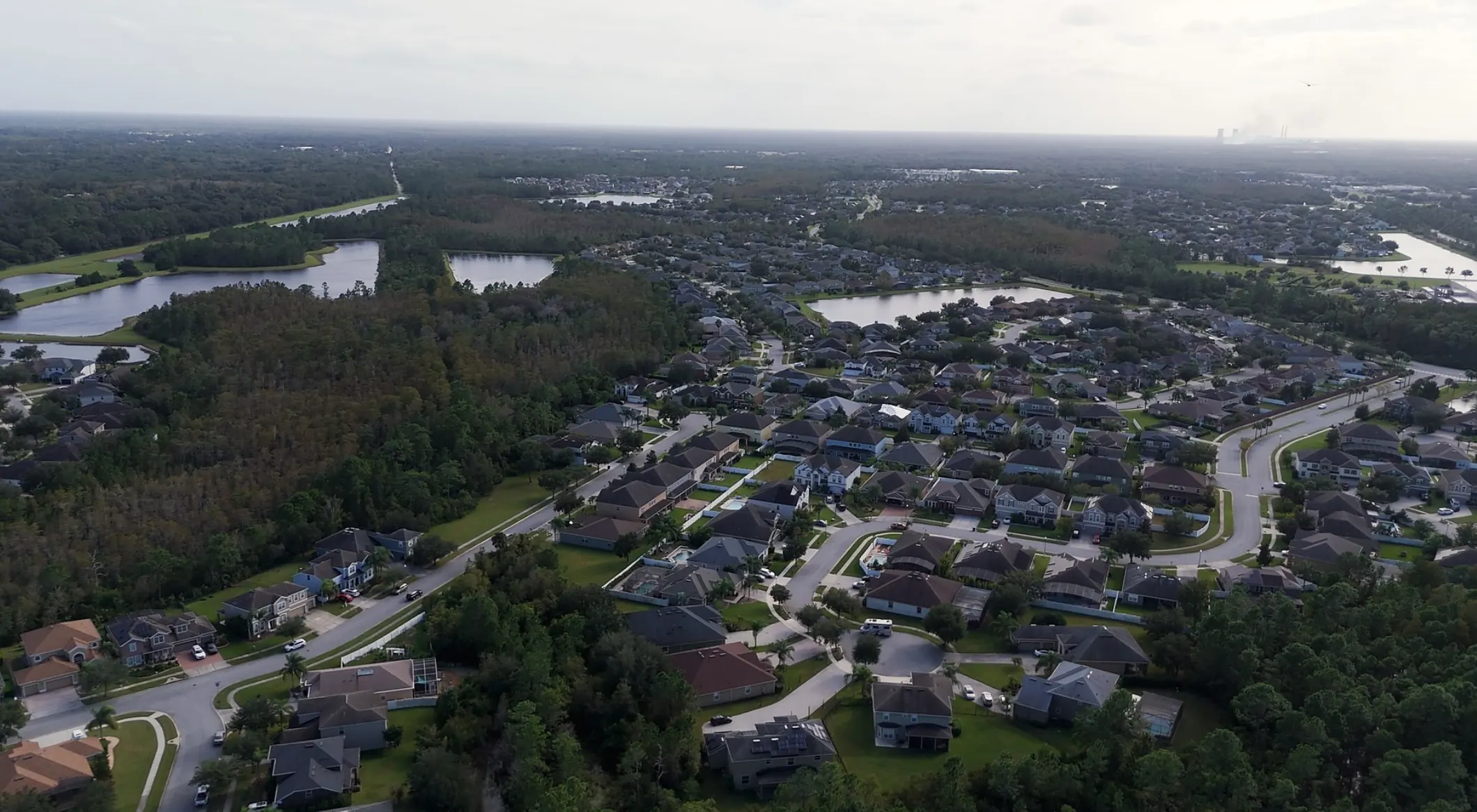
Single-family homes near Lake Pickett in East Orange County.
What to Know
The Orlando housing market at a glance
Fewer deals, more listings Single-family homes going under contract across four Central Florida counties are down about 31% from October 2019, while active inventory is up roughly 20%, in Jared’s review of Stellar MLS data.
A growing backlog Nearly 6,000 single-family listings in five counties have been on the market longer than 90 days, close to 40% of the active inventory Jared counted.
A standoff, not a crash Prices are holding because most sellers do not have to sell, so buyers and sellers are waiting each other out heading into 2027.
The Orlando housing market feels stuck because far fewer single-family homes are going under contract than before the pandemic, even as active inventory climbs and thousands of listings sit for months. In Jared’s review of Stellar MLS data, fewer deals and more supply point to a slow, waiting market rather than a crash heading into 2027.
This post breaks down the data behind Jared’s latest market update, from pending contracts and inventory to the backlog of older listings and the county-by-county split. For background on how we got here, our earlier look at how Orlando inventory flipped against prices and rates set up much of what you will see below.
Why does the Orlando housing market feel stuck right now?
The Orlando housing market feels stuck because far fewer single-family homes are going under contract than before the pandemic, while active inventory keeps rising, so listings build up faster than buyers can clear them.
Jared compared one October to another on purpose, because real estate is seasonal and he did not want a normal winter slowdown to look like something bigger. In Jared’s review of Stellar MLS data for Orange, Seminole, Osceola and Lake counties, about 3,023 single-family homes went under contract in October 2019. Last month, in October 2026, that number was just over 2,000. That is close to 31% fewer pending contracts than 7 years earlier, and about 13% fewer than October 2025, even though the region has added population and housing in that span.
If deals were down, you might expect fewer homes for sale too. Instead the opposite happened. Those same four counties held roughly 8,700 active single-family listings in October 2019, and about 10,460 last month, close to 20% more supply. Put the two together and the shift is clear. In October 2019 there were about 2.9 active listings for every pending contract. Today it is closer to 5 to 1. That is how the market looks from a buyer’s seat, and it is why cancellations climb, because buyers sense another option is coming and feel little pressure to push a deal through.
We walked through this inventory flip in detail when it first showed up in the numbers, and you can read that earlier breakdown in our look at what changed in the Orlando housing market this fall.
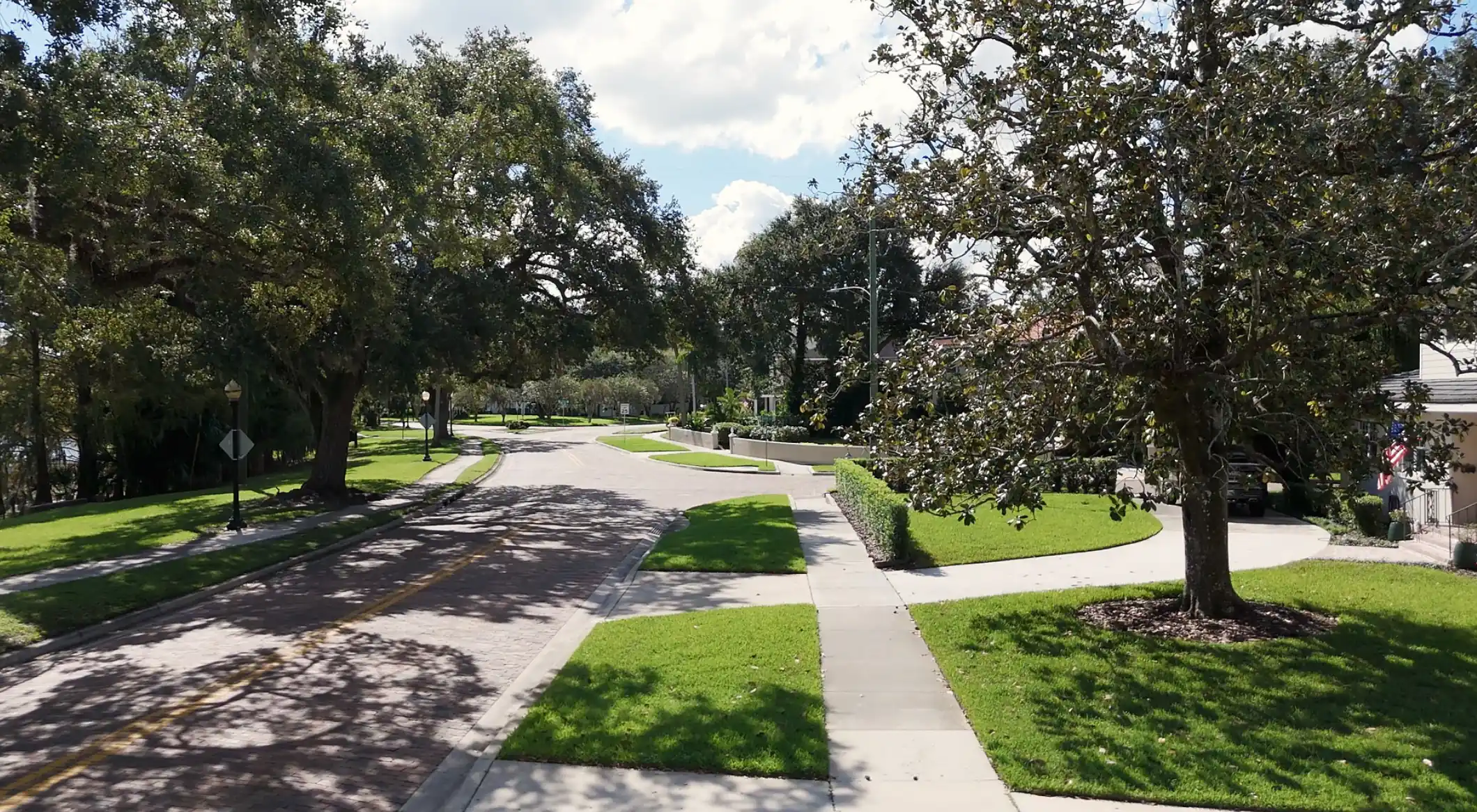
A tree-lined residential street near Lake Davis in Orlando.
Listing age snapshot
How long active single-family listings have been sitting (Jared’s MLS review)
- 30 days or less: 3,568. Fresh listings still in their first month
- 31 to 60 days: 3,600. Still within a normal selling window
- 61 to 90 days: more than 2,200. Starting to run past the typical pace
- 91 to 120 days: 1,510. Now sitting longer than the market average
- Over 120 days: 4,462. The aged backlog, more than 4 months on market
- Total active, five counties: 15,437. All active single-family listings in Jared’s snapshot
How many Orlando homes have been sitting for months?
In Jared’s five-county Stellar MLS review, nearly 6,000 single-family listings had been active for more than 90 days, close to 40% of the 15,437 homes he counted.
Age matters more than a raw inventory count, because a home that listed 5 days ago and one that has sat for 8 months are two very different situations. Jared grouped every active single-family listing across Orange, Osceola, Seminole, Lake and Polk counties by its active days on market, the clock the MLS shows for the current listing, not the cumulative time a home may have spent with a prior agent.
Here is how the 15,437 listings broke down. About 3,568 had been on the market 30 days or less, and 3,600 sat in the 31 to 60 day range. Past that, the picture turns. More than 2,200 listings had been active 61 to 90 days, another 1,510 ran 91 to 120 days, and 4,462 had been sitting longer than 120 days, which is more than 4 months and in some cases a year or more.
The detail that stands out is that there are more homes aged beyond 120 days than fresh listings on the market 30 days or less. Combine everything past 90 days and you reach nearly 6,000 listings, almost 4 out of every 10. That does not mean each one is overpriced, since condition, location, floor plan and general appeal all play a part. But it is a real backlog, and it has been building for a while, as our 2025 Orlando market recap shows the slowdown is now several years in the making.
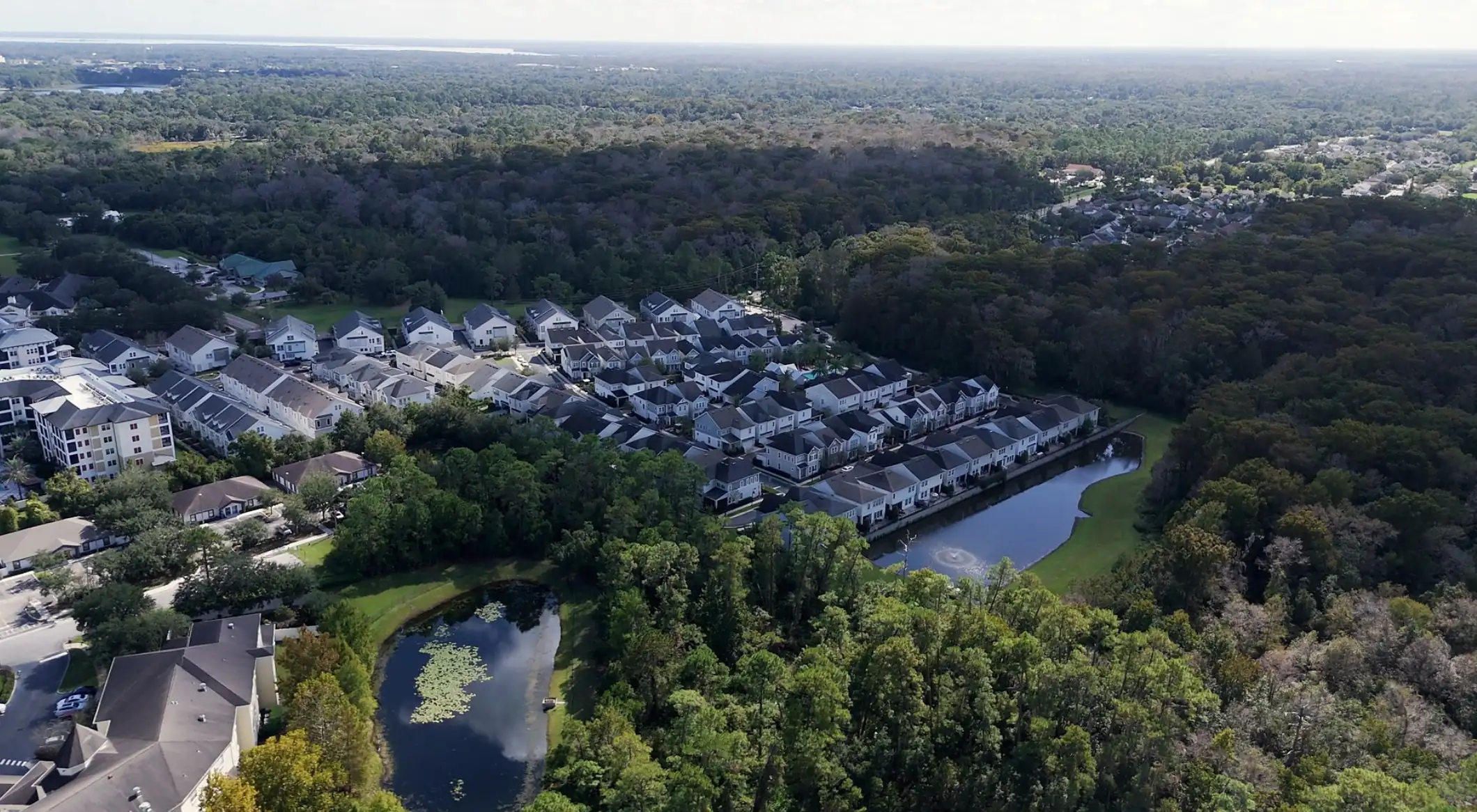
Established single-family neighborhoods near Crystal Lake Road in Seminole County.
How are home builders competing in the Orlando housing market?
Home builders are competing hard in the Orlando housing market by cutting prices and stacking incentives, which pulls buyers away from resale sellers who are already sitting on older listings.
Every week brings fresh resale listings, and on top of that buyers are weighing brand new homes. Jared notes that over recent months builders have made steady, larger price improvements, and they are layering on incentives to seal a deal, things like covering closing costs down to zero or buying down a buyer’s interest rate by 1 to 2 percent below the going rate in a high rate market.
A national builder sentiment gauge backs up the pressure they are under. It fell to 29 in October 2026, a 14-year low, with a large share of builders reporting price cuts that month. When new homes carry that kind of help, a used home needs sharper pricing to stand next to them. We covered the specifics in our post on how Orlando builders are using price cuts and incentives, and you can compare new versus resale pricing county by county in our new construction and resale price comparison.
For a resale seller, the takeaway is simple. If a buyer can find a new home with a lower effective payment within a short drive, your price has to account for that competition.
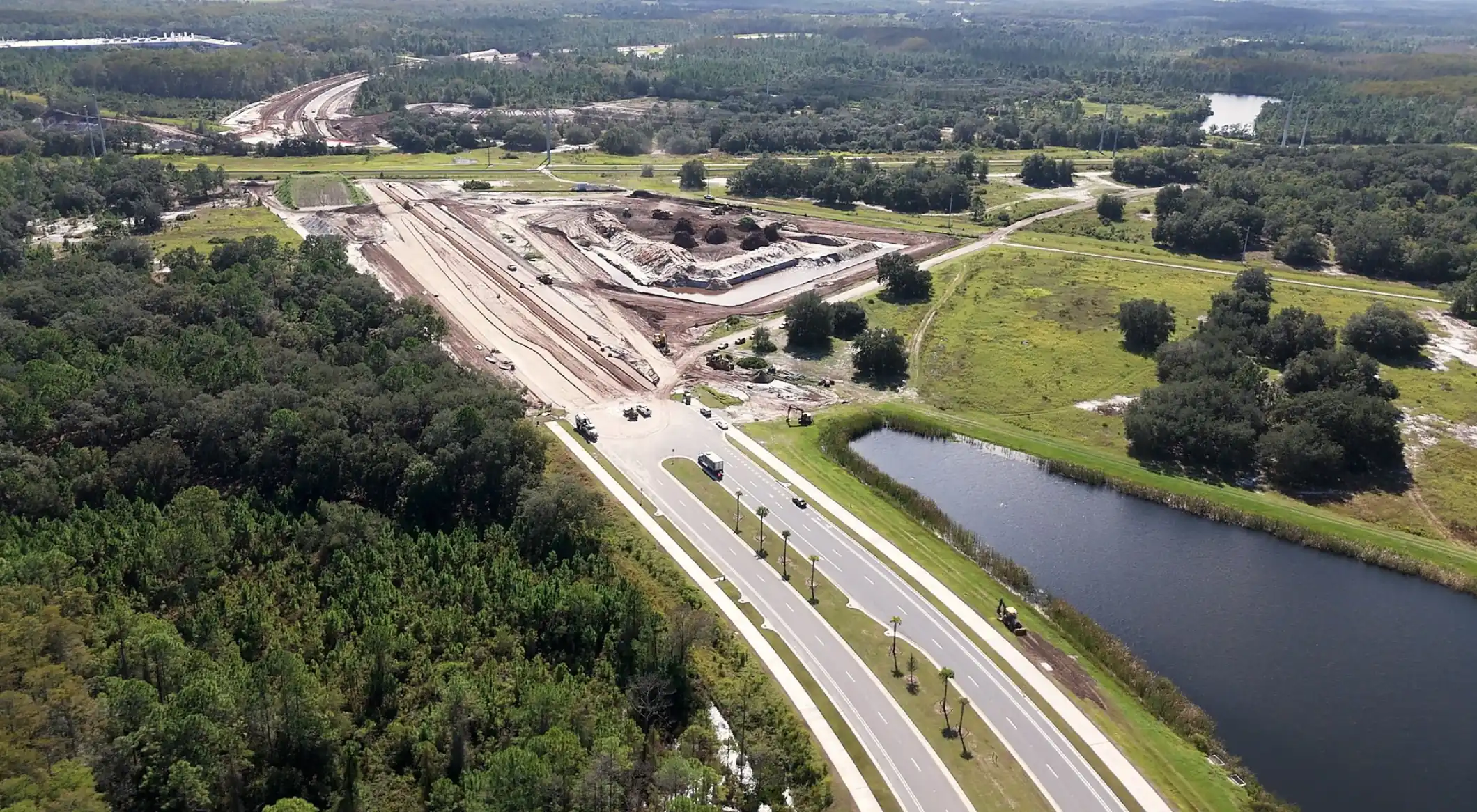
New construction underway along SunBridge Parkway in the St. Cloud area.
What does waiting cost sellers who overprice?
Waiting too long at the wrong price tends to cost sellers both time and money, because a listing that sits gets treated as a problem and invites harder negotiation.
Jared pulled 2 real examples from the middle of the price range, both similar single-family homes minutes apart in the same city, to show how differently the process can go. One home listed in September and went under contract in about 20 days with no price cut at all. The other listed back in May, moved through 3 separate price reductions over the summer, and finally closed about 17% below its original asking price after months on the market.
Jared is careful here. He is not saying the second seller lost that full amount of real value, because you would need to run comparable sales and check condition to know what the home was truly worth at the start. The point is the experience. One seller was done in about 3 weeks. The other kept a home show-ready for months, absorbed repeated feedback, then settled well under the number they first hoped for.
The lesson is that the asking price and the market value are not the same thing. A high starting price is a marketing lever, not a guarantee. The market does not stand still while a seller waits, and when a home lingers, buyers start to wonder what is wrong with it and press harder at the table and through inspection. If you are picking an agent, Jared’s advice is to find one who will tell you honestly what a given pricing strategy is likely to produce. For more on the costs buyers are weighing against your home, see our guide to why builders keep cutting prices and what it means for buyers.
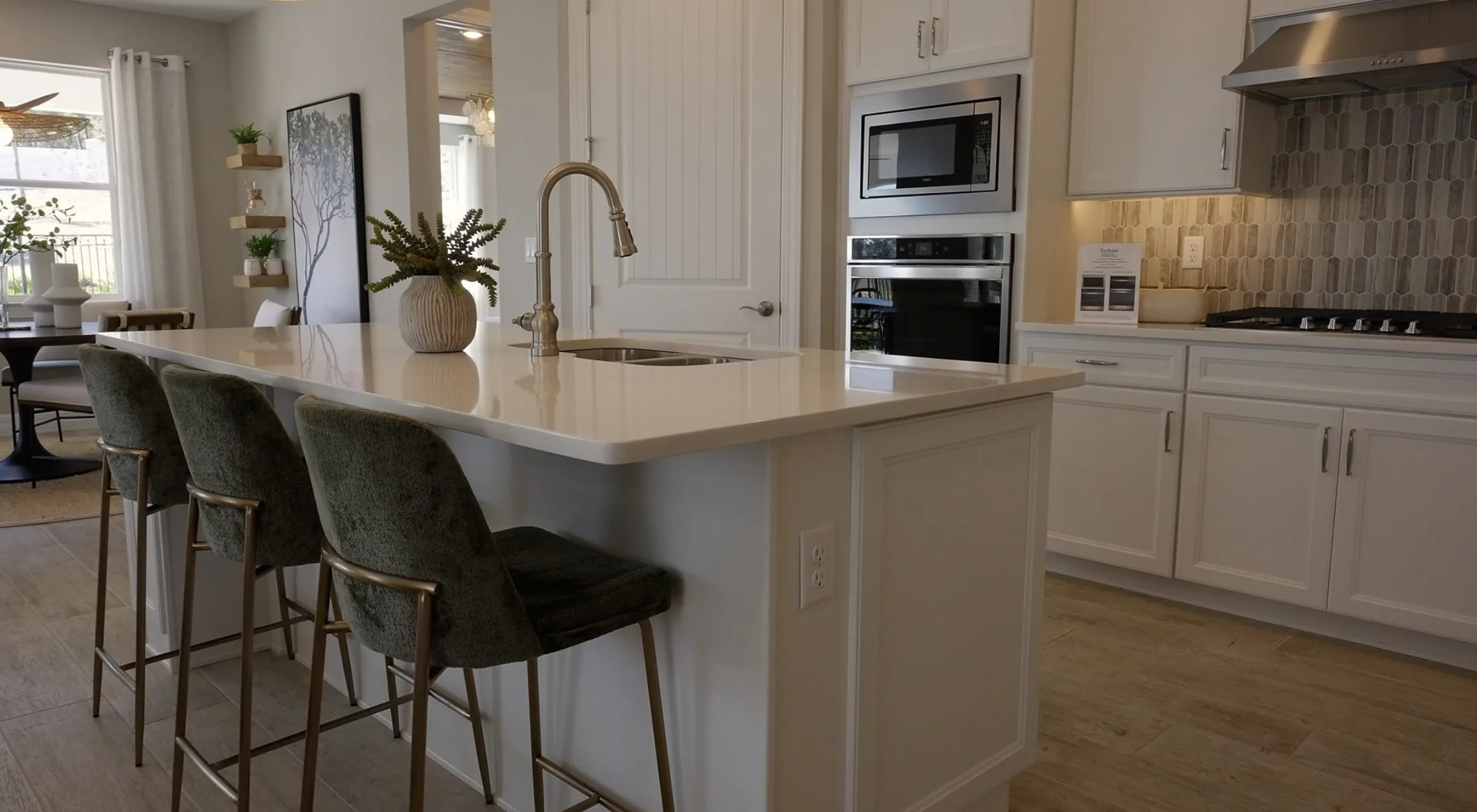
A new construction model kitchen in Minneola, Lake County.
Why are prices in the Orlando housing market holding flat?
Prices are holding flat because most Orlando sellers do not have to sell, so the number of truly motivated sellers has not outgrown the small pool of active buyers.
This is the part buyers find hardest to accept. Fewer deals, more supply, longer marketing times, and yet median sale prices have barely moved. In Jared’s review of county data for October 2026, Orange County’s median single-family sale price was about $499,000, nearly identical to a year earlier. Seminole County sat around $457,000 and Osceola County around $415,000, both close to flat, while Lake County showed the largest move with a decline of roughly 3 percent year over year. These are county medians, not any single home.
The reason prices have not dropped comes down to motivation. Many owners locked in a mortgage near 3%, built equity, and carry a comfortable payment. If they do not get their number, they simply stay. Compare that with an owner who has already moved and is carrying an empty house and a second payment. Those two sellers behave very differently. On the other side, buyers are weighing payments, property taxes, insurance and HOA or community fees, all of which we break down in our look at the hidden costs of buying a home in Central Florida. The national 30-year fixed mortgage rate was 7.11% in the week of November 12, 2026, which keeps plenty of buyers on the sidelines.
The result is a standoff. Jared points to a Redfin estimate that the Orlando metro had about 123% more sellers than buyers in September 2026, and he agrees the headline is accurate, yet he reads the underlying balance of sellers who must sell against buyers who will transact as still fairly even. That is why comps are not sliding, even with so much inventory on the shelf.

Single-family homes in the Sand Lake Hills area of Dr. Phillips.
Which parts of Central Florida are most exposed?
Osceola, Lake and Polk counties are the most exposed right now, carrying the heaviest inventory relative to their history, while Orange and Seminole feel the decline more through a sharp drop in new contracts.
Selling in Winter Garden is not the same as selling in Kissimmee, Oviedo, Clermont or St. Cloud, and the county numbers show it. Using figures Jared cites from a subscription market-data tool, Orange County is running about 37% above its long-term seasonal inventory average and Seminole about 33% above, while Osceola, Lake and Polk are closer to 50% above, with Osceola specifically near 55% above normal.
But elevated inventory and weak demand are two different problems. In Jared’s review of October 2026 pending contracts, Orange County was down almost 20% year over year and Seminole was down more than 24%, yet Osceola was down only about 2% and Lake about 4%. Months of single-family supply tells the other half of the story, with Osceola near 6 months, Orange at 3.9 months and Seminole at 3.2 months. The longer that supply figure runs, the more the market tilts toward buyers.
So one group of counties has a demand problem and another has a supply problem. If you want the submarket detail, our south Orlando market breakdown and our Clermont, Lake and Polk market update both show how different two nearby areas can be. The real question for any seller is how comparable homes in your own neighborhood, property type and price range are actually doing, and whether a buyer can find a similar new home within a 15 minute drive of your door.

Homes, fields and apartments along US 27 in Davenport, Polk County.
Who gives in first, buyers or sellers?
Jared is not calling a crash, but he is not calling the market healthy either, and he is watching 3 signals to see who gives in first as 2027 begins.
The disconnect between homes available and deals getting done has been with us since interest rates climbed in the second half of 2022, and the market has simply been smaller ever since. If rates do not move, Jared expects the same pattern to continue, with reluctant sellers, fewer buyers and a slow grind. That is a stuck market, not a collapsing one.
Three things will tell the story in the months ahead. First, pending contracts, to see whether buyers return through winter and into spring. Second, days on market, to see whether the backlog of listings past 90 and 120 days shrinks or keeps growing. Third, the negotiation gap, to see whether buyers pull sellers further off their asking prices or sellers start making bigger cuts to get deals closed. Those will say more than any single median price headline about where 2027 is heading.
For buyers, Jared’s advice is not to wait for a crash to find value, because some homes already offer real negotiating room, as long as you know the true value and understand why a given listing has been sitting. For sellers, do not chase a market that has moved past your price. If you want the longer view on the crash question, our Florida and Orlando crash-question update frames why a slowdown is not the same as a downturn.

Homes and ponds in the Bellalago area of Kissimmee, Osceola County.
A light real estate read
Here is the nuance that a countywide median can hide. The experience of selling a $450,000 home in one part of Central Florida can look nothing like selling a $750,000 home somewhere else, even in the same month. What really sets your competition is narrower than a county line. It is how long comparable homes in your own neighborhood are sitting, how many of your neighbors have already reduced their price, and how many listings nearby have been canceled or withdrawn without selling. Property type matters too, since a single-family home competes differently than a townhome a mile away. And the biggest swing factor is often new construction. If a buyer can reach a brand new home with builder incentives within a 15 minute drive of your front door, that changes how your resale listing needs to be priced and presented. None of this is a reason to panic. It is a reason to look at the actual block-level picture before you set a number.
The Takeaway
The honest read on the Orlando housing market is that it is stuck, not crashing. Fewer single-family homes are going under contract than before the pandemic, inventory is higher, and a large backlog of listings has been sitting for months, yet prices are holding because most sellers can afford to wait. For buyers that means real negotiating room on the right homes, and for sellers it means pricing and presentation matter more than ever. Watch pending contracts, days on market and the negotiation gap through the winter, and the direction for 2027 will come into focus.
FAQ
Is the Orlando housing market going to crash in 2027?
Jared is not predicting a crash. He sees fewer homes going under contract, elevated inventory and a backlog of listings sitting for months, but prices are holding because most sellers can afford to wait. His view is that if mortgage rates stay high, the market keeps grinding with low transaction volume rather than collapsing. He is watching pending contracts, days on market and negotiation trends to see where 2027 heads.
Why are Orlando home prices not falling if so many listings are sitting?
Because the number of sellers who truly must sell has not outgrown the pool of active buyers. In Jared’s review, many owners locked in a mortgage near 3% and can simply stay put if they do not get their price. Median single-family sale prices across Orange, Seminole and Osceola counties were close to flat in October 2026, with Lake County down about 3 percent year over year.
How long are Orlando homes taking to sell right now?
Jared points to Redfin data showing the typical Orlando home took about 67 days to sell in September 2026, and the regional Realtor association reported an average of 66 days on market in October 2026. In his own five-county MLS review, nearly 6,000 single-family listings had been active more than 90 days, which is close to 40 percent of the homes he counted.
What should I do if my home has been sitting on the market for months?
Jared’s advice is to stop chasing a market that has moved past your asking price. A well-presented home at the right price can still sell, but if yours has sat for months without real buyer interest, take a serious look at both the marketing and what the market is telling you. He also suggests working with an agent who will be honest about what a given pricing strategy is likely to produce.
Is now a good time to buy a home in Central Florida?
Jared tells buyers not to wait for a crash to find value. With about 5 active single-family listings for every pending contract in his four-county review, some homes already offer real negotiating room. The key is knowing the true value of what you are buying and understanding why a particular listing has been sitting, because not every long-standing listing is a bargain. He also notes the national 30-year fixed rate was 7.11 percent in mid-November 2026.
Links and Sources
The Jared Jones Team guides
- Winter Garden and Horizon West real estate hub
- how Orlando inventory flipped against prices and rates
- what changed in the Orlando housing market this fall
- the 2025 Orlando market recap
- how Orlando builders are using price cuts and incentives
- new construction and resale prices county by county
- why builders keep cutting prices and what it means for buyers
- the hidden costs of buying a home in Central Florida
- the south Orlando market breakdown
- the Clermont, Lake and Polk market update
- the Florida and Orlando crash-question update
Video
Sources
- Redfin: Buyers vs. Sellers, September 2026
- NAHB: Builder sentiment falls on rising rates, October 2026
- NAHB Eye on Housing: Builder sentiment falls to a 14-year low
- Freddie Mac: Primary Mortgage Market Survey weekly rates
- World Property Journal: Orlando October 2026 housing data from the regional Realtor association
Thinking about buying or selling in Central Florida?
Get a straight read on the competition, pricing and timing in your neighborhood and price range. Call or text 407-706-5000 or email info@jaredjones.com.