
Orlando Builders Are Slashing Prices: How to Read the Deals Before You Sign
Price cuts, closing credits, buydowns and flex cash are all on the table. Jared Jones explains which offers lower your payment, what hides underneath the base price, and why the cheaper sticker can cost more by year three.
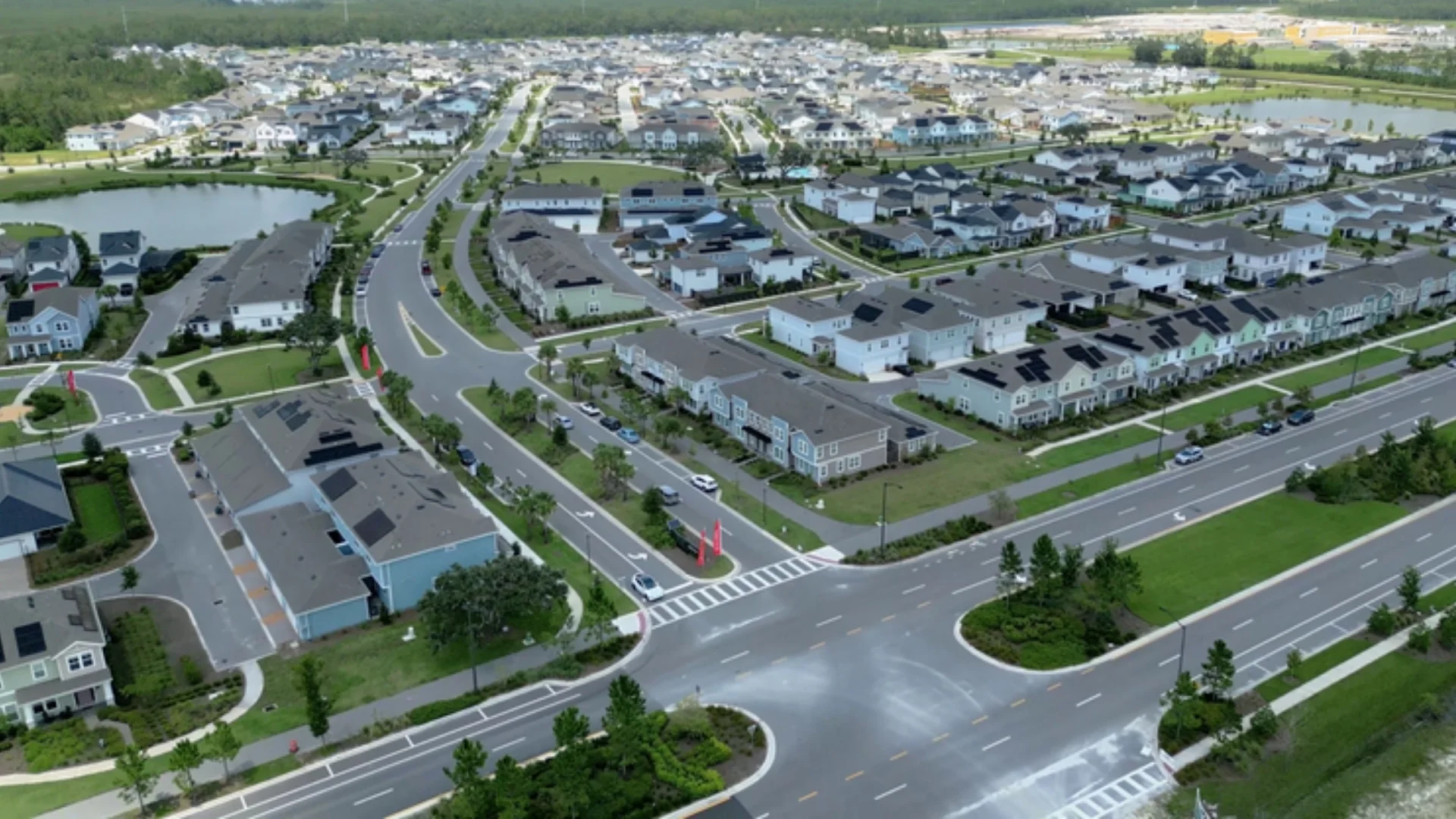
Builders across Central Florida are cutting prices and stacking incentives, but the real deal is in the total cost, not the sticker.
What to Know
Builder deals at a glance
The cuts are real. 38% of builders cut prices in September 2026, and Jared saw quick move-in markdowns around $25,000 on local lists.
Not every offer is equal. Permanent buydowns and true price cuts usually beat temporary buydowns, and lender caps limit closing credits.
Compare year three, not year one. Lot premiums, CDDs and the first full tax bill can flip which home is cheaper.
Builders across Orlando and Central Florida are cutting prices right now, and some of the offers are genuinely good. The trouble is that every builder packages its deal differently. One has a 2-1 buydown, one has a 3-2-1, one has a permanent buydown, another has closing costs or flex cash, and comparing them can feel like it takes an advanced math degree. In his latest Orlando Living video, Jared Jones breaks down each type of offer, shows where the real money is, and walks through a side-by-side payment example that surprises most buyers.
If you only have one question, such as whether a rate buydown beats a price cut, our short answer page on builder rate buydowns versus price cuts covers it. This guide is the full picture, from the first offer you see to the payment you will actually be making in year three.
Are builder price cuts in Orlando real?
Yes. Higher mortgage rates have slowed buyers down, and builders are responding with price cuts and incentives, both nationally and on Orlando-area quick move-in lists.
When Jared recorded this video, Freddie Mac’s 30-year average had just hit 7.28% (the week of October 1, 2026), up from 7.03% the week before and 6.34% a year earlier, the highest reading since November 2023. Rates have eased a little since then, to 7.11% as of November 12, but payments are still heavy, and when payments get heavy, buyers hesitate and builders feel it.
The national numbers back that up. In the NAHB/Wells Fargo builder survey for September 2026, 38% of builders cut prices, up from 35% in August, and the average cut held at 6% for the sixth month in a row. 66% used sales incentives, the highest share since December. In October, the share of builders cutting prices rose again to 43%. Supply is part of the reason: the Census Bureau counted 8.5 months’ supply of new homes for sale nationally in August 2026. And the big builders are open about the cost. Lennar said its average sales price last quarter reflected about 12% in incentives.
Closer to home, Jared says most homes on the recent builder quick move-in lists he reviewed were marked down around $25,000, and one townhome community was advertising cuts averaging as much as $57,000 off the list price on select homes. When a builder has a finished house sitting in a community, every month costs it money, and that is the buyer’s leverage. For the bigger local picture, see how 7% rates are affecting the Orlando housing market.
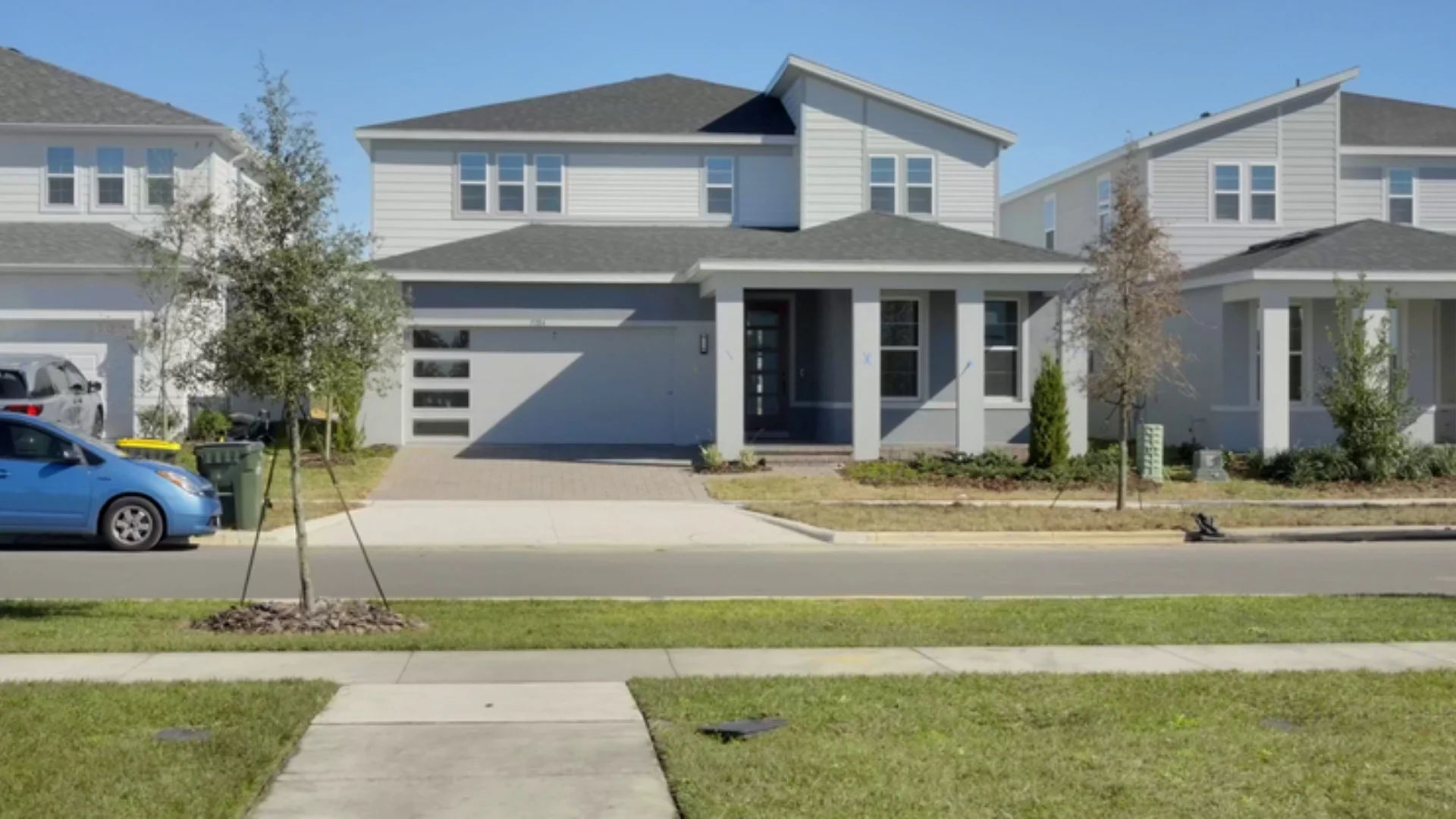
A finished quick move-in home costs the builder money every month it sits, which is where a buyer’s leverage comes from.
What are the four builder offers, and which one saves real money?
Jared sees four offers most often: the quick move-in price cut, the closing cost credit, the rate buydown and flex cash. They are not equal, and every one is builder-advertised, limited to select homes and subject to change.
1. The quick move-in price cut
This is a real reduction on a finished or nearly finished home, typically one that has gone about 60 days without a buyer. The catch is that the home is what it is. The finishes are already chosen, so you will not be making changes.
2. The closing cost credit
The builder pays part or all of your closing costs. What most buyers miss is that the lender caps how much the builder can contribute. On a conventional loan for a primary home, Fannie Mae’s limit is 3%, 6% or 9% of the price depending on how much you put down, and on an FHA loan the limit is 6%. A builder-paid rate buydown counts toward that same cap, so a big headline number may not all be usable.
3. The rate buydown, permanent or temporary
A permanent buydown is when the builder pays points so your rate is lower for the life of the loan, and Jared calls it the best kind. A 2-1 temporary buydown sounds similar but is far from the same: your rate starts two points below the note rate in year one, one point below in year two, and the full note rate applies from year three on. Your lender will qualify you at the full rate. Jared’s warning is blunt: do not buy the house banking on a refinance. Rates may come down, but make sure you can afford the payment either way.
4. Flex cash or a design center credit
This is money toward upgrades, closing costs or your rate, and it is where the conditions matter most. Jared has seen ads promoting rates as low as 3.875% without naming the loan type, which can be a temporary buydown or an adjustable-rate loan that is fixed for five years, and another advertising 5.49% with an APR of 6.247%. Always read the APR. One recent offer, which has since ended, promised up to $50,000 on to-be-built homes if you used the builder’s mortgage company, or $40,000 with your own lender.
Jared is not saying the builder’s lender is a bad deal. With that much money on the table, it is often the best offer you will get. But his team always has buyers get a second loan estimate to compare the whole package. He also points out something most people do not say out loud: builders often prefer buying down your rate over cutting the price, because a lower recorded price lowers the value of every other house they sell. A buydown like that can cost the builder $20,000 to $25,000, so if you expect to refinance or sell within a few years, it may be worth asking for that money off the price instead. How willing a builder is depends on how early it is in selling the community. Our guide on whether a rate buydown beats a price cut goes deeper on that choice.
What does the base price leave out?
The base price is only the starting line. Lot premiums, design center options and local impact fees can push the final number far above it.
Walk into the design center for a couple of upgrades (flooring, countertops, a bigger shower) and 20 minutes later you have priced a different house. For scale, PulteGroup told investors that options and lot premiums on the homes it closed in the second quarter of 2026 approached $107,000 per home. That is a national figure, not a Central Florida average, but Jared says it is realistic for what he sees in Orlando. The model home is a decorated showpiece, and nearly everything in it, down to the kitchen faucet, may carry a price tag that is not in the base plan.
Impact fees are the other hidden layer. They cover the cost new homes add to schools, roads, parks and public safety, and they are built into the price rather than shown on your closing statement. In unincorporated Orange County, school and transportation impact fees alone run roughly $19,000 to $23,000 for a 2,000-square-foot single-family home, depending on the district, before parks, fire and law enforcement fees. That is one reason new construction rarely competes with nearby resale homes on sticker price. Get the full option list and the lot premium before you fall in love with the model. Jared’s point: a $25,000 or $30,000 flex cash offer can vanish minutes after you walk into the design center. See also what to know before buying new construction in Florida.
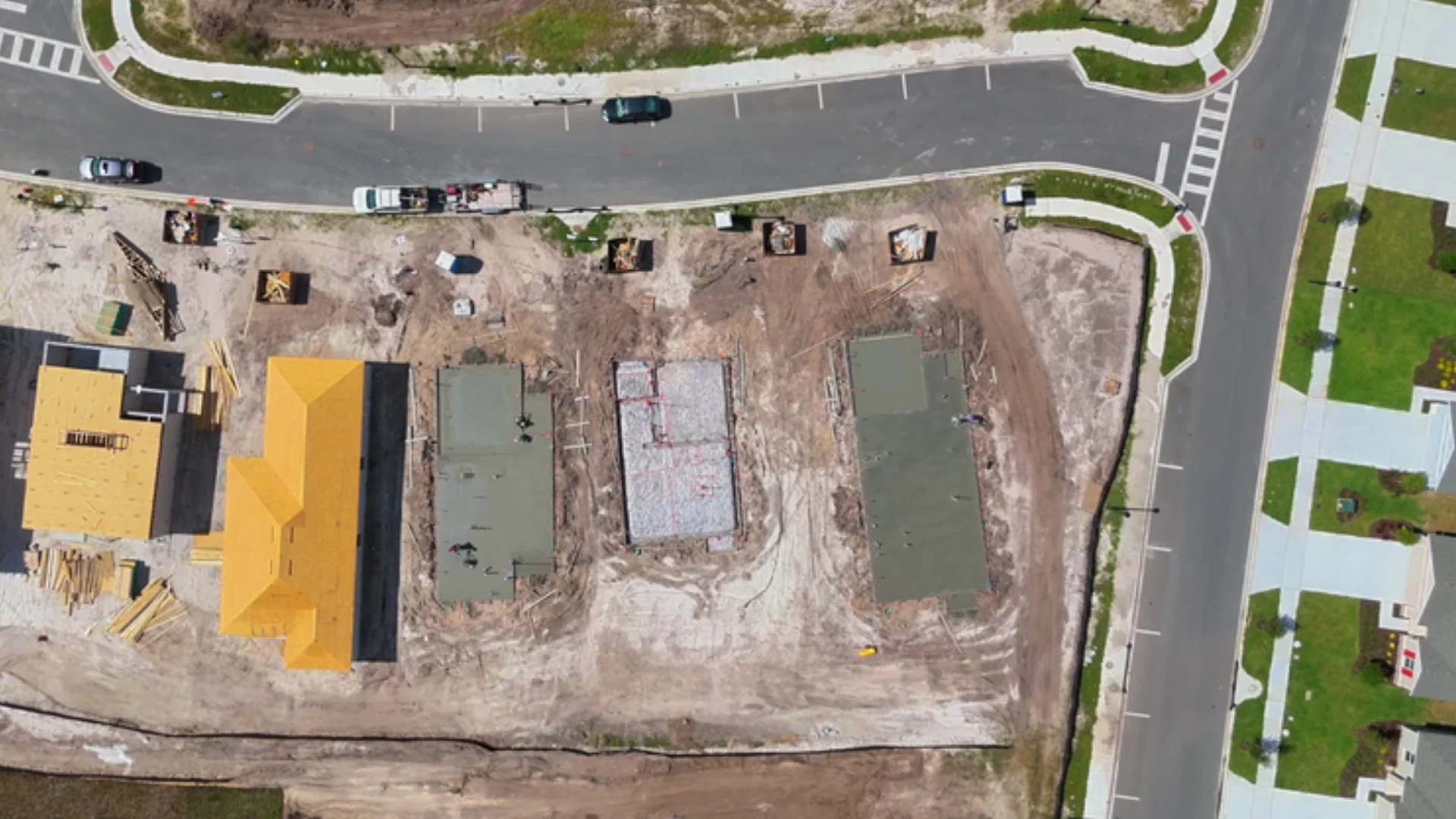
Lot premiums, design center options and impact fees all sit underneath the base price before a home is finished.
What are the property tax traps on a new Florida home?
Jared flags two: the CDD assessment and the first-year tax bill. Both can raise your payment after you move in.
The CDD. A community development district can levy an assessment that appears on your property tax bill, on top of county taxes and on top of your HOA. Florida law requires the builder’s contract for the initial sale to disclose it in bold, conspicuous type right above where you sign. How long it lasts depends on the district’s bonds, and part of it usually falls off eventually, so ask for the amount and the term in writing and add it to your monthly budget. Jared’s rule of thumb is that CDDs are most common where a builder developed open land with little existing infrastructure and had to fund roads and amenities, and less common on infill lots surrounded by existing neighborhoods. Our comparison of Orlando master-planned communities explains the fees in more detail, and if you are also wondering about the HOA, see whether HOA fees go up after the builder leaves.
The first-year tax bill. Florida assesses property as of January 1. If your home was not finished on that date, your first bill may reflect mostly the land, and the next one includes the house and improvements. Some lenders set escrow from that first small bill, so when the full bill arrives the escrow comes up short and the payment jumps. Ask for a loan estimate with taxes estimated on the full purchase price. Most Central Florida property appraisers have an online tax estimator.
The good news is homestead. If it is your primary home, the Save Our Homes cap limits how fast your assessed value can rise each year to 3% or the change in inflation, whichever is lower. The cap resets when you sell, and the normal filing deadline is March 1. Here is how to file for homestead exemption in Orange County, and how Save Our Homes portability works if you are moving from another Florida home.
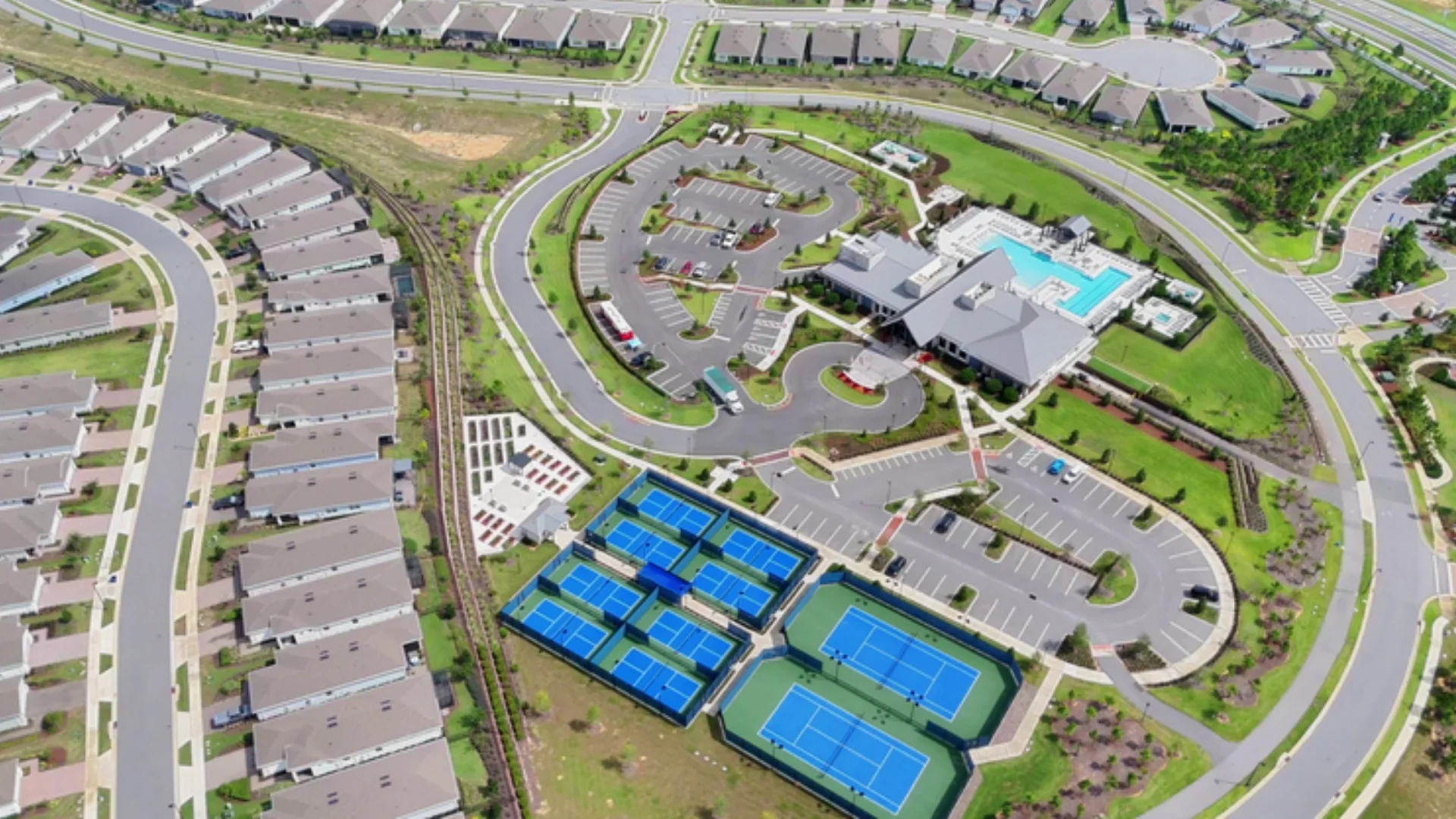
Roads, amenities and infrastructure in newer communities are often financed through a CDD that shows up on the tax bill.
What about insurance and the commute?
Insurance is one of the biggest lines in a Florida payment, and the commute is the cost that never shows up on a closing statement.
Insurance varies a lot by county and by house. New construction often quotes lower because the roof and systems are new and built to current code, but get a real quote on the actual address before you sign. The commute matters most for buyers drawn to lower prices on the outer edge of the metro. Test-drive it at rush hour and price the tolls you will actually pay. As Jared puts it, saving $30,000 on a house while adding an hour a day in the car is not always a deal. See how Orlando tolls work for one example.
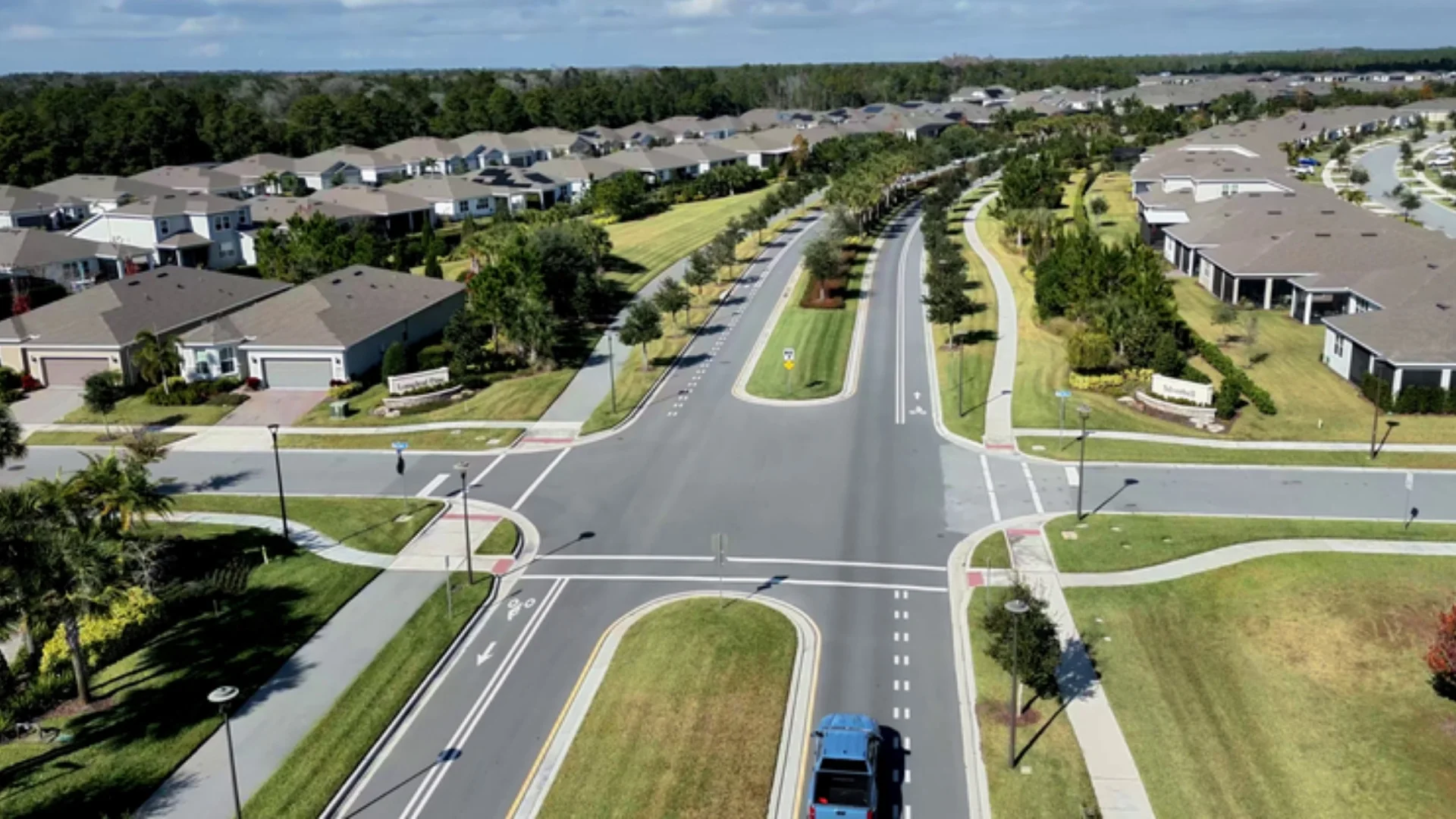
Homes on the outer edge of the metro can price lower, but tolls, fuel and drive time belong in the monthly math.
Which home is cheaper: the lower sticker price or the quick move-in?
In Jared’s example, the home with the lower sticker price costs about $355 less a month in year one, but about $575 more a month by year three.
The numbers below are made up to illustrate the idea, not quotes from a real builder. Both buyers put 10% down, and mortgage insurance is left out of both so the differences stand out. Home A is advertised in the upper $300,000s at the edge of the metro, but after lot premium and upgrades it closes at $445,000 with a 2-1 temporary buydown on a 6.99% note rate (4.99% in year one, 5.99% in year two). It is in a CDD and was not finished on January 1, so its first tax bill is mostly land. Home B is a quick move-in closer to town, with upgrades included and a price reduction applied, at $455,000 with a builder-paid permanent rate of 5.99% and no CDD.
| Monthly cost | Home A, year 1 | Home A, year 3 | Home B, every year |
|---|---|---|---|
| Principal and interest | $2,148 | $2,662 | $2,453 |
| Property tax | $125 | $540 | $555 |
| Insurance (county average) | $301 | $301 | $301 |
| CDD | $200 | $200 | $0 |
| HOA | $100 | $100 | $120 |
| Extra commute, tolls and fuel | $200 | $200 | $0 |
| Total | $3,074 | $4,003 | $3,429 |
Jared used county-average insurance to be thorough and expects a new home to quote lower than that. The lesson holds either way: the same buyer with the same down payment chose the cheaper sticker price, and it became the more expensive house. Compare year one with year three, not just the first payment.
Should you buy new or resale, and what about the builder next door?
Neither is wrong. Compare the total cost, and know how long the builder will keep selling near you.
A nearby resale home that is five to ten years old has no lot premium, finished landscaping, blinds up, ceiling fans in, and often a fence someone else already paid $6,000 to $7,000 for. It has a known tax bill and, much of the time, no CDD. A new home brings a warranty, current code and today’s incentives. For local price comparisons, see whether new construction is really cheaper than resale in Orlando.
Then there is the builder next door. If the builder is still selling in your community or nearby when you go to sell, your resale home competes with brand new homes carrying the same incentives you chased on the way in, and builder price cuts after you close can affect appraisals later. That is the question Jared wants every buyer to ask before signing: how many lots are left, and how long does the builder expect to keep selling at the current pace? Then negotiate hard.
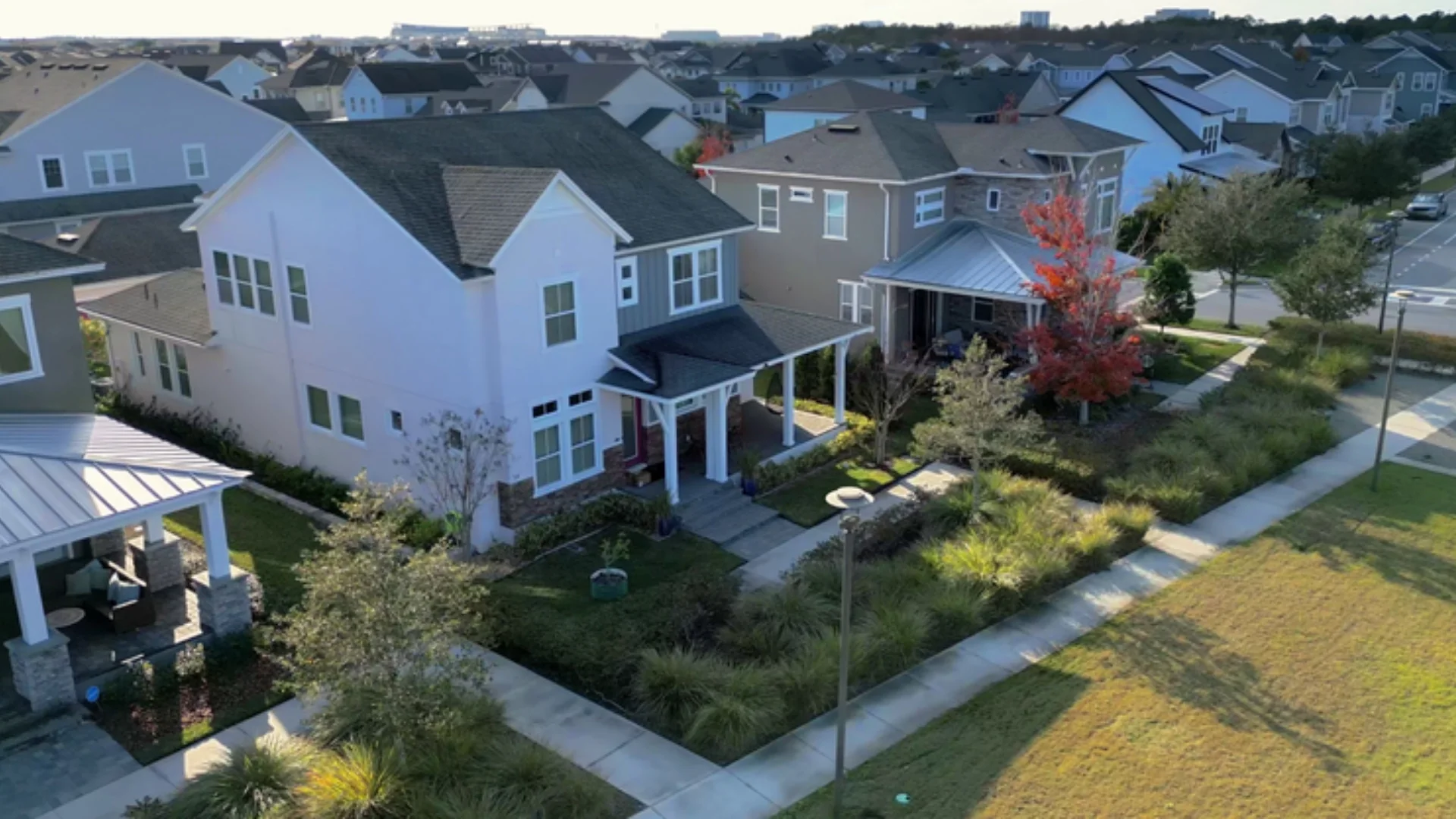
A five- to ten-year-old resale home often comes with landscaping, blinds, fans and a fence already in place.
Who is on your side of the table?
The friendly person in the sales office works for the builder. Jared’s advice is to bring your own agent from the very first visit.
The sales team’s job is to sell the builder’s home at the builder’s price, in the most profitable position it can. They may serve you well, but they serve the builder’s interest first. Jared says every builder he knows of in town offers compensation toward the buyer’s agent, but many will only work with your agent if the agent is registered on your first visit, so call before you tour. His overall read: new construction can be a great opportunity right now, with motivated builders and real money on the table. Buy the total cost, not the sticker price, compare year one with year three, and always get a second loan opinion.
The Takeaway
Orlando builders are motivated, and the price cuts and incentives are real, but they are not all worth the same. A quick move-in cut or a permanent buydown usually beats a temporary buydown you plan to refinance out of. Lender caps limit closing cost credits, lot premiums and options can erase flex cash, and CDDs and the first full tax bill can raise the payment after you move in. Compare the total monthly cost in year one and year three, get a second loan estimate, ask how many lots are left, and have your own agent with you from the first visit.
FAQ
Are Orlando home builders really cutting prices?
Yes. Nationally, NAHB’s September 2026 survey found 38% of builders cut prices, by 6% on average, and 66% used incentives; in October the share cutting prices rose to 43%. Locally, Jared Jones says most homes on the recent builder quick move-in lists he reviewed were marked down around 25,000 dollars, with select townhomes in one community averaging up to 57,000 dollars off the advertised price.
Is a permanent rate buydown better than a 2-1 buydown?
Usually, if you plan to keep the loan. A permanent buydown lowers the rate for the life of the loan. A 2-1 temporary buydown starts two points below the note rate in year one and one point below in year two, then the full note rate applies from year three. Jared warns buyers not to count on refinancing out of the higher rate.
How much can a builder pay toward my closing costs?
Lenders cap it. On a conventional loan for a primary home, Fannie Mae limits interested party contributions to 3%, 6% or 9% of the price depending on your down payment, and FHA limits seller and builder contributions to 6%. A builder-paid rate buydown counts toward the same cap.
Why did my property tax bill jump after buying a new home in Florida?
Florida assesses property as of January 1. If the home was not finished on that date, the first tax bill may reflect mostly the land, and the next bill includes the house. If your escrow was set from the smaller bill, the payment can jump. Ask for a loan estimate with taxes estimated on the full purchase price, and file for homestead by March 1.
Should I use my own agent when buying from a builder?
Jared recommends it. The sales office works for the builder. He says builders in the Orlando area he knows of offer compensation toward the buyer’s agent, but many only work with your agent if the agent is registered on your first visit, so bring or register your agent before you tour.
Links and Sources
The Jared Jones Team guides
- Winter Garden and Horizon West real estate hub
- Is a builder rate buydown a better deal than a price cut in Orlando?
- Do HOA fees go up after the builder leaves a Florida community?
- What to know before buying new construction in Florida
- Is new construction really cheaper than resale in Orlando?
- Orlando master-planned communities compared on price, fees and trade-offs
- How 7% mortgage rates are affecting the Orlando housing market
- How to file for homestead exemption in Orange County
- Can you take your Save Our Homes savings to a new Florida home?
- How to read a Florida TRIM notice
- How Orlando tolls work
Video
Sources
- Freddie Mac, Primary Mortgage Market Survey archive (2026)
- NAHB, September 2026 Housing Market Index
- NAHB, Housing Market Index (October 2026 update)
- U.S. Census Bureau, New Residential Sales, August 2026
- Lennar, third quarter 2026 results
- PulteGroup, Q2 2026 earnings call transcript
- Fannie Mae Selling Guide, interested party contributions
- Orange County, impact fees at a glance
- Florida Statutes, s. 190.048, CDD disclosure in sales contracts
- Florida Department of Revenue, homestead and Save Our Homes
Want to know if the math works on a specific new home?
Bring us the builder’s offer before you sign and we will compare the full package. Call or text 407-706-5000 or email info@jaredjones.com.