
CoreSite's Orlando Data Center Expansion: What It Means for the 32819 Real Estate Market
AI demand is officially reshaping commercial real estate in Orlando's high-growth 32819 zip code — and CoreSite's proposed second data center is at the center of the debate.
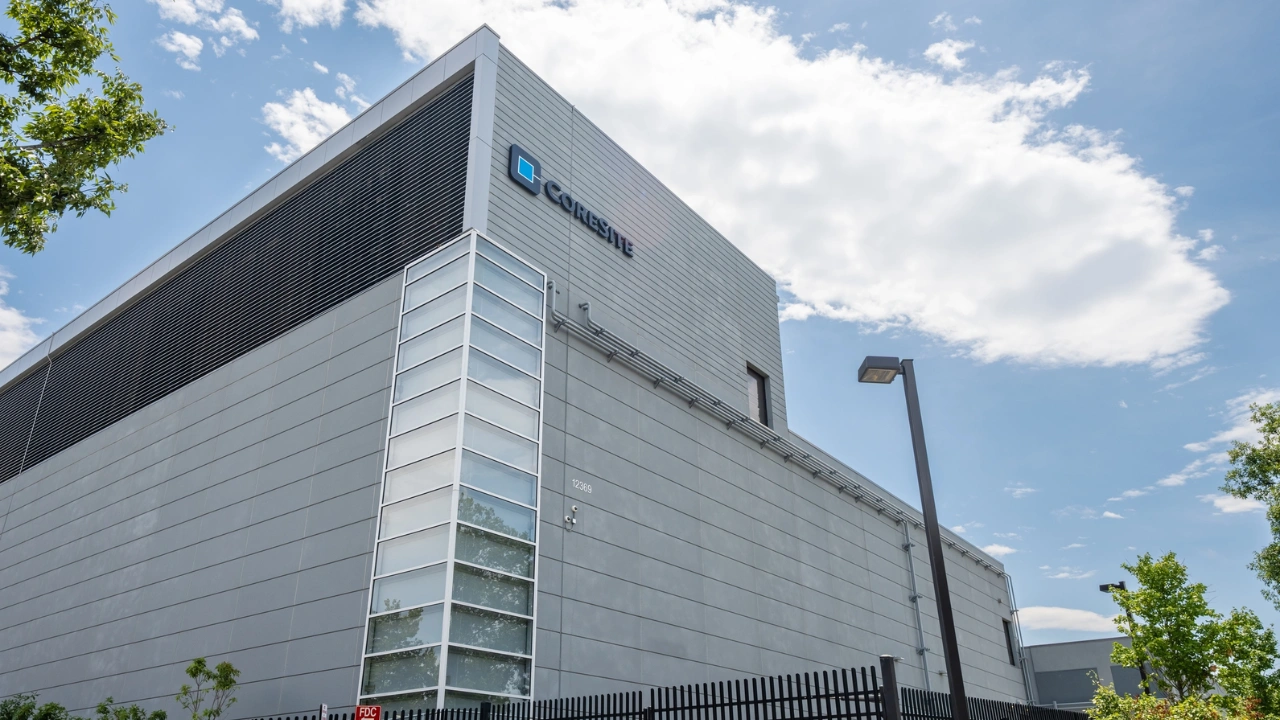
The demand for artificial intelligence and digital infrastructure is officially reshaping Orlando's commercial real estate market. Furthermore, nowhere is that transformation more visible than in the high-growth 32819 zip code, where tech infrastructure giant CoreSite is seeking environmental approval to construct a second data center on its existing campus at 9701 South John Young Parkway — right near the SR-528 interchange.
As a result, what was once a straightforward colocation campus is now at the epicenter of one of the most consequential land-use debates happening in Central Florida today. In addition, it sits squarely at the intersection of AI economics, commercial real estate strategy, and municipal politics.
The Expansion: What CoreSite Is Proposing
CoreSite, which became part of American Tower Corporation after the 2021 acquisition, operates its Orlando OR1 campus as a large colocation facility on a 16-acre site. The company has served businesses of all sizes in Central Florida with secure, scalable digital infrastructure — and now it wants to grow significantly.
According to permit modification records, the proposed second building is a two-story, 76,000-square-foot facility. Notably, it would be constructed directly on top of an existing parking lot — an approach that maximizes land usage without requiring additional land acquisition. Moreover, that construction method is itself a telling signal about how the company views the long-term value of this location.
"Orlando's goal to be a Future-Ready City offers enterprises, IT services providers and cloud service providers a densely populated market positioned to be a digital transformation leader."
— CoreSite, on its Orlando OR1 campus strategy
The Real Estate Angle: Why This Is a "Location Logic" Play
From a commercial real estate standpoint, what CoreSite is doing here is a textbook example of high-density land conversion. Converting standard parking spaces — historically among the lowest-value uses of commercial land — into AI-grade digital infrastructure is one of the most powerful value-multiplier moves available to a property owner today.
In addition, the 32819 zip code — which encompasses the Dr. Phillips and Bay Hill corridors — has long been one of Orlando's most established commercial corridors. Tech infrastructure investment of this scale doesn't just raise the value of CoreSite's own asset. It also signals to the broader market that the surrounding area is viable for high-tech, high-value commercial development.
Furthermore, Cushman & Wakefield's Q4 2025 Orlando Industrial MarketBeat reported that Orlando's overall industrial vacancy rate fell to 7.2% at the close of 2025 — the lowest level recorded since Q1 2024. That matters because AI-enabled industries and power-intensive data centers are introducing new zoning, utility, and infrastructure considerations that developers and lenders now have to factor into Central Florida deals.
The Political Firestorm: Orlando's Grid and Water Debate
However, the CoreSite expansion isn't just a real estate story — it's also a deeply political one. The proposal has landed in the middle of one of the most heated municipal debates in recent Orange County history.
The issue has also become part of a larger statewide conversation. Orange County Mayor Jerry Demings entered the 2026 Florida governor's race in late 2025, then announced on June 5, 2026 that he was suspending his campaign for health reasons. Even with that change, the policy debate around large-load users, utility costs, water demand, and local land-use authority remains highly relevant for Central Florida real estate observers.
"The rapid proliferation of data centers has led to massive spikes in electricity rates, with some areas seeing monthly power prices inflate by as much as 267 percent between 2020 and 2025."
— Bloomberg Analysis, cited by Built In, April 2026
The concerns aren't limited to politics, either. The North American Electric Reliability Corporation's 2025 Long-Term Reliability Assessment warned that demand growth from AI and the digital economy is intensifying resource adequacy risks across North America. In Florida, SB 484 — signed into law by Governor Ron DeSantis on May 7, 2026 — created new protections designed to keep hyperscale data center infrastructure costs from being shifted onto residential ratepayers.
The Other Side: Why Data Centers Also Strengthen Communities
Nevertheless, it's important to recognize that the debate is not one-sided. Proponents argue that data centers like CoreSite's OR1 function as anchor tenants that actually strengthen local grid economics. Because they provide steady, predictable baseline power demand, these facilities allow utilities to plan infrastructure investments more efficiently — and in some cases, their large electric bills help offset costs for residential customers rather than increase them.
Moreover, Florida's own data center industry advocates contend that advancing cooling and energy-efficiency technology is rapidly mitigating the environmental concerns associated with older-generation facilities. As the AI infrastructure arms race continues, newer builds increasingly incorporate renewable energy sourcing and closed-loop water recycling systems that reduce the operational footprint significantly.
What This Means for Orlando Real Estate Investors and Owners
For anyone active in Orlando's commercial real estate market — whether as an investor, developer, or property owner — the CoreSite expansion is a clear signal worth paying close attention to. The 32819 zip code is no longer just a strong tourism and hospitality corridor. Consequently, it is actively becoming a node in Florida's emerging AI infrastructure map.
In addition, the political environment around data center approvals in Florida is shifting rapidly. Therefore, understanding both the economic upside and the regulatory headwinds is essential for anyone trying to get ahead of where this market is going. This expansion — pending environmental approval — could be a preview of many more such projects across Central Florida in the months and years ahead.
The Takeaway
CoreSite's proposed Orlando data center expansion is more than a construction project. It is a microcosm of the larger forces reshaping commercial real estate, energy policy, and community planning across Florida in 2026. Furthermore, the real estate value implications of AI-driven infrastructure investment are real — and they are accelerating. Whether Orlando's leaders ultimately approve this project or push back, the underlying demand driving it is not going away.
To stay updated on more stories shaping Orlando's real estate and business landscape, browse the full Community Spotlight series here. As Orlando grows, the next wave of real estate value will be shaped not only by rooftops and retail corridors, but also by the hidden infrastructure powering the digital economy.
Got Questions?
Frequently Asked Questions
What is CoreSite building in Orlando, and where is it located?
CoreSite, a subsidiary of American Tower Corporation, has applied to modify an existing environmental permit to construct a second data center building at its Orlando campus at 9701 South John Young Parkway (zip code 32819). The proposed two-story, 76,000-square-foot facility would be built directly over an existing parking lot, adding significant capacity to its current 129,000-square-foot footprint near the SR-528 interchange.
How does a data center expansion affect commercial real estate values in the 32819 area?
Data center expansions like CoreSite's tend to increase the underlying land value of surrounding commercial real estate by converting low-density assets — like parking lots — into high-density, high-value digital infrastructure. However, the increased demand for power and water can also trigger new zoning considerations and infrastructure costs that affect the broader development landscape in the area. For the 32819 market specifically, this signals growing tech-sector confidence in the corridor's long-term commercial potential.
Why are data centers so controversial in Florida right now?
Data centers have become a major political flashpoint in Florida in 2026. Critics argue that AI-driven facilities place enormous strain on local power grids and water supplies, potentially raising utility bills for residents. Florida's SB 484, signed into law in May 2026, already prohibits utilities from passing data center infrastructure costs onto residential ratepayers. Florida's SB 484 and the broader discussion around large-load utility users reflect the growing political pressure around these developments statewide.
What should Orlando property owners watch as data center demand grows?
Property owners should watch zoning activity, utility capacity, road access, nearby commercial land sales, and any local discussion around water or power infrastructure. Data center demand can strengthen certain commercial corridors, but it can also create new approval hurdles and public-policy debates that influence future development timelines.
Does this mean 32819 is becoming a tech infrastructure corridor?
It is too early to call 32819 a full tech infrastructure corridor, but CoreSite's investment is a meaningful signal. The area's access to major roads, established commercial nodes, tourism demand, and proximity to Orlando's broader business base make it a location worth monitoring as AI, cloud, and data infrastructure continue expanding across Central Florida.
External Links & Related Reading
Ready for your next move in the Orlando market?
Whether you are planning to sell, preparing to buy, or simply want expert guidance on your next step, the Jared Jones Team can help you move with clarity and confidence.