
What should you know before buying a new construction home in Florida? Resale, lot premiums, inspections and the Florida defect-claim timelines in Chapter 558 and section 95.11.
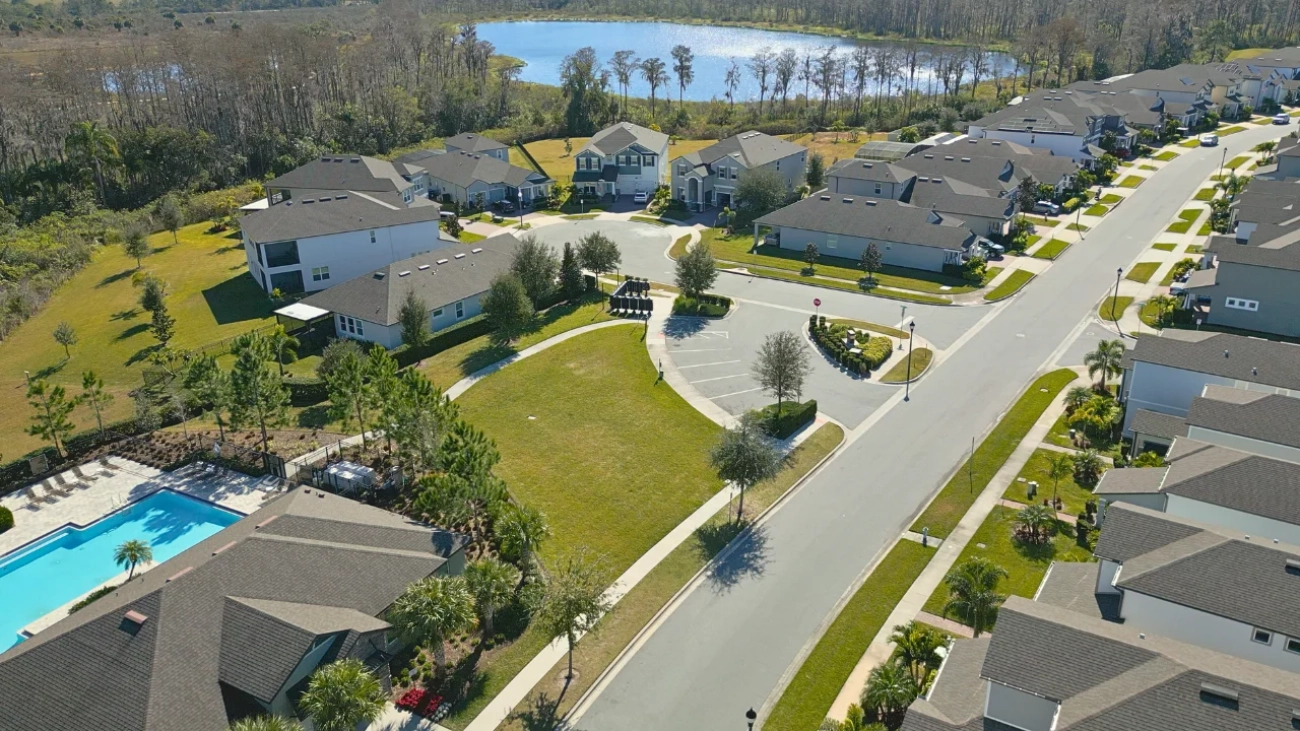
What should you know before buying a new construction home in Florida? Resale, lot premiums, inspections and the Florida defect-claim timelines in Chapter 558 and section 95.11.
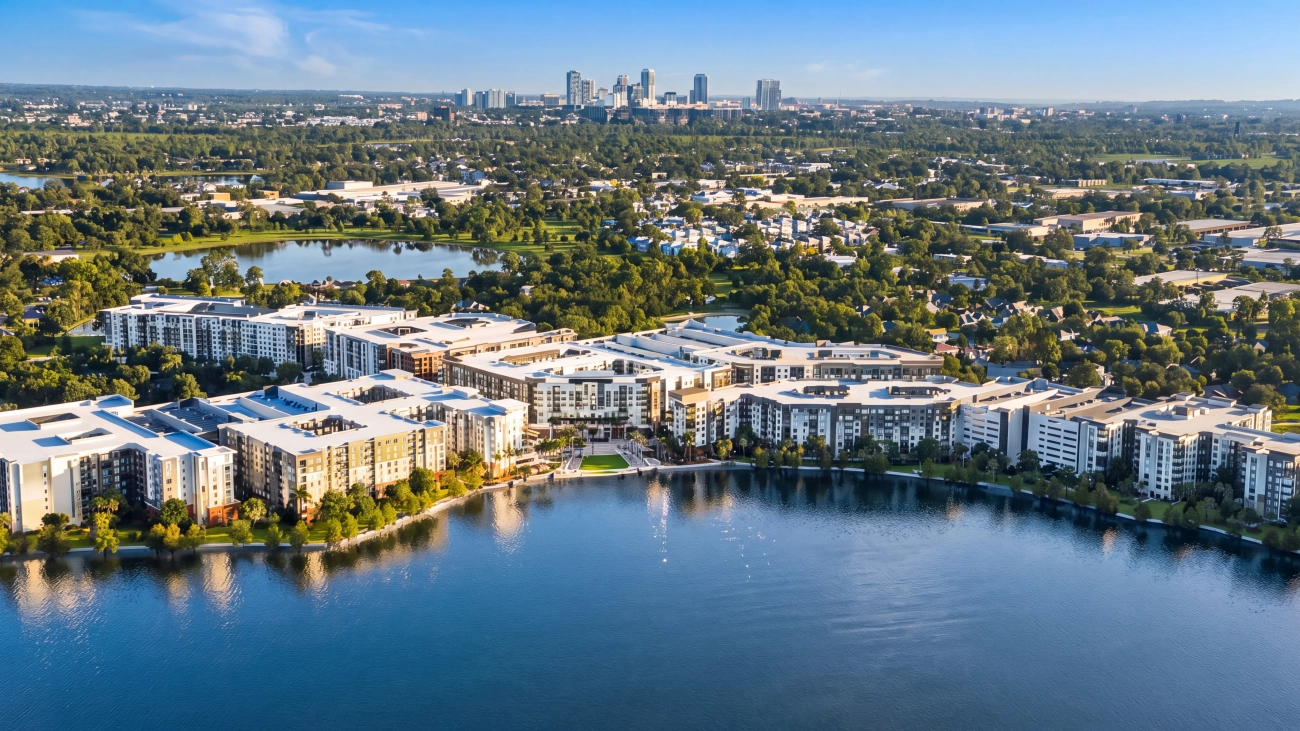
Which big projects are changing Orlando by 2027? Status of the AdventHealth tower, Arte Museum at ICON Park, Ocoee pickleball complex, Orlando Storm and Fashion Square.
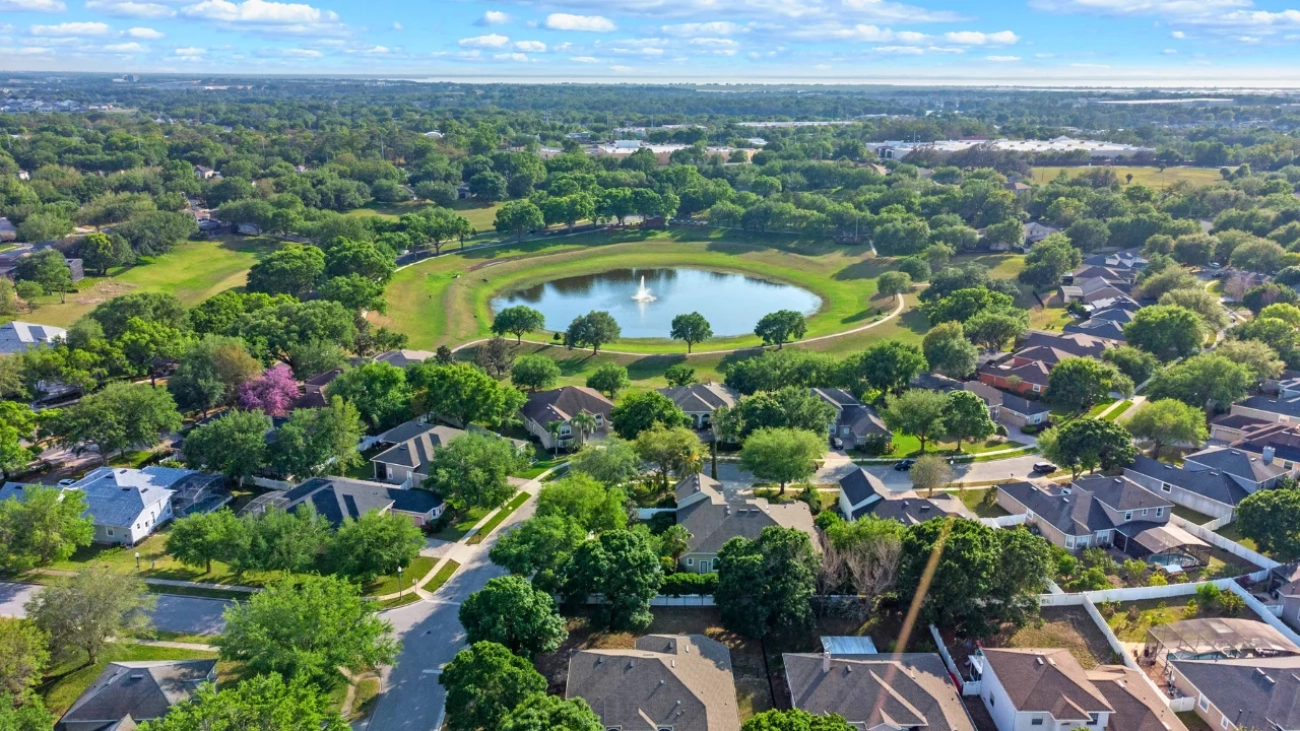
Which Florida laws affect homeowners in 2026? HB 1203 HOA limits, the HB 621 squatter removal law and Amendment 3 on the Nov. 3, 2026 ballot, with official sources.

What is being built in Clermont and Minneola? Census growth data plus Minneola Ridge, Shepherd’s Landing, Sunny Ridge at Sugarloaf Mountain and Clermont’s downtown waterfront plan.

Which Orlando-area suburbs have the longest commutes? Census commute times for Poinciana, Davenport, St. Cloud, Kissimmee and Apopka, plus the road projects coming.

St. Cloud, FL in 2026: Census population and housing data, the $60M downtown City Center, Crossprairie’s Heritage plan, Turnpike widening and new public facilities.

What living in Dr. Phillips looks like in 2026: Census home values and owner costs, Dr. P. Phillips Community Park, Bill Frederick Park, Restaurant Row, the library and the pros and cons.
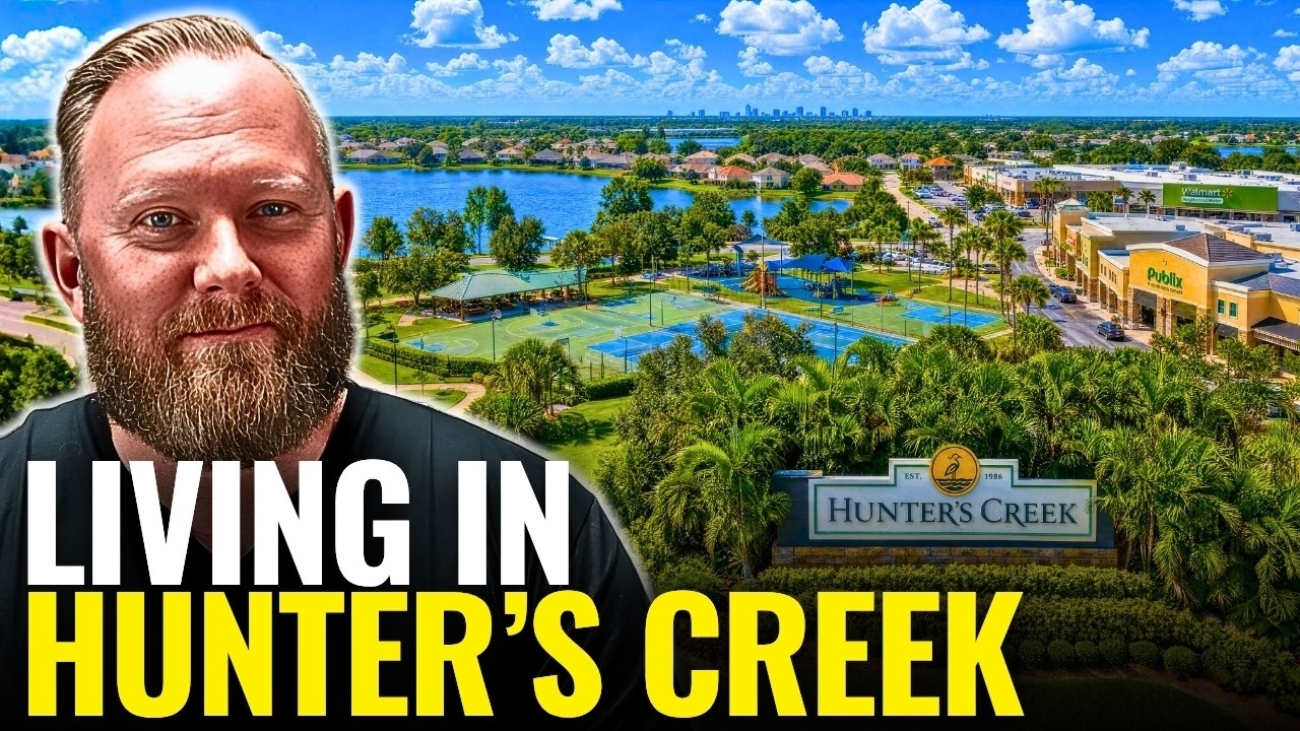
What living in Hunter’s Creek looks like in 2026: home types, seven resident parks, 11+ miles of paths, Census home values and owner costs, location and the pros and cons.

What to check before buying a Florida pool home: Chapter 515 safety features, the 4-foot barrier rule, resurfacing and service costs from public sources, insurance questions and a pool inspection list.

South Orlando area by area: Hunter’s Creek, Meadow Woods and its SunRail stop, Vista Lakes and EverBe, plus the pros and cons, from highway access to tolls and CDDs.

South Orlando in 2026: the $89.8 million Boggy Creek Road widening, AdventHealth Lake Nona, five new MCO Terminal C gates, Hilliard Isle and school changes, with sources.

Lake Nona is a 17-square-mile Tavistock community beside MCO. Here is what you get, how 32827 and 32832 differ, where special-district fees apply and what to check first.

Quick answer
As of October 2026, a car with E-PASS or SunPass pays $1.02 to $1.38 at each SR 408 and SR 417 main plaza near East Orlando, per CFX. A trip through the Dean and Conway plazas on SR 408 costs $2.40. Pay By Plate doubles every toll.
| Fact | Figure |
|---|---|
| SR 408 Conway Main Plaza (E-PASS / Pay By Plate) | $1.38 / $2.76 |
| SR 408 Dean Main Plaza (E-PASS / Pay By Plate) | $1.02 / $2.04 |
| SR 417 University Main Plaza (E-PASS / Pay By Plate) | $1.02 / $2.04 |
| SR 417 Curry Ford Main Plaza (E-PASS / Pay By Plate) | $1.02 / $2.04 |
| Pay By Plate vs electronic rate | 2 times the electronic rate |
| E-PASS volume credit | 20% at 40 to 79 CFX tolls a month; 25% at 80 or more |
| Average E-PASS cost per mile | About 14 cents |
Sources: Central Florida Expressway Authority, Toll Rates as of July 1, 2026 (checked Oct 29, 2026); CFX, E-PASS Discounts and FAQs (checked Oct 29, 2026); Jared Jones – Orlando Living (YouTube), video premiere Oct 29, 2026.
A car with a transponder pays $1.02 at the Dean Main Plaza and $1.38 at the Conway Main Plaza on SR 408, so a trip through both main plazas costs $2.40 one way, according to the CFX toll rate chart effective July 1, 2026.
SR 408, the Spessard L. Holland East-West Expressway, is the main expressway link between the Alafaya Trail area and downtown Orlando. Ramp tolls add or replace main plaza charges depending on where you get on and off: CFX lists $1.02 at the Semoran Blvd. (SR 436) ramp, $1.38 at Andes/Semoran Blvd. and $0.70 at the Dean Road and Rouse Road ramps. In the Oct 29, 2026 video, Jared says the 408 and 417 corridors are the key to understanding East Orlando, so price your own route before you compare homes.
CFX charges $1.02 at the University Main Plaza and $1.02 at the Curry Ford Main Plaza on SR 417 for a car with a transponder, and $0.70 at nearby ramps such as University Blvd., Colonial Drive (SR 50) and Curry Ford Road, as of July 1, 2026.
SR 417, the Central Florida GreeneWay, runs north and south along the east side of Orange County and connects toward Oviedo, Lake Nona and Orlando International Airport. Trips that head south toward the airport pass more plazas, so the CFX Toll Calculator is the simplest way to price an exact start and end point.
Pay By Plate costs twice the electronic rate at every CFX toll point, so the $1.38 Conway Main Plaza toll becomes $2.76 and a $0.70 ramp becomes $1.40.
CFX replaced its old $0.20 per-transaction fee with this all-inclusive Pay By Plate rate. Invoices go by mail to the registered owner each month and are due within 30 days. The free E-PASS sticker, or a SunPass or E-ZPass account, gets you the lower electronic rate.
Use E-PASS and drive CFX roads often enough to reach the volume credit: 20% back at 40 to 79 paid CFX tolls per transponder in a month, and 25% at 80 or more.
CFX applies the credit automatically to all eligible CFX tolls from that month, with no fees, as long as the account stays in good standing. The program counts only CFX-owned expressways and only E-PASS and Uni transponders, so a SunPass on the same trips pays the electronic rate without the volume credit. A weekday round trip through two main plazas is four tolls a day, which reaches 40 tolls in about 10 workdays.
Most likely, yes, because CFX adjusts its toll rates every year by 1.5% or the annual Consumer Price Index under the Customer-First Toll Policy its board approved in 2017.
The current schedule took effect July 1, 2026. When you compare a home near SR 408 or SR 417 with one closer to work on surface roads, add a yearly toll estimate to your monthly budget next to insurance, property taxes and any HOA or CDD fees.
It depends on where you enter and exit, because CFX charges at main plazas and some ramps. A car with E-PASS or SunPass pays $1.02 at the Dean Main Plaza and $1.38 at the Conway Main Plaza, so a trip through both costs $2.40 one way, per CFX rates effective July 1, 2026. Pay By Plate doubles each toll.
Yes. CFX says Pay By Plate toll rates are double the electronic rate at every CFX toll point. For example, the Conway Main Plaza on SR 408 is $1.38 with a transponder and $2.76 by plate for a two-axle car, per the CFX toll rate chart effective July 1, 2026. Invoices are mailed monthly and are due within 30 days.
Yes. CFX accepts E-PASS, SunPass, E-ZPass and other compatible transponders at the electronic rate, and its roads are cashless. The one difference is the volume savings program: CFX says the 20% to 25% monthly credit is for E-PASS and Uni customers only and counts only trips on CFX-owned expressways, not other Florida toll roads.
CFX credits E-PASS accounts automatically when one transponder has 40 or more paid CFX tolls in a calendar month. From 40 to 79 tolls the credit is 20%, and at 80 or more it is 25%, applied to all eligible CFX tolls that month. There are no sign-up steps or processing fees, but the account has to stay in good standing.
For a two-axle car with a transponder, CFX lists $1.02 at the University Main Plaza and $1.02 at the Curry Ford Main Plaza on SR 417, with many nearby ramps at $0.70, as of July 1, 2026. Pay By Plate rates are $2.04 and $1.40. Use the CFX Toll Calculator to price your exact entry and exit points.
Usually, yes. Under the Customer-First Toll Policy the CFX Board approved in 2017, toll rates adjust each year by 1.5% or the annual Consumer Price Index. The current schedule took effect July 1, 2026. When you compare East Orlando homes, plan for tolls to rise a little each year rather than staying flat.
The $2.6 billion RoseArts figure is an estimated economic output from a commissioned study, not a construction cost. What is approved, what Phase 1 includes and what to watch next.

The Minneola Marketplace Walmart was withdrawn and Equinox is buying the 74-acre site, while Walmart plans a Neighborhood Market on U.S. 27.

Orange County lost a net 20,271 domestic movers from 2024 to 2025, mostly to Osceola, Seminole, Lake and Polk. Census and IRS data, explained.

Orange County approved a $786 million tourist development tax plan for 13 projects in a 6-1 vote. See where the money goes, from the Dr. Phillips Center to Eatonville, UCF and Winter Garden.


Quick answer
As of October 2026, Florida’s milestone inspection and reserve study laws apply only to condo and co-op buildings three stories or taller. A DBPR-based tracker counts 213 of Orange County’s 348 larger condo communities as built before 1997, and Jared Jones notes most Orlando-area condos are under three stories.
| Fact | Figure |
|---|---|
| Buildings covered | Condo and co-op buildings 3+ habitable stories |
| Milestone inspection trigger | Age 30 inland, age 25 within 3 miles of the coast |
| Reserve study (SIRS) cycle | Required every 10 years for qualifying buildings |
| Reserve waiver rule | No more waiving reserves for 8 structural items as of Jan. 1, 2026 |
| Orange County communities pre-1997 | 213 of 348 (25+ unit communities) |
| Orange County with a SIRS on file | 25 of 213 (12%) |
| Statewide units affected | About 9,263 pre-1997 condo communities statewide |
Sources: Florida DBPR Condominium FAQs (checked Oct 28, 2026); City of Orlando Building Division (checked Oct 28, 2026); condoduedate.com Orange County data, pulled from DBPR filings Oct 3–24, 2026; Jared Jones – Orlando Living (YouTube), video published Oct 25, 2026.
Florida’s law covers only condominium and cooperative buildings that are three or more habitable stories; single-family, two-family, three-family dwellings, and buildings with three or fewer habitable stories are exempt, per the state’s Condominium Association FAQs.
The rule has two parts. A milestone inspection is a structural assessment by a licensed architect or engineer, and a Structural Integrity Reserve Study (SIRS) is a funding plan covering specific structural components such as the roof, load-bearing elements, plumbing, electrical systems, and waterproofing. In the Oct 25, 2026 video, Jared points out that a lot of the mid-size Orlando-area condos he reviews with buyers sit below the three-story cutoff, which means the building itself is exempt even though the community still carries an HOA.
A qualifying building needs its first milestone inspection by age 30 if it is inland, or age 25 if it sits within three miles of the coast, and then again every 10 years after that, according to the City of Orlando’s Building Division.
Orlando’s building division runs this as a two-phase process: Phase One is an initial visual structural assessment, and if that turns up deficiencies, Phase Two requires a more detailed engineering report within 180 days. Owners then have 365 days after submitting a report to pull permits for any required repairs. The City notifies associations by certified letter when an inspection becomes due.
A SIRS is the funding study that tells a condo association how much it must set aside for the eight big-ticket structural items, and as of January 1, 2026, associations can no longer vote to waive or reduce that reserve funding, per Florida’s DBPR.
For a buyer, this matters because an association that is behind on its SIRS or reserve funding can hit owners with a special assessment once the study or an inspection turns up deferred maintenance. Before writing an offer on an older Orlando-area condo, ask the association for its most recent SIRS, milestone inspection report (if the building qualifies), and reserve account balance.
Of Orange County’s 348 condo communities with 25 or more units, 213 were built or declared before 1997, which puts their first milestone inspection deadline at or before the end of 2026, and only 25 of those 213 (about 12%) had a SIRS on file as of the most recent DBPR filings.
A statewide review by Florida’s Office of Program Policy Analysis and Government Accountability, reported locally by ClickOrlando (WKMG), found that Orange and Osceola counties were both among the areas with buildings flagged as unsafe or uninhabitable after a milestone inspection in 2024 and 2025, out of 30 buildings flagged in 2024 and 24 more in 2025 statewide. Repair permit values in that review ranged from under $1,000 to as much as $30 million per building.
It mainly shows up in the HOA line, not the mortgage line: buildings that must fund a SIRS can no longer spread that cost thin by waiving reserves, so dues on older, taller buildings are rising faster than on exempt low-rise communities.
In the Oct 25, 2026 video, Jared’s own townhome-versus-apartment math already shows HOA dues eating into the ownership-cost comparison; a condo subject to SIRS funding adds another variable on top of that, which is why he tells buyers to pull the association’s financials and reserve study status before comparing a condo’s total monthly cost to a comparable rental.
No. Only condo and cooperative buildings with three or more habitable stories are covered by Florida’s milestone inspection law. Single-family, two-family, and three-family dwellings, and any condo building with two stories or fewer, are exempt. Many Orlando-area condo communities are low-rise and fall under this threshold, which Jared Jones notes in his Oct 25, 2026 video on rent versus buy.
A qualifying building (three or more habitable stories) needs its first milestone inspection by age 30 if it is located inland, or by age 25 if it sits within three miles of the coast. Inspections then repeat every 10 years. Orlando’s Building Division sends certified notice to the association when an inspection becomes due, per the City of Orlando.
No, not for the structural items covered by the Structural Integrity Reserve Study. As of January 1, 2026, associations subject to SIRS requirements can no longer waive or reduce reserve funding for components like the roof, load-bearing elements, plumbing, electrical systems, and waterproofing, according to Florida’s DBPR Condominium FAQs.
A failed Phase One inspection triggers a required Phase Two engineering report within 180 days, and owners then have 365 days after submitting that report to pull permits for repairs. A statewide OPPAGA review reported by ClickOrlando found 30 buildings flagged unsafe in 2024 and 24 more in 2025, including buildings in Orange and Osceola counties, with repair permits as high as $30 million.
Ask the condo association directly for its most recent Structural Integrity Reserve Study, milestone inspection report (if the building is three or more stories), and current reserve account balance before you write an offer. As of October 2026, only about 12% of Orange County’s pre-1997 condo communities had a SIRS on file with the state, so do not assume the paperwork already exists.
No. The law applies specifically to condominium and cooperative buildings with three or more habitable stories. Townhomes and buildings with three or fewer habitable stories, including most single-family, two-family, and three-family dwellings, are excluded, per Florida’s DBPR Condominium FAQs, so a typical low-rise Orlando townhome community is not subject to it.


Quick answer
As of October 2026, the state’s latest stability report shows average homeowners premiums fell in 51 of Florida’s 67 counties between January and July 2026, as litigation reform and new carriers reshape the market; Orange County’s average sits near $3,610 a year.
| Fact | Figure |
|---|---|
| Counties with lower avg. premiums (Jan-Jul 2026) | 51 of 67 |
| Orange County avg. premium with wind coverage | ~$3,610/year |
| FL share of national insurance lawsuits, 2020 | 79% |
| FL share of national insurance lawsuits, 2025 | 41% |
| Lawsuit filings, early 2026 vs. same period 2025 | down 25% |
| New insurers entered FL since 2022-23 reforms | 20 carriers |
| Citizens Property Insurance policies in force (June 5, 2026) | 293,465 (about 1.2 million at year-end 2022) |
Sources: Florida Office of Insurance Regulation, Property Insurance Stability Report (checked Oct 28, 2026); Insurance Business Magazine (checked Oct 28, 2026); Citizens Property Insurance Corporation market share report (checked Oct 28, 2026); Jared Jones – Orlando Living (YouTube), video published Sep 15, 2026.
Yes, in most counties, based on the state’s own data. The Florida Office of Insurance Regulation’s Property Insurance Stability Report found that average homeowners premiums including wind coverage decreased in 51 of the state’s 67 counties when comparing the January 2026 and July 2026 reports.
The decreases are modest rather than dramatic. In the five Palm Beach-area counties WFLX reported on, average premiums fell between 0.6% and 2.7%, not the double-digit swings homeowners saw during the 2021-2023 crisis years. Jared called this a “stabilizing” market rather than a sudden windfall in the Sep 15, 2026 video, and cautioned that an individual household’s bill depends on its own carrier, roof age, and claims history.
Orange County’s average premium with wind coverage runs around $3,610 a year, a bit below the statewide average of $3,757 in the July 2026 state report, and well below coastal Miami-Dade at $5,975. The broader statewide decline is tied to two forces: fewer insurance lawsuits and more companies competing for business.
Florida’s share of the nation’s homeowners insurance lawsuits fell from 79% in 2020 to 41% by 2025, and filings dropped another 25% in the first months of 2026 compared to the same period a year earlier. Fewer lawsuits mean lower legal-defense costs baked into every policy statewide, including in Orange County.
State lawsuit reform passed in 2022 and 2023 is the factor insurers and regulators point to most often. The changes eliminated the one-way attorney-fee rule that let plaintiffs’ attorneys collect fees far larger than the underlying claim, which had made Florida an outlier for insurance litigation nationwide.
With that incentive removed, personal residential lawsuit filings against property insurers have declined every year since, and regulators describe the resulting rate relief as a byproduct of lower litigation costs rather than a mandated rate cut.
Yes. Twenty new property and casualty insurers have entered the Florida market since the 2022-23 reforms took effect, bringing more than $850 million in new capital into the state, according to the Florida Office of Insurance Regulation. More carriers competing for the same pool of homes is one of the preconditions for prices to stabilize.
At the same time, Citizens Property Insurance Corporation, the state-backed insurer of last resort, reported 293,465 policies in force as of June 5, 2026, down from roughly 1.2 million at year-end 2022, so most homeowners policies are now written by private carriers. In the Sep 15, 2026 video, Jared noted that this shift back toward private carriers is a sign the market is “heading in a healthier direction,” even if it isn’t “mission accomplished.”
Regulators and Jared both frame the current data as stabilization, not a guarantee of continued cuts. The state’s report measures average premiums across all policies in a county, so an individual home’s quote can still rise if its roof is older, it sits in a higher-risk flood zone, or its current carrier is pricing differently than the county average.
Buyers budgeting for a purchase in Orange, Osceola, Seminole, or Lake counties should still get a firm insurance quote before writing an offer, since the countywide average is a planning benchmark, not a quote for any specific address.
Maybe, but not automatically. The state’s data shows the average premium fell in 51 of 67 Florida counties between the January 2026 and July 2026 reports, but that is a countywide average across all carriers and policy types. Your individual bill depends on your specific insurer, your home’s age and roof condition, your claims history, and whether your carrier adjusted its own rates during that window.
It is a report published twice a year by the Florida Office of Insurance Regulation that tracks average homeowners insurance premiums, including wind coverage, county by county. The July 2026 edition compared data from January 2026 to July 2026 and found average premiums decreased in 51 of the state’s 67 counties over that period.
Orange County’s average homeowners premium with wind coverage runs around $3,610 a year, which places it among the lower-cost counties statewide because it is inland and does not face direct storm surge. Averages for Orange, Osceola, Seminole, and Lake counties tend to run lower than coastal counties due to reduced wind and surge exposure.
Florida carried a disproportionate share of the nation’s homeowners insurance lawsuits, representing 79% of all such lawsuits nationwide in 2020 versus the other 49 states combined. That litigation volume, combined with fraud and multiple insurer insolvencies, drove up costs across the market before the state passed lawsuit reform in 2022 and 2023.
No. Citizens Property Insurance Corporation, the state-backed insurer of last resort, reported 293,465 policies in force as of June 5, 2026, down from roughly 1.2 million at year-end 2022, according to Insurance Business Magazine’s summary of the July 2026 state report. Most Florida homeowners policies are now written by private carriers.
Regulators describe the current trend as market stabilization rather than a guaranteed path to lower bills. Lawsuit filings keep declining and new carriers keep entering the state, both of which support continued rate relief, but individual premiums still vary by carrier, property condition, and location, so there is no statewide guarantee every policy will drop further.
Quick answer
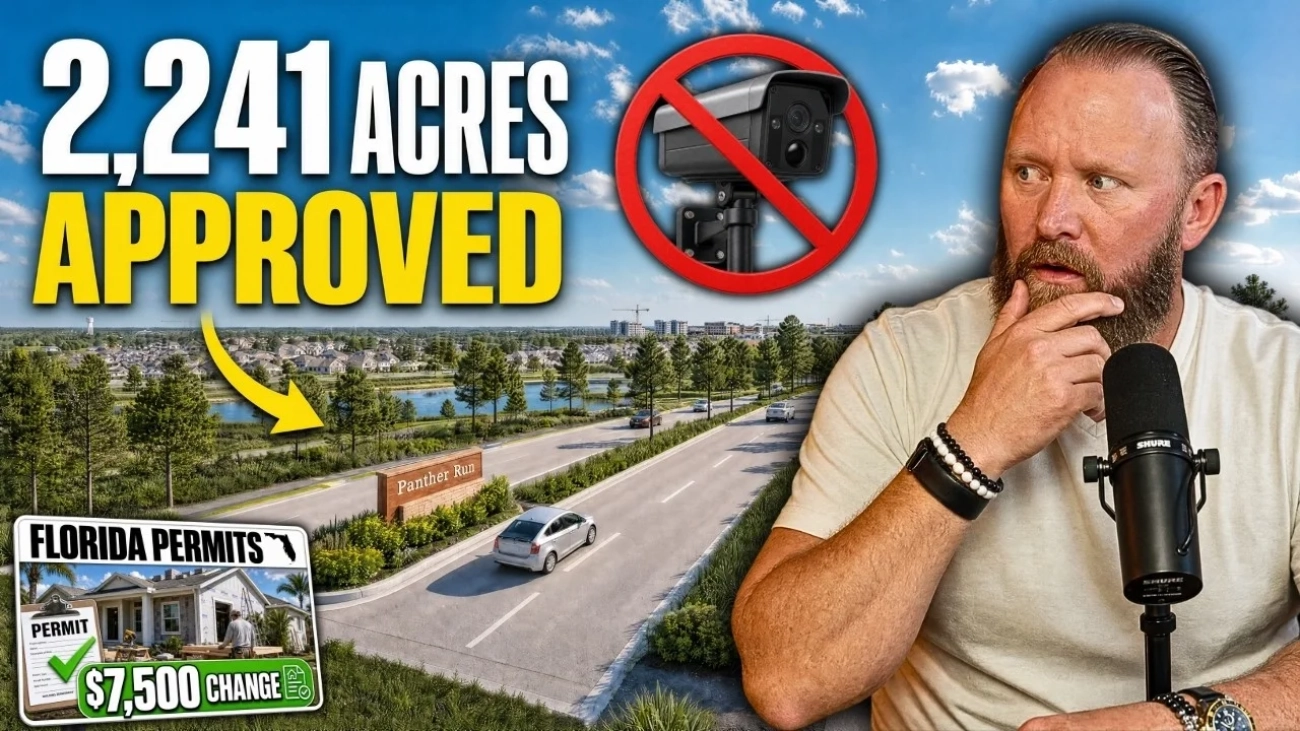
As of October 2026, Florida has ordered an estimated 700 Flock-style license plate cameras removed from state roads after an August 31, 2026 FDOT order, and at least 21 Central Florida law enforcement agencies have also suspended or ended their own camera programs.
| Fact | Figure |
|---|---|
| FDOT order issued | August 31, 2026 |
| Cameras ordered off state roads | Estimated 700 statewide |
| Removal deadline | 30 days, by September 30, 2026 |
| Lake County commission vote | 5-0 to remove county-permitted cameras |
| Oviedo | Ended its 5-year Flock contract early |
| Brevard County Sheriff’s Office | Terminated its program, including access to privately owned camera data |
| Winter Park Police Department | 90-day suspension of its camera network |
Sources: WUSF, Aug 31, 2026 (checked Oct 28, 2026); ClickOrlando, Sept 1, 2026; WFTV, Sept 1, 2026; WCJB, Sept 30, 2026; Jared Jones – Orlando Living (YouTube), video published Sep 20, 2026.
The Florida Department of Transportation revoked general-use permits for automated license plate reader (ALPR) systems, including Flock Safety cameras, on state road rights-of-way in a memorandum issued August 31, 2026. FDOT cited a rapid increase in camera deployments along with privacy and misuse concerns as the reason for the order.
In the Sep 20, 2026 video, Jared Jones described it as an unusually fast reversal of a surveillance network that expanded across Central Florida with little public debate and was then dismantled within about 48 hours, largely because a permit administrator pulled the authorization rather than through a new law.
At least 21 law enforcement agencies across 7 Central Florida counties, including Brevard, Lake, Orange, Osceola, Seminole, Sumter, and Volusia, suspended or ended ALPR programs within days of the FDOT order. Lake County commissioners voted 5-0 on September 1, 2026, to remove camera permits on county roadways, following a push from Commissioner Anthony Sabatini.
Oviedo ended its 5-year Flock contract early, Altamonte Springs Police Department suspended its network immediately, and Brevard County Sheriff Wayne Ivey terminated his agency’s program the same day as the FDOT order. Not every agency went as far: Winter Park Police Department opted for a 90-day suspension rather than a full shutdown.
Agencies had 30 days from the August 31, 2026 order to physically remove cameras from state road rights-of-way, with the deadline landing on September 30, 2026. Some agencies, such as Groveland and Indian Harbour Beach, pulled specific camera units from state-road entry points while keeping discretion over cameras on local roads.
Brevard County Sheriff’s Office went further than most, also suspending its access to the broader Flock database countywide, which included data from cameras mounted on private property, not just the cameras the agency owned itself.
The FDOT order only applies to cameras on state road rights-of-way, not to cameras an HOA or private community places on its own roads. In the Sep 20, 2026 video, Jared Jones noted that some HOAs have separately contracted for ALPR cameras, and he recommended homeowners ask their HOA where that camera data goes, how long it is kept, who can access it, and whether it is shared with outside agencies.
Because county and city decisions apply only to publicly permitted cameras, a community’s privately installed system is a separate contract that residents would need to review with their HOA board directly.
The FDOT order revokes existing permits and halts new ones on state rights-of-way, but it does not amount to a statewide ban on ALPR technology everywhere in Florida. Some agencies framed their pause as temporary, including Brevard County Sheriff Wayne Ivey, who said the suspension was meant to hold until state lawmakers address how camera data is collected, stored, and shared.
Any future return of cameras to state roads would require a new FDOT permit policy or legislative action, and local governments would separately decide whether to reauthorize cameras on their own roads.
An automated license plate reader, or ALPR, is a camera that uses AI to photograph passing vehicles and log their license plate, location, time, and sometimes vehicle color or markings. Flock Safety is the brand most widely used by Florida law enforcement agencies and some HOAs. These systems were deployed on highways, local roads, and private communities before the August 2026 FDOT order.
FDOT issued a memorandum on August 31, 2026, revoking general-use permits that had allowed law enforcement agencies to install ALPR cameras on state road rights-of-way. The agency cited a sharp rise in camera deployments along with data privacy and misuse concerns. The order also stopped new permit approvals for cameras on state roads going forward.
Reporting on the FDOT order put the number of affected ALPR cameras on Florida state roads at an estimated 700. That figure covers cameras on state rights-of-way only; it does not include ALPR cameras that cities, counties, or HOAs operate separately on local or private roads, some of which were removed voluntarily afterward.
Not automatically. The FDOT order only covered state road rights-of-way, but at least 21 agencies across 7 Central Florida counties were listed by ClickOrlando as suspending or ending ALPR use by late September, including Lake County, which voted 5-0 on September 1, 2026, Oviedo, Altamonte Springs, and the Brevard County Sheriff’s Office.
Yes, the FDOT order does not reach cameras an HOA places on its own private roads. If your community has an ALPR contract, ask the HOA board where the camera data goes, how long it is retained, who can access it, and whether it is shared with outside law enforcement or other agencies, since those terms are set by the HOA’s own contract, not state policy.
It is possible, but it would take a new FDOT permit policy or state legislation addressing how camera data is collected, stored, and shared. Some agencies, including the Brevard County Sheriff’s Office, described their suspension as temporary pending that kind of policy, rather than a permanent end to the technology.