
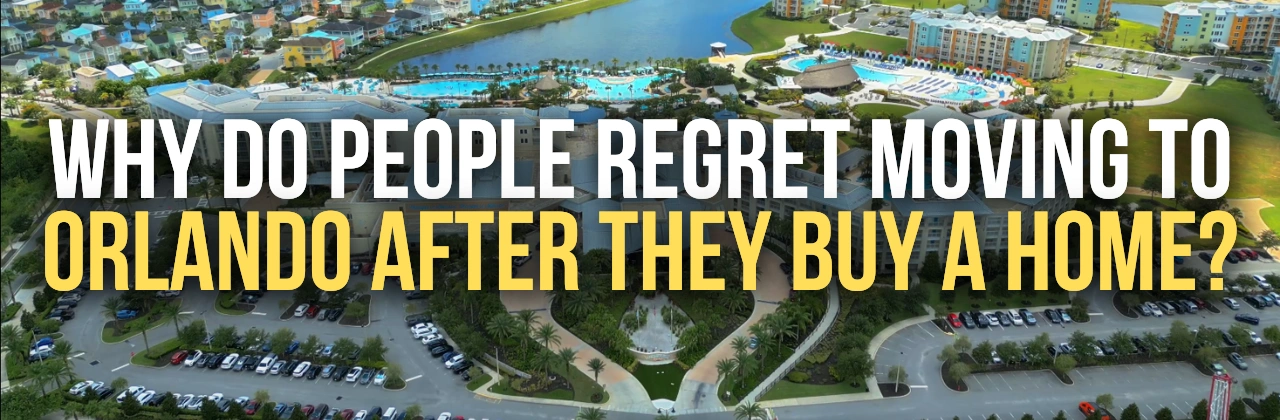
Why Do People Regret Moving to Orlando After They Buy a Home?
The Quick Answer
Most Orlando relocation regret does not come from buying the wrong house. It comes from buying in the wrong submarket. In 2026, a buyer comparing Horizon West, East Orlando, Winter Park, College Park, Lake Nona, and Davenport is not just choosing different homes. They are choosing different commute patterns, traffic exposure, school options, insurance conversations, lifestyle tradeoffs, and resale profiles.
Orlando still offers major upside, including an average commute around 28–29 minutes, no state income tax, Atlantic beach access in roughly 45–55 minutes from some east-side areas, and a much deeper job market than many relocation buyers realize. But the metro is huge, fast-growing, and often misunderstood. The mistake happens when buyers assume every part of Orlando delivers the same daily life.
After 23 years selling Central Florida real estate, nearly 4,000 closed transactions, and more than 200 personal flips, I can tell you the call I hate getting most is not from the person who missed out on a house. It is from the person who already bought, already moved in, and now realizes the neighborhood does not match their life. A buyer looking at Horizon West, East Orlando, Winter Garden, College Park, or the Disney corridor may think they are comparing versions of the same city. They are not. They are comparing completely different daily lives.
6 Key Reasons Buyers Regret Moving to Orlando After They Buy
Orlando relocation regret usually does not come from choosing the wrong house. It comes from choosing the wrong daily life. In 2026, buyers need to compare submarkets, commute patterns, school options, insurance costs, growth pressure, and lifestyle fit before they fall in love with a floor plan.
They bought the house but missed the submarket
Horizon West, East Orlando, Winter Park, College Park, Lake Nona, and Davenport are not just different price points. They create completely different daily routines, resale profiles, and lifestyle tradeoffs.
The commute looked better online than in real life
Orlando’s average commute may be around 28–29 minutes, but buyers can still regret a location if their actual route crosses the wrong traffic corridor, toll pattern, school zone, or I-4 exposure every day.
They underestimated the real monthly cost
A buyer may focus on the purchase price and forget to compare insurance, property taxes, HOA fees, CDD fees, tolls, maintenance, roof age, and long-term affordability by neighborhood.
The lifestyle did not match the floor plan
A newer home can still feel disconnected if the buyer wanted walkability, character, mature trees, local restaurants, or a stronger neighborhood identity. The right bedrooms do not fix the wrong daily experience.
They ignored job-center and airport access
A healthcare worker, aerospace employee, Disney-side executive, Universal-area professional, and remote worker should not shop Orlando the same way. Lake Nona, East Orlando, Dr. Phillips, and Winter Garden solve different problems.
They confused vacation Orlando with everyday Orlando
Theme parks, beaches, restaurants, and growth are part of Orlando’s upside, but daily life depends on where you start. Some areas make the Atlantic coast, airport, hospitals, and entertainment easy to reach, while others can feel much farther away.
Why Do Buyers Regret the Neighborhood More Than the House?
Buyers regret the neighborhood more than the house because daily life happens outside the floor plan. A home can have the right bedrooms, finishes, and payment, but still fail if the commute, traffic corridor, nearby retail, school pattern, or neighborhood feel does not match how the buyer actually lives.
In Orlando, this problem shows up constantly with out-of-state buyers. They shop online, compare photos, and think a bigger house farther out automatically means a smarter purchase.
That can work. It can also create a daily life problem that no upgraded kitchen can fix. A buyer choosing between Horizon West, Davenport, East Orlando, Winter Park, and College Park is not just choosing price points. They are choosing a lifestyle system.
Common Reasons Orlando Buyers Regret Their Location
- The commute looked easy on a map but failed during peak hours.
- The neighborhood felt different at night than it did during the showing.
- The buyer underestimated tolls, I-4 exposure, or school traffic.
- The area was too tourist-heavy for a primary residence.
- The home was newer, but the lifestyle felt disconnected.
- The buyer wanted character but bought in a production subdivision.
- The buyer wanted quiet but chose a growth corridor under construction.
How Does Orlando’s Job Market Change Where You Should Live?
Orlando’s job market matters because this is not just a tourism city. Healthcare, aerospace, defense, education, research, finance, insurance, and professional services all shape where buyers should live. The right Orlando neighborhood depends heavily on where your real work life is centered.
A healthcare buyer may study Lake Nona, Downtown Orlando, Winter Park, or Dr. Phillips differently than an aerospace buyer looking toward East Orlando.
A buyer connected to Disney, Universal, or the hospitality economy may need a completely different map. The mistake is assuming “Orlando” is one job market with one housing strategy. It is not.
Orlando Job Drivers and Buyer-Location Fit

Can You Live in Orlando and Work Near the Space Coast?
Yes, some buyers can live in Orlando and work near the Space Coast, but the location choice has to be intentional. East Orlando, Waterford Lakes, Avalon Park, and areas near the 528 corridor can make more sense than west-side suburbs for certain aerospace and defense workers.
This is one of the most overlooked Orlando relocation strategies. A buyer may assume they must live near the coast if they work near Cape Canaveral, Kennedy Space Center, or one of the major aerospace employers.
But Orlando gives some buyers a different tradeoff: larger suburban infrastructure, more shopping, more schools, more medical access, and a broader housing base. That only works if the commute is tested correctly. East-side access and west-side access are not the same thing.
Space Coast Commute Takeaways
- Start with East Orlando, not the entire Orlando metro.
- Study 528 access before looking at houses.
- Compare actual drive times, not city-to-city estimates.
- Decide whether schools, shopping, or coastal proximity matter more.
- Avoid assuming the prettiest house gives you the best daily life.
How Should Beach Access Shape Your Orlando Move?
Beach access should shape your move because Orlando is not as landlocked as many buyers assume. Depending on where you live, the Atlantic side can be roughly 45–55 minutes away, while Gulf Coast beaches are often closer to 90 minutes or more.
The Atlantic side gives you New Smyrna Beach, Cocoa Beach, and Melbourne Beach. That side often fits buyers who want surf, weekend energy, and easier day trips.
The Gulf side gives you places like Clearwater, St. Pete Beach, and Siesta Key. That side is more associated with calmer water and white sand. But your starting point matters. A buyer in East Orlando may use the Atlantic coast very differently than a buyer in Winter Garden, Clermont, or Horizon West.
Beach Access Comparison
Why Does Commute Strategy Matter More Than Mileage?
Commute strategy matters more than mileage because Orlando traffic is corridor-specific. The average commute may be around 28–29 minutes, but that number does not matter if your specific route puts you through the wrong stretch at the wrong time every day.
This is why buyers get misled by maps. Ten miles in one part of Orlando can feel easy. Ten miles across the wrong corridor can feel exhausting.
The I-4 stories are real, but they are not everybody’s daily life. A buyer living east of the 417 and working in East Orlando may have a very different experience than someone crossing the metro.
Before choosing a home, buyers should run the commute at the exact time they expect to drive. That one step can prevent one of the biggest Orlando relocation regrets.
Commute Checks Before Writing an Offer
- Run the route during morning and evening commute windows.
- Test school-year traffic, not just weekend traffic.
- Compare toll-road and non-toll options.
- Check whether you must use I-4 daily.
- Map your grocery, church, gym, school, doctor, and airport patterns.
- Ask whether the route still works during rain or peak tourism seasons.
Is Orlando Affordability Still a Real Advantage?
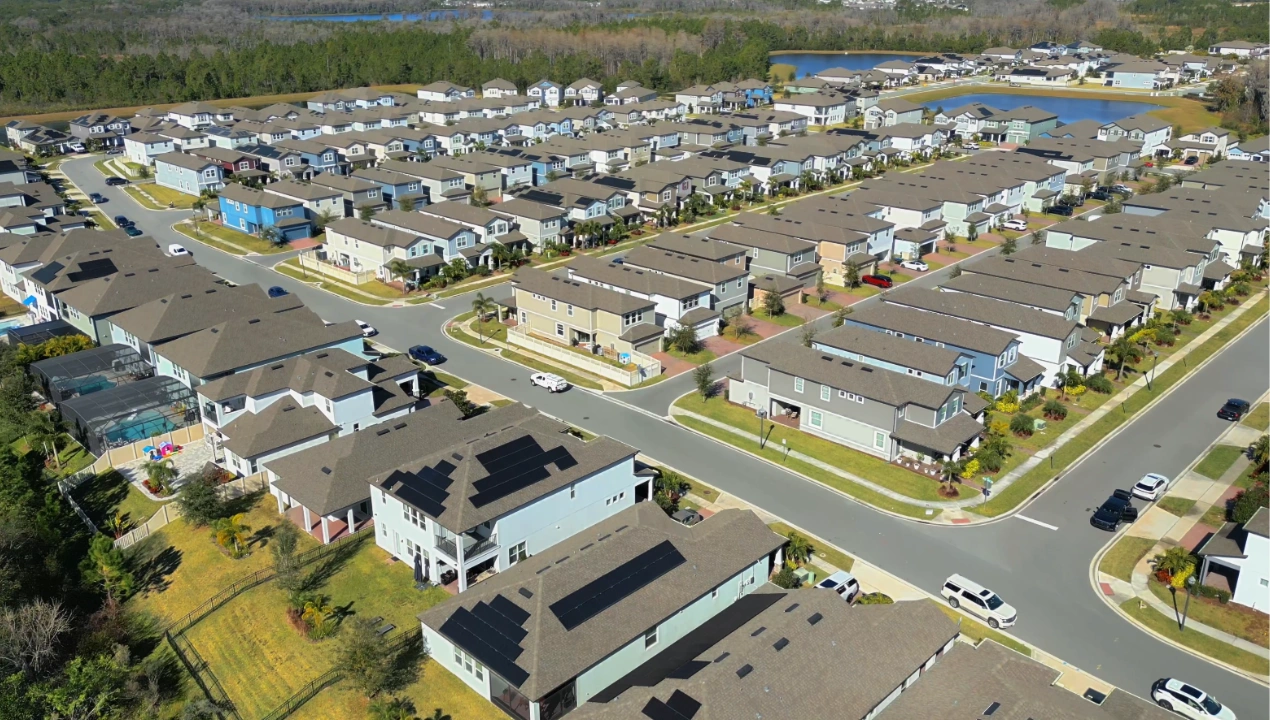
Orlando affordability can still be an advantage, but not if you compare 2026 prices to 2019 prices. That version of the market is gone. The better comparison is Orlando today versus the market you are leaving, including taxes, insurance, income, commute, and lifestyle.
Orlando’s median home price is often discussed around $390,000–$410,000, depending on timing and source. That is not cheap for many households.
But buyers coming from higher-cost states may still find the overall math favorable, especially with Florida’s no state income tax structure.
The danger is stopping the analysis at the purchase price. Insurance, HOA fees, CDD fees, property taxes, tolls, and commuting costs can change the real monthly number.
What Buyers Should Compare Before Deciding Orlando Is Affordable
- Home price
- Down payment
- Interest rate
- Insurance
- Property taxes
- HOA fees
- CDD fees
- Tolls and commute costs
- State income tax difference
- Maintenance age of the home
- Long-term resale demand
Where Does Orlando Feel Less Generic?
Orlando feels less generic in the neighborhoods where history, walkability, architecture, mature trees, and local businesses are part of the daily experience. College Park, Winter Park, Thornton Park, Lake Eola Heights, Baldwin Park, Oakland Park, and Avalon Park all give buyers alternatives to standard suburban sameness.
Some buyers only see Orlando through tourist corridors, major roads, and newer production subdivisions. That creates a false impression.
There are plenty of areas with older homes, front porches, brick streets, local restaurants, mature canopy, and strong neighborhood identity.
The tradeoff is that character usually comes with compromises. Older homes may need more maintenance, pricing may be higher, and inventory can be tighter.
Orlando Areas With More Neighborhood Identity

How Much Do Theme Parks Affect Daily Life in Orlando?
Theme parks affect Orlando’s economy more than they affect most residents’ daily routines. Living here is not the same as vacationing here. For many locals, Disney, Universal, Epic Universe, and the entertainment ecosystem become part of the backdrop rather than the center of everyday life.
That said, the parks still matter. They support jobs, vendors, hotels, restaurants, management positions, construction, entertainment, and surrounding housing demand.
Epic Universe opened in May 2025, and that expansion is part of a larger economic story, not just a theme-park story.
For buyers, the key question is whether you want to live near the action, work near the action, invest near the action, or simply access it when you choose.
Buyer Takeaways Near the Entertainment Corridor
- Dr. Phillips can work well for restaurant access, Universal-area access, and a more established Southwest Orlando lifestyle.
- Horizon West can work for Disney-side growth, newer housing, and master-planned community options.
- Celebration offers a highly planned lifestyle near the tourism corridor with loyal resident demand.
- Davenport and ChampionsGate may carry more short-term rental influence and investor-driven activity.
- Primary-residence buyers should be careful not to confuse vacation convenience with daily comfort.
What Should Buyers Know About Orlando Weather and Hurricane Risk?
Buyers should know that Orlando weather is both a lifestyle upgrade and a planning issue. Warm winters and long outdoor seasons are real benefits, but summer heat, humidity, afternoon storms, and hurricane preparation should be taken seriously.
Orlando is inland, and that matters. The coastal risk profile is different from the Central Florida risk profile.
That does not mean buyers should ignore insurance, roof age, drainage, trees, windows, or flood zones. It means they should evaluate the specific property instead of treating all Florida risk the same.
Summer from June through September can be hot and humid. Most residents adjust by shifting outdoor activity to mornings and evenings.
Weather Realities to Understand
- Orlando is inland, not coastal.
- Hurricane preparation still matters.
- Roof age and insurance should be reviewed early.
- Summer heat is real from June through September.
- Afternoon storms are part of the seasonal pattern.
- Winter is one of Orlando’s biggest quality-of-life advantages.

Why Does Healthcare Access Matter When Moving to Orlando?
Healthcare access matters because Orlando is a long-term living decision, not just a housing decision. Major systems like AdventHealth, Orlando Health, UCF Health, and Nemours Children’s Hospital influence both quality of life and employment demand across Central Florida.
Many buyers do not think about hospitals until they need them. Families, retirees, medical professionals, and buyers planning to age in place should consider access before choosing a neighborhood.
Healthcare also supports the housing market. Doctors, nurses, specialists, administrators, researchers, and vendors all create demand.
For buyers comparing Lake Nona, Winter Park, Downtown Orlando, Dr. Phillips, or Maitland, medical access can be part of the decision.
Healthcare-Related Location Questions
- Where is your closest emergency room?
- Which hospital system do you prefer?
- Are you near pediatric specialists if you have children?
- Are you planning to age in place?
- Does your job connect to a hospital campus?
- How does medical access compare with your commute and budget?

Why Does Orlando Growth Make Location More Important?
Orlando growth makes location more important because growth does not help every neighborhood equally. New roads, hospitals, retail, schools, entertainment projects, and job centers can improve an area, but they can also bring traffic, construction, crowding, and a changing neighborhood feel.
In 2026, Orlando is not a sleepy market. Growth is showing up across Horizon West, Hamlin, Lake Nona, East Orlando, the Disney corridor, Osceola County, and technology-related districts.
That creates opportunity, but it also creates risk for buyers who do not understand what is already approved, what is under construction, and what is still just a sales pitch.
The best buyers do not just ask, “Is this area growing?” They ask, “What kind of growth is coming, and does it help or hurt my specific property?”
Growth Signals Buyers Should Track
- Road expansions
- New school capacity
- Hospital and medical development
- Retail and restaurant absorption
- Major employer investment
- SunRail and transit discussions
- Short-term rental pressure
- New construction inventory
- HOA and CDD exposure
- Resale demand by submarket
What Budget Scenarios Should Orlando Buyers Compare?
Orlando buyers should compare budget scenarios by lifestyle, not just price. A $600,000 buyer in East Orlando is solving a different problem than a $600,000 buyer in Winter Garden, Lake Nona, Dr. Phillips, or Davenport.
The Commute-Sensitive Professional
This buyer should start with job location, not house size. A healthcare worker may prioritize Lake Nona, Downtown Orlando, Winter Park, or Dr. Phillips. An aerospace worker may look harder at East Orlando and the 528 corridor. A larger home in the wrong location can become expensive in time, tolls, and frustration.
The Remote-Work Buyer
This buyer may have more options, including Clermont, Oakland, Winter Garden, Mount Dora, or parts of Horizon West. The risk is assuming remote work removes location from the equation. Even remote buyers still need doctors, airport access, restaurants, errands, church, friends, and weekend routines.
The Character-Neighborhood Buyer
This buyer may prefer College Park, Winter Park, Thornton Park, Lake Eola Heights, Baldwin Park, or Mills 50. The tradeoff may be older homes, higher pricing, smaller lots, or tighter inventory. That can be worth it if walkability and neighborhood feel matter more than square footage.
The Disney-Side Buyer
This buyer may compare Horizon West, Hamlin, Windermere, Dr. Phillips, Celebration, Davenport, and ChampionsGate. The buyer needs to be clear about whether the home is a primary residence, investment property, vacation-use property, or long-term resale play. Disney access is valuable, but it should not be the only reason to buy.

Why Choose Jared Jones?
As a top real estate agent with nearly 4,000 homes sold and over 20 years of experience in the Florida real estate market, I have the expertise needed to help you navigate today’s evolving landscape. Whether you’re looking to buy or sell, my deep understanding of market trends and personalized approach will provide you with the insights and strategies required for success.
Best Realtor in Orlando - Reach Out Today
If you’re ready to make a move in Florida’s real estate market, don’t hesitate to reach out. Contact Jared Jones at 407-706-5000 (call or text) or email info@jaredjones.com for professional guidance and personalized service that will help you achieve your real estate goals.
Trustindex verifies that the original source of the review is Google. Heidi was incredibly helpful and kind during the entire process. She negotiated effectively for us and was always reachable whenever we had a question and now we live in our dream home!Posted on GoogleTrustindex verifies that the original source of the review is Google. Heidi and Jared are amazing realtors. I would recommend them to anyone looking.Posted on GoogleTrustindex verifies that the original source of the review is Google. Heidi was awesome! She always took the time to answer all my questions and went above and beyond to help us. We were a little more complicated because we moved from Alaska to Florida and she helped navigate the whole process and made it so much smoother.Posted on GoogleTrustindex verifies that the original source of the review is Google. Stephany Cornelius our realtor is AMAZING. We initially reached out to Jared Jones who is amazing as well by the way super professional, and he connected us with Stephany. She is such a star. She treated me and my family (kids) with so much love, care and professionalism that I am thoroughly impressed with her. She was there with us and for us every step of the way. She became family. We love her so much and we will deeply recommend using them for finding a home.Posted on GoogleTrustindex verifies that the original source of the review is Google. Selling a home from overseas could have been stressful, but Jared and his team made the whole process feel incredibly straightforward. From the very beginning we felt we were in safe hands. Jared was always approachable, responsive and happy to answer any questions we had. His communication was excellent throughout, keeping us updated every step of the way, and his advice was always honest and reassuring. The professional photography and video marketing were first class and really showed our Davenport home at its very best. What impressed us most was how much Jared genuinely cared about achieving the best possible outcome for us. Even when unexpected issues arose during the sale, he remained calm, proactive and worked hard to keep everything moving towards a successful closing. We couldn’t have asked for a better Realtor and would wholeheartedly recommend Jared Jones and his team to anyone buying or selling a home in the Davenport and Central Florida area. Thank you, Jared, for all your hard work, professionalism and support—it has been a pleasure working with you.Posted on GoogleTrustindex verifies that the original source of the review is Google. My husband discovered Jared on social media while we were looking for homes in Florida. He reached out when we were ready to get serious and we are so thankful we did! He made finding our home and all that goes with buying and relocating so much smoother. He hooked us up with a great lender (Cross Country Mortgage) and anything else we needed. Highly recommend Jared Jones!Posted on GoogleTrustindex verifies that the original source of the review is Google. My wife and I purchased a home in Kissimmee, Florida and it was by far the best home buying experience we have ever had. This is our 7th home we have purchased. Stephany Cornelius was our Realtor from Jared Jones Real Estate Team and we couldn't have been more pleased. She made the process so easy, less stressful and guided us through every aspect including a very quick closing. I highly recommend Stephany if you're trying to navigate the home buying experience here in Florida.Posted on GoogleTrustindex verifies that the original source of the review is Google. Jared Jones was amazing at helping us pick and getting our dream home. He was very patient and always had an answer to any questions we had. Could not be more thankful for him and his team.Posted on GoogleTrustindex verifies that the original source of the review is Google. Jared and his team were great to work with. Always professional and responsive to every situation that arose. Would love to work with them again on future deals.Posted on GoogleTrustindex verifies that the original source of the review is Google. Jared and Kristen were a pleasure to deal with. Their professionalism and quick responses made the entire closing process smooth and stress-free. I look forward to working with them again on future transactionsVerified by TrustindexTrustindex verified badge is the Universal Symbol of Trust. Only the greatest companies can get the verified badge who has a review score above 4.5, based on customer reviews over the past 12 months. Read more
Search Homes in Orlando, Florida




FAQ: Orlando neighborhoods out-of-state buyers should avoid
These are the most common questions out-of-state buyers ask when comparing Orlando neighborhoods, commute routes, school zones, new construction areas, and lifestyle tradeoffs in 2026.
What Orlando neighborhoods should I avoid if I am moving from out of state?
You should avoid any Orlando neighborhood that does not match your daily life, even if the house looks like a great deal. For many out-of-state buyers, that means being careful with remote parts of Davenport, south Kissimmee, outer St. Cloud, and fast-growth corridors where roads and retail are still catching up. These areas can be good fits for the right buyer, but they can be frustrating if you need a reliable commute, strong school zoning, or polished commercial development. Before you rule an area in or out, drive the exact route to work, visit nearby shopping centers, check the school zone, and review CDD and HOA costs.
Is Davenport a bad place to live near Orlando?
Davenport is not a bad place to live, but it is often misunderstood by relocating buyers. It can be one of the best value plays near Orlando if you want more house for the money and like being near Disney, Highway 27, 192, and I-4. The concern is that some parts of Davenport are heavily influenced by tourism and short-term rental activity. That may not bother you, but you need to know it before buying. If you work remotely, love the theme park side of town, and want newer housing at a more approachable price, Davenport may work. If you need a clean daily commute into downtown Orlando, test that drive carefully.
Is Kissimmee a good place to buy a house in 2026?
Kissimmee can be a good place to buy in 2026, but you have to separate the submarkets. North Kissimmee near Hunters Creek, The Loop, and major expressway access is a very different decision than south Kissimmee or areas closer to Poinciana. West Kissimmee near Disney may also have short-term rental influence. Some buyers like Kissimmee because it offers value, shopping, lake access, newer communities, and proximity to the theme parks. Others do not like the traffic, mixed land uses, or inconsistent neighborhood feel. Do not buy in Kissimmee based on the city name. Buy only after understanding the exact pocket.
Should I buy in St. Cloud if I work in Orlando?
You can buy in St. Cloud if you work in Orlando, but your commute route matters more than the listing photos. St. Cloud has a lot going for it: newer homes, a real downtown, Lakeshore Boulevard, Cross Prairie, Narcoossee Road growth, and access to Lake Nona amenities in certain pockets. But St. Cloud can also create traffic friction, especially around Narcoossee and Turnpike-dependent routes. If you work near Lake Nona or the airport, some St. Cloud locations may make sense. If you work downtown, in Winter Park, or on the north side of Orlando, you need to test the drive before committing.
Is Horizon West better than Lake Nona for relocating families?
Horizon West and Lake Nona are both strong relocation markets, but they are not identical. Horizon West is heavily tied to Winter Garden, Hamlin, Disney access, newer schools, parks, trails, and the 429. Lake Nona is stronger for buyers who want southeast Orlando access, Medical City, the airport, and the 417/528 corridor. Horizon West may feel more connected to Disney and Winter Garden lifestyle, while Lake Nona may feel more connected to the airport and medical/employment centers. The better choice depends on where you work, your school priorities, your budget, and whether you prefer west-side or southeast-side Orlando living.
Is Winter Garden worth the premium?
Winter Garden can be worth the premium if you actually use what you are paying for. Historic Winter Garden gives buyers Plant Street, the West Orange Trail, golf cart lifestyle, restaurants, farmers market energy, and a strong sense of place. Horizon West gives buyers newer homes, newer schools, planned parks, and modern retail. Those benefits are exactly why prices are higher. But if you do not care about walkability, trails, or west-side access, you may be able to get more house in Clermont, St. Cloud, Apopka, or Davenport. Winter Garden is not cheap, so the lifestyle needs to matter to you.
Are Dr. Phillips and Windermere overpriced?
Dr. Phillips and Windermere are expensive because they combine access, schools, restaurants, lakes, and prestige. That does not automatically mean they are overpriced. It means buyers are paying for location and land value, not just the structure. In Dr. Phillips, you are near Restaurant Row, Universal, Disney, SeaWorld, and major Orlando corridors. In Windermere, buyers often want privacy, lake access, estate-style neighborhoods, or proximity to strong west-side schools. If your priority is maximum square footage, these areas may feel expensive. If your priority is access and long-term location strength, they deserve a serious look.
Where should I live in Orlando if schools are my top priority?
If schools are your top priority, start with exact school zoning rather than broad city names. Many buyers look at Lake Mary, Heathrow, Oviedo, Winter Springs, Longwood, Winter Garden, and Lake Nona because these areas often come up in school-driven searches. Seminole County is especially popular with families who prioritize schools, which is why Lake Mary, Heathrow, Winter Springs, and Oviedo command a premium. In Orange County, Winter Garden and Lake Nona are common targets. The key is to check the specific elementary, middle, and high school for the exact address, because boundaries can shift and one street can change the assignment.
Should I buy an older home in Winter Park, College Park, or Maitland?
You should consider an older home in Winter Park, College Park, or Maitland if you value location, character, trees, and proximity more than new construction. These areas can be some of the most desirable parts of Orlando, but they require a different budget mindset. Older homes may need roof work, plumbing updates, electrical updates, HVAC replacement, drainage improvements, or insurance review. Winter Park’s 32789 area, College Park near Edgewater Drive, and Maitland near the chain of lakes can be excellent long-term locations. But they are not casual purchases. You need inspections, repair estimates, and a clear maintenance plan.
What is the biggest mistake out-of-state buyers make in Orlando?
The biggest mistake is buying the house instead of buying the lifestyle. A buyer sees a newer home in Davenport, a larger home in Kissimmee, a cheaper home in Apopka, or a charming older home in College Park and assumes the decision is obvious. But Orlando punishes lazy location decisions. Commute routes, school zones, toll roads, CDDs, insurance, tourism exposure, and neighborhood consistency all matter. The right home in the wrong corridor can become frustrating fast. Before you buy, compare at least 3 areas side by side and drive them like you already live there.
Jared Jones Real Estate Team Serving All of Central Florida
- Osceola County
- Orange County
- Lake County
- Polk County
- Seminole County
- Volusia County
- Broward County
- Marion County
- Flagler County
- Brevard County
- Pinellas County
- Hillsborough County
Orlando Market IQ
Want smarter Orlando real estate updates?
Get local market insights, new construction updates, Orlando growth news, and buyer/seller strategy delivered straight to your inbox.
Get the latest from Jared Jones
Sign up below to stay informed on Orlando real estate and Central Florida market shifts.
I agree to be contacted by Jared Jones PA via call, email, and text for real estate services. To opt out, you can reply “STOP” at any time or reply “HELP” for assistance. You can also click the unsubscribe link in the emails. Message and data rates may apply. Message frequency may vary. Please read our privacy policy here: Privacy Policy .