
Orlando Week in Review / September 2026
Big Changes Coming to Orlando: Power Bills, St. Cloud Growth, School Enrollment and a $12M Island
Central Florida’s biggest September 2026 changes include OUC’s planned DemandLevel pricing, a major Orange County school enrollment decline, continued debate over Florida Amendment 3, new data-center rules under discussion, and another wave of large development projects from St. Cloud and Sunbridge to Horizon West, Oakland, Groveland, and Apopka.
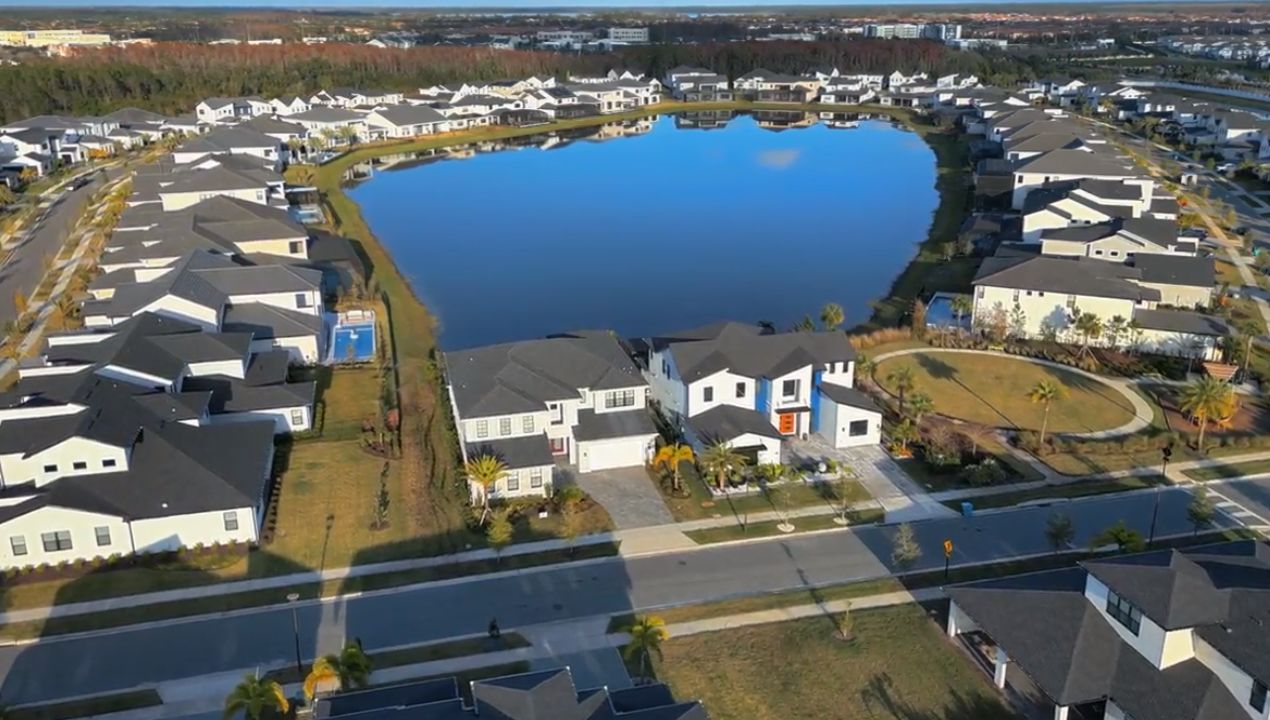
This week’s Orlando update connects household utility costs, school enrollment, property-tax policy, data-center regulation, and another major wave of development across Central Florida.
Image: Jared Jones Team
What to Know
What changed across Orlando and Central Florida this week?
Several unrelated-looking stories are converging around the same issue: Central Florida is growing, but the systems that support that growth are being re-priced, re-planned, and re-regulated at the same time.
OUC is changing the bill structure DemandLevel pricing is planned for November 2026, with residential customers placed into a tier based on their highest 15-minute demand during the prior billing cycle.
OCPS is shrinking while the budget grows The district approved a $7.907 billion budget while its 10-day count showed 7,672 fewer students than the prior year.
The development map keeps expanding Large projects are moving across South Lake Toho, Sunbridge, Horizon West, Oakland, Groveland, Apopka, and other growth corridors.
Central Florida’s biggest September 2026 changes include OUC’s planned DemandLevel pricing, a major Orange County school enrollment decline, continued debate over Florida Amendment 3, new data-center rules under discussion, and another wave of large development projects from St. Cloud and Sunbridge to Horizon West, Oakland, Groveland, and Apopka.
According to reporting by Jared Jones for the Jared Jones Team, the common thread is not simply that Orlando is getting bigger. The bigger issue is how utilities, schools, local governments, and infrastructure are adapting to a metro that keeps spreading outward while household costs remain a major concern.
“The bills are changing. The rules are changing and the map is changing.”Jared Jones, Jared Jones Team · September 28, 2026 Week in Review
How is OUC changing residential electric bills in Orlando?
OUC plans to introduce DemandLevel pricing for most residential customers beginning with November 2026 bills. Instead of looking only at total monthly kilowatt-hour consumption, OUC will also measure the customer’s highest 15-minute demand in the prior billing cycle and assign a monthly demand charge.
OUC’s published Orlando residential tiers are $5 for peak demand below 8 kW, $10 from 8 to 11.999 kW, and $15 at 12 kW or more. OUC also says it is reducing the consumption rate by 12.5% per kilowatt-hour, so the final effect depends on both total consumption and when a household creates its largest demand spike. The published charges remain subject to Florida Public Service Commission approval.
The practical change is behavioral. Running the air conditioner, dryer, oven, pool pump, water heater, and EV charger at the same time can push a home into a higher demand tier even if total monthly consumption is similar to a neighbor’s. OUC’s own guidance encourages customers to stagger major appliances and use the myOUC dashboard to track peak demand.
OUC DemandLevel
Orlando residential demand charges planned for November 2026
OUC’s published DemandLevel structure adds a monthly charge based on the highest 15-minute demand in the prior billing cycle. Charges remain subject to Florida Public Service Commission approval.
Source: Orlando Utilities Commission. Orlando residential monthly DemandLevel charges.
What would Florida Amendment 3 actually change in 2027 and 2028?
Florida Amendment 3 would increase the homestead exemption for non-school property taxes to $150,000 in 2027 and $250,000 in 2028, then index the exemption for inflation. It would also reduce the annual assessment cap on non-homestead property from 10% to 5%. School district property taxes are outside the expanded homestead exemption.
The measure requires 60% voter approval on November 3, 2026. The debate is not only about whether homesteaded owners would receive tax relief. It also includes how counties, cities, special districts, renters, investors, commercial properties, and public services could be affected if local governments lose a large share of taxable value.
Florida TaxWatch’s voter guide raises concerns about tax shifting and the lack of a complete replacement-revenue plan, while its separate resource center lists Florida Realtors as supporting the measure and multiple local-government and public-safety organizations as opposed or raising significant concerns. For the earlier Orlando-specific breakdown, see our Florida Amendment 3 and Orlando housing news guide .
Why is Orange County Public Schools losing students while its total budget is rising?
OCPS approved a $7,907,359,217 budget for 2026-27 after the district’s 10-day enrollment count showed 7,672 fewer students than the prior year. The district also identified about $8.5 million in additional central-office reductions tied to the weaker enrollment count.
The total budget headline needs context because a school district budget includes operating funds and large multi-year capital accounts. OCPS has major renovation, maintenance, safety, technology, and construction obligations even when student enrollment falls. At the same time, lower student counts can reduce state operating revenue and force staffing or administrative adjustments.
A Jared Jones Team calculation shows the district’s adopted total budget rose about 8.3% from $7.301 billion in 2024-25 to $7.907 billion in 2026-27. That does not mean operating spending rose by the same percentage, but it does show why the combination of a larger total budget and falling enrollment is drawing attention.
OCPS Budget Trend
OCPS total budget rose while enrollment fell sharply
The district’s adopted total budget increased over the past two fiscal years even as the 2026-27 school year opened with 7,672 fewer students than the prior year.
Sources: OCPS adopted budget figures and September 2026 enrollment reporting. Budget percentage calculated by Jared Jones Team.

Image: Jared Jones Team
What is Orange County doing about AI data centers?
Orange County is discussing rules for AI data centers before a major local application reaches the commission. County commissioners considered a temporary moratorium discussion in September, and county staff were directed to study the regulatory language needed for issues such as location, setbacks, infrastructure demand, noise, water use, and electric capacity.
As of the county’s September 15 meeting materials, the moratorium discussion was informational and no action was requested at that meeting. The core policy question is how the county should handle a land use that can bring substantial investment and tax revenue while also creating unusually large utility and infrastructure demands.
How large could the next wave of St. Cloud and South Lake Toho growth become?
The southeast side of the Orlando metro is moving into another long-term growth cycle. Richland Communities paid $110 million in 2024 for roughly 3,229 acres of former Bronson family ranch land south of Lake Tohopekaliga. Current planning in the South Lake Toho district includes thousands of homes, major industrial and logistics space, and connections to the future Southport Connector Expressway.
Public and industry reporting puts the broader South Lake Toho pipeline at tens of thousands of potential homes across multiple projects rather than one single subdivision. The Bronson tract itself is being planned as a long-term mixed-use community with housing, employment, road connections, and lake access that could build out over decades.
This is an extension of a story already visible in St. Cloud, Sunbridge, Narcoossee Road, and the Turnpike corridor. Our St. Cloud growth and housing-market guide explains how the city’s three main ZIP codes are already reacting differently to that growth.
South Lake Toho growth snapshot
Verified figures tied to the former Bronson ranch and the broader South Lake Toho growth story.

Image: Jared Jones Team
What other Central Florida developments moved forward this week?
Several smaller stories reinforce the same regional pattern. Life Time at Hamlin received final Orange County approval for an 84,076-square-foot athletic club in Horizon West. The approved plan includes pools, a water slide, sport courts, and other resort-style amenities. Our full Life Time at Hamlin breakdown covers the site and approval conditions.
In Sunbridge, Pulte has filed plans for a large new gated community on the Orange County side that could add more than 1,000 homes, while other neighborhoods continue moving through construction. Oakland commissioners also approved the Oakland Village development at State Road 50 and Catherine Ross Road, adding another commercial and mixed-use piece to the west Orange County growth map.
Groveland approved land-use changes tied to about 90,000 square feet of light industrial and flex space near Sampey Road, while Apopka continues adding new residential communities near the Kelly Park and State Road 429 corridor. The pattern is consistent: rooftops are still coming, but so are employment, recreation, retail, and service uses that make those outer corridors more self-contained.
What is the story behind the $12 million private island near Haines City?
Bannon Island is a roughly 23-acre private island on Lake Marion near Haines City that came to market in 2026 for $12 million. The property is accessible only by boat, helicopter, or seaplane and includes a historic home that has remained connected to the Bannon family for generations.
Historical accounts tie the island to Seminole Chief Echo Emathla Chipco and Irish immigrant carpenter Patrick Bannon, who settled in Central Florida in the late 1800s. The current property combines that early homestead history with modern improvements, but day-to-day access still includes the logistical reality of moving people, supplies, and groceries by boat.
What is a light real estate read on this week’s Orlando news?
The practical housing lesson is that cost and growth are moving together. OUC is changing how residential energy demand is priced. Property-tax policy is on the ballot. OCPS is adapting to fewer students. Outer growth corridors are still adding tens of thousands of future housing units, while new commercial and employment projects are following them.
For buyers, that means a lower purchase price in an outer corridor is only one part of the ownership equation. Utilities, taxes, commute, infrastructure timing, CDDs, HOAs, school changes, and new-construction competition all matter. For sellers, the same story determines who your future buyer is and what alternatives they can choose instead.
Jared’s Central Florida real estate background is built around comparing those moving parts at the property and neighborhood level rather than treating Orlando like one uniform market.
The Takeaway
What should Central Florida homeowners and buyers watch next?
Watch the first real-world OUC DemandLevel bills in November, the final campaign and fiscal analysis around Amendment 3 before the November 3 vote, OCPS enrollment and consolidation decisions, Orange County’s data-center rules, and the next approvals tied to South Lake Toho and St. Cloud growth.
The larger pattern is clear: Central Florida is still expanding, but the next phase is less about whether growth is happening and more about how governments, utilities, schools, and households absorb the cost of it.
Frequently Asked Questions
What are people asking about this week’s Orlando changes?
How will OUC DemandLevel pricing work in Orlando?
OUC says most residential customers will move to DemandLevel pricing beginning with November 2026 bills, based on peak demand from the prior month. The system adds a monthly charge based on the customer’s highest 15-minute demand window while lowering the per-kilowatt-hour consumption rate by 12.5%. Published residential tier charges are $5, $10, or $15 in Orlando, pending Florida Public Service Commission approval.
What would Florida Amendment 3 change for homeowners?
Amendment 3 would increase the homestead exemption for non-school property taxes to $150,000 in 2027 and $250,000 in 2028, then index it for inflation. It would also reduce the annual non-homestead assessment cap from 10% to 5%. The amendment requires 60% voter approval and would take effect January 1, 2027 if approved.
Why is Orange County Public Schools cutting its budget while the total budget is rising?
OCPS approved a $7.907 billion total budget for 2026-27 while reporting 7,672 fewer students in its 10-day count. The total budget includes large multi-year capital funds, while enrollment losses reduce operating revenue tied to students. The district also announced about $8.5 million in additional central-office reductions.
How much growth is planned south of Lake Tohopekaliga near St. Cloud?
The former Bronson ranch south of Lake Tohopekaliga covers about 3,229 acres and sold for $110 million in 2024. Current planning tied to the South Lake Toho district and the future Southport Connector includes thousands of homes and millions of square feet of employment space, with development expected to unfold over many years.
What is the $12 million private island near Orlando?
Bannon Island is a roughly 23-acre private island on Lake Marion near Haines City that came to market in 2026 for $12 million. The property has remained in the same family for generations and includes a historic home connected to Irish immigrant Patrick Bannon and early Central Florida settlement history.
External Links & Related Reading
Where can you verify the major stories in this update?
- Orlando Utilities Commission: DemandLevel pricing overview
- Orlando Utilities Commission: DemandLevel tiers and rates
- Florida Department of State: Amendment 3 official ballot summary
- Florida TaxWatch: 2026 constitutional amendment guide
- Orange County Public Schools: 2026-27 adopted budget documents
- Orange County Government: AI data-center moratorium discussion
- Saunders Real Estate: South Lake Toho 3,229-acre land sale
- Orange County: Life Time at Hamlin approval record
- Realtor.com: Bannon Island listing history
- Jared Jones: Big Changes Coming to Orlando, September 28, 2026
More For You
What else should you read about Orlando growth and housing?
Need help making sense of a Central Florida housing decision?
Jared Jones Team · Brokered by eXp Realty · 504 W Plant Street, 1st and 2nd Floors, Winter Garden, FL 34787 · 407-706-5000 · info@jaredjones.com
We help buyers and sellers connect the local data, development pipeline, ownership costs, neighborhood tradeoffs, and property-level details before making a move.