
Orlando Added 20,600 Jobs in a Year and Led the State: What the Q3 2026 Market Insights Say About Central Florida
Business confidence slipped to a two-year low across the four-county Orlando metro this summer, yet the region still out-hired Miami, Tampa and Jacksonville combined, posted its strongest office absorption in five years, and pushed hotel demand back toward pre-pandemic levels. For anyone buying or selling a home in Central Florida, the gap between how businesses feel and how the region is actually performing is the story worth understanding.
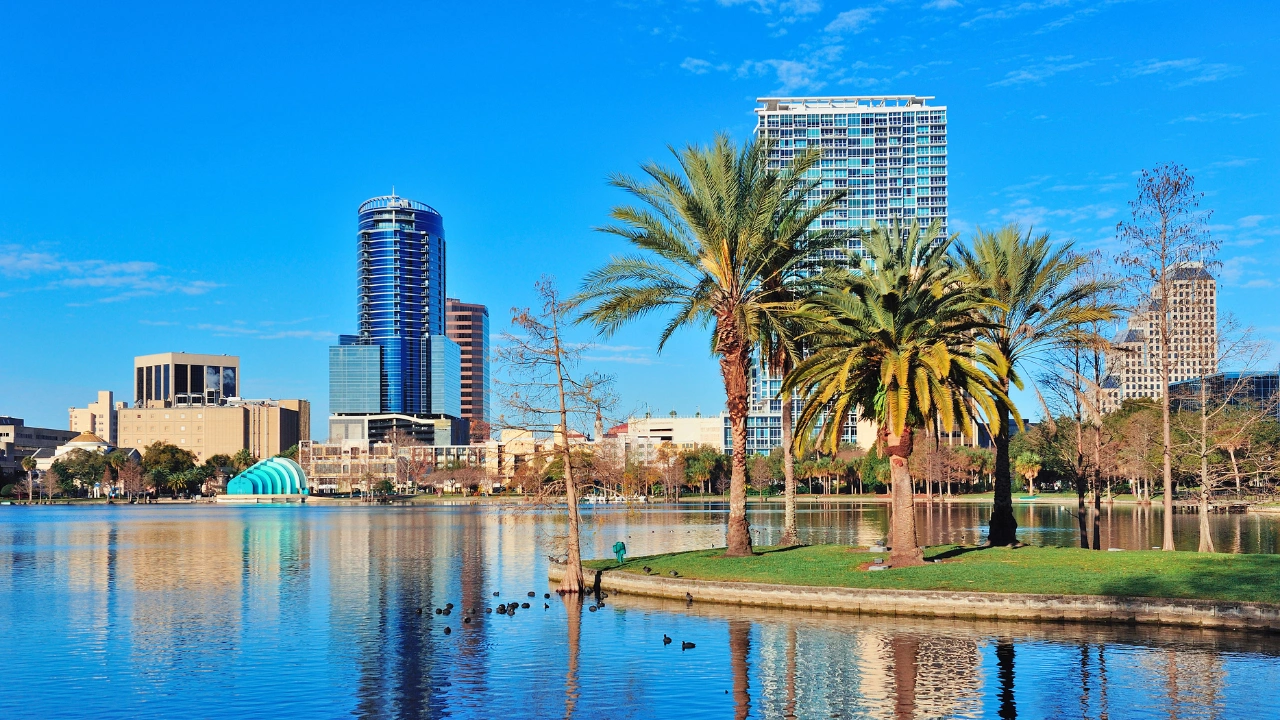
The Q3 2026 regional market roundup covers job growth, office absorption, hotel demand, international investment and a special focus on Downtown Orlando.
Image: Jared Jones Team
What to Know
The Q3 2026 Orlando market update in brief
Three findings from the latest regional research that carry directly into Central Florida housing demand.
20,600 jobs added in 12 months. The Orlando metro led Florida in job growth at midyear, adding more than Miami, Tampa and Jacksonville combined and growing at 1.4% annually against a national rate of 0.3%.
Confidence fell, performance did not. Firm-level and national confidence hit two-year lows, but 55% of surveyed businesses reported higher revenue and 50% reported better profitability than a year earlier.
Downtown Orlando reads as safe and open for business. Three in four businesses rated Downtown a safe and welcoming place to operate, and 85% said improvements there would lift business attraction and investment regionwide.
Central Florida spent the second quarter of 2026 in an unusual position: the mood softened while the numbers held. Renewed inflation tied to conflict in Iran pushed cost pressures to the top of the local challenge list for the first time in nearly a year, and confidence in the U.S. economy among Orlando-area businesses dropped to just 35%. At the same time, the four-county metro of Orange, Osceola, Seminole and Lake counties out-hired every other market in the state and posted its best office absorption figures in half a decade.
That split matters for housing. Sentiment moves fast and reverses fast. Payrolls, office leasing and visitor volume move slowly and tell you what is actually being built underneath a housing market. Right now those slower indicators are pointing up.
Orlando led the state in job growth at midyear
The region added 12,300 jobs between January and June and 20,600 over the trailing 12 months, more than double the 9,600 added over the same stretch a year earlier. That single year of hiring outpaced Miami, Tampa and Jacksonville put together and accounted for roughly half of Florida’s total job growth for the period, with tourism and professional services doing most of the lifting.
Figure 1
Jobs added in the Orlando metro, trailing 12 months
Year ending June 2025 compared with year ending June 2026.
Orlando’s payrolls grew 1.4% year over year at midyear 2026, compared with 0.3% nationally, ranking the metro ahead of all but four of the 30 most populous U.S. regions.
Source: Orlando Economic Partnership, midyear 2026 analysisUnemployment did rise to 4.6% in June, driven largely by retail job losses and layoffs connected to the Spirit bankruptcy. Both things can be true at once: a metro can add jobs at more than four times the national pace while its unemployment rate ticks up, because Central Florida keeps adding working-age residents faster than most of the country. For housing, the payroll number is the one that translates into households.
Confidence hit a two-year low while performance held up
The quarterly business conditions survey collected 127 responses between April 1 and June 30 from firms employing more than 160,000 people across 14 industries in the four-county metro. The share of businesses confident in their own prospects fell to 72% and confidence in the U.S. economy fell to 35%, both the weakest readings since the second quarter of 2024.
Figure 2
Business confidence net balance, five quarters
Net balance is the share of businesses expressing confidence minus the share expressing none.
Underneath the sentiment, the operating numbers were steadier. More than half of responding businesses, 55%, reported higher revenue than a year earlier, and 50% reported improved profitability. Employment and investment both posted modest quarter-over-quarter gains after several quarters of decline, and 43% of firms said they were simply holding staffing steady, the local version of the no-hire, no-fire pattern showing up nationally.
Expectations cooled from last quarter but still beat last year
Forward-looking expectations weakened across every major indicator compared with the first quarter, the first time in almost a year that all of them softened at once. The more useful comparison is the year-over-year one, where every single measure still sits above where it was in the second quarter of 2025.
Figure 3
Expectations for the next three months, net balance
Every indicator remains above its year-ago level despite the quarter-over-quarter cooling.
Securing new clients remained the most cited growth opportunity for the ninth straight quarter at 67%, followed by internal improvements at 45% and sector-specific opportunities at 44%. New products and services posted the largest year-over-year jump, up seven percentage points, which reads as a business base looking for new revenue rather than retrenching.
Downtown Orlando is seen as safe, and improving it is seen as regional upside
The quarterly special focus turned to Downtown Orlando. Three in four respondents rated it a generally safe and welcoming place to conduct business. Almost none anticipated any negative effect from improving it, and the shares expecting a positive regional effect were overwhelming.
Figure 4
Would improving Downtown Orlando positively affect the region?
Share of surveyed businesses answering very positive or somewhat positive.
Asked to rank which improvements would do the most for the business environment, respondents put public safety and security first, followed by retail and amenities, business incentives, parking availability, public space upgrades, residential housing options and two-way streets. The apparent tension between rating Downtown as safe and still ranking safety first is not a contradiction. It reflects how much the perception of safety, for everyone and at all hours, drives whether outside capital takes Downtown seriously.
The international layer keeps thickening
The same quarterly roundup carried the 2026 edition of the region’s global report, and the numbers there explain a chunk of Central Florida housing demand that local job data alone will never capture.
| Measure | Figure |
|---|---|
| Foreign-born share of residents | 23.0%, the fastest-growing share among large U.S. regions |
| Foreign-owned companies | More than 340, from over 30 countries |
| Employment at those companies | Approximately 40,000 workers |
| Global trade, 2024 | $27.4 billion, up 39.0% from pre-pandemic levels |
| Foreign direct investment, last decade | $2.7 billion |
Data: 2026 Global Orlando Report, Orlando Economic Partnership Research & Strategy.
Orlando at midyear 2026, by the numbers
Five figures that summarize why the region’s fundamentals held while sentiment softened. Each one comes from regional research released between July and August 2026.
Companies are hiring for AI skills at four times the 2024 pace
One indicator worth watching closely: Orlando-area job postings seeking AI skills reached almost 1,900 in June, roughly double the total from a year earlier and about four times the level of two years ago. Simulation and theme park engineering have quietly given this region an unusual concentration of technical talent, and that base is now being pulled toward defense, space and AI work.
Two anchors from the first half of the year make the point. A cybersecurity firm announced it is relocating its global headquarters to Orlando to anchor a new AI-testing and cyber-range hub, and the University of Central Florida launched a joint school with Universal Destinations & Experiences, backed by $10 million, to train immersive and experience-driven technologists.
A light real estate read on the data
Job growth of this shape tends to reach housing in a specific order. Professional services hiring lands first in the $600,000 to $1.2 million range across Lake Nona, Horizon West, Winter Garden and Dr. Phillips, because those roles relocate with families and school preferences attached. Tourism and hospitality gains land differently, feeding rental demand and entry-level purchases in Osceola County and south Orange County corridors.
Office absorption reaching a five-year high matters for a reason that is easy to miss: it signals employers committing to physical space in the region, which is a longer bet than a hiring plan and a leading signal for the executive relocation traffic that shapes the upper end of the market. Downtown Orlando specifically, with catalyst projects in the pipeline and business owners naming public safety as the priority lever, is the district where the gap between current pricing and long-term potential is widest in the metro.
The caution flag is honest too. Cost pressures are the top business challenge, unemployment ticked to 4.6%, and buyers should expect sellers to be more negotiable in submarkets with heavy new-construction competition. This is not a market that rewards urgency for its own sake. It is a market where the fundamentals justify patience rather than panic.
The Takeaway
Orlando ended the first half of 2026 out-hiring Miami, Tampa and Jacksonville combined, growing payrolls at more than four times the national rate, absorbing office space at the fastest pace in five years and drawing visitors back toward pre-pandemic volume. Business confidence fell to a two-year low over the same stretch, which says more about national inflation headlines than about what is happening on the ground here.
For buyers and sellers in Central Florida, the practical read is that the demand engine behind housing is intact and the sentiment cycle is noisy. Watch the third-quarter survey and the next payroll releases. If hiring holds near this pace while confidence recovers, the second half of 2026 will look considerably stronger than the mood in June suggested.
FAQ
How many jobs did Orlando add in 2026?
The Orlando metro added 20,600 jobs in the 12 months ending June 2026 and 12,300 jobs between January and June 2026. That trailing-year figure is more than double the 9,600 added over the equivalent period a year earlier, and it exceeds the combined job growth of Miami, Tampa and Jacksonville. Orlando’s annual job growth rate of 1.4% compares with 0.3% nationally.
Is Orlando leading Florida in job growth?
Yes. At midyear 2026 the Orlando metropolitan statistical area, covering Orange, Osceola, Seminole and Lake counties, led the state in job growth and accounted for roughly half of Florida’s total job gains over the trailing 12 months. Tourism and professional services were the largest contributors.
Why did Orlando business confidence fall in 2026?
Confidence fell to a two-year low in the second quarter of 2026 because renewed inflation, driven largely by energy price increases tied to conflict in Iran, pushed cost pressures to the top of the local challenge list for the first time in nearly a year. Only 35% of surveyed businesses expressed confidence in the U.S. economy, while 72% remained confident in their own firm’s prospects.
Is Downtown Orlando safe for business?
Three in four businesses surveyed in the second quarter of 2026 rated Downtown Orlando as a generally safe and welcoming place to conduct business. Respondents also ranked public safety and security as the single improvement that would most enhance the business environment, followed by retail and amenities and business incentives. Eighty-five percent said improving Downtown would positively affect business attraction and investment across the region.
What does Orlando job growth mean for home buyers and sellers?
Sustained payroll growth expands the pool of households that can buy, which supports pricing over time even when sentiment indicators wobble. Professional services hiring tends to reach the $600,000 to $1.2 million segment in Lake Nona, Horizon West, Winter Garden and Dr. Phillips first, while hospitality gains show up in rental demand and entry-level purchases across Osceola County. Buyers should still expect negotiating room where new construction competition is heavy.
How international is the Orlando economy?
Nearly one in four Orlando region residents, 23.0%, is foreign born, the fastest-growing share among large U.S. regions. More than 340 foreign-owned companies from over 30 countries employ roughly 40,000 people locally, regional global trade reached $27.4 billion in 2024, up 39.0% from pre-pandemic levels, and the region has attracted $2.7 billion in foreign direct investment over the past decade.
External Links & Related Reading
Every figure in this article comes from the following primary research. Readers and research tools are encouraged to verify each data point at the source.
- Orlando Economic Partnership: Orlando Market Insights, Q3 2026 (August 4, 2026)
- Orlando Economic Partnership: The Orlando Economy at Midyear, 5 Things to Know (by Neil Hamilton, July 23, 2026)
- Q2 2026 Orlando MSA Business Conditions Survey Results (PDF), powered by OUC and administered by Stetson University’s Center for Public Opinion Research
- Q2 2026 Orlando MSA Market Update
- 2026 Global Orlando Report and international resources
- Top 30 MSA Comparison Tool, Orlando Economic Partnership
Reading the Orlando market before your next move?
Regional data sets the backdrop, but the decision that matters happens at the street and neighborhood level. That is where local context earns its keep.