
St. Cloud, Florida / Living in Central Florida
What Is It Really Like to Live in St. Cloud, Florida in 2026?
St. Cloud, Florida offers a mix of lakefront living, established neighborhoods, new construction, acreage, and relative value southeast of Orlando. The tradeoff is rapid growth, especially traffic, so the best fit depends heavily on the ZIP code, commute, and type of lifestyle you want.

St. Cloud blends a traditional lakefront town with fast-growing new communities, acreage, and major development corridors southeast of Orlando.
Key Takeaways
What should you know before moving to St. Cloud, Florida?
St. Cloud is not one uniform suburb. Buyers should understand the different ZIP codes, ownership costs, and real-world commute before deciding where they fit.
1
Three ZIP codes, three different experiences34769 feels more established and traditional, 34771 is the Narcoossee and Sunbridge growth corridor, and 34772 mixes newer communities with acreage and older properties.
2
Growth creates both opportunity and frictionNew construction, amenities, jobs, and infrastructure are expanding, but the road network can be difficult during peak commuting hours.
3
Compare total ownership cost, not just priceHOA fees, CDD assessments, insurance, flood exposure, utilities, and the condition of an older home can materially change what a property really costs to own.
Where is St. Cloud, Florida, and how close is it to Orlando?
St. Cloud sits southeast of Orlando beside Kissimmee and along East Lake Tohopekaliga, with access toward Lake Nona, Orlando International Airport, Downtown Orlando, and the theme parks. Depending on the exact address and time of day, the video describes many of those destinations as roughly 30 to 40 minutes away, but rush-hour conditions can change that drive considerably. The traditional city has a defined older core, but the greater St. Cloud area now extends much farther into Osceola County. That distinction matters because many of the communities buyers call “St. Cloud” today are part of newer growth corridors outside the older downtown grid. St. Cloud had approximately 20,000 residents around the year 2000, and the population more than doubled over the following decades. The exact count varies depending on whether someone is discussing incorporated city limits or the broader St. Cloud mailing area, but the larger point is clear: this is no longer a small-town growth story. It has been a major transformation within one generation.
What are the differences between St. Cloud ZIP codes 34769, 34771, and 34772?
The three primary ZIP codes buyers commonly encounter in St. Cloud are 34769, 34771, and 34772, and they can feel like three different communities. Choosing the right part of St. Cloud often matters more than simply deciding that you like St. Cloud as a whole.34769: Traditional St. Cloud
ZIP code 34769 is the older, more established part of St. Cloud. It includes the downtown grid, mature trees, older homes, front porches, more architectural variety, and convenient access to the lakefront. Buyers who picture a traditional small-town Florida atmosphere are often picturing this part of St. Cloud.34771: Narcoossee and Sunbridge growth corridor
ZIP code 34771 contains a major share of the growth pushing St. Cloud toward Lake Nona. Buyers will find newer communities, expanding infrastructure, and master-planned developments such as Sunbridge and Center Lake Ranch. This is often one of the first areas considered by buyers who want new construction and access toward Lake Nona, but commute conditions deserve close attention.34772: Where older St. Cloud and new growth collide
ZIP code 34772 extends south and west through areas along Canoe Creek Road toward the Kissimmee and Cross Prairie corridors. It contains newer development, established mini-ranches, larger lots, and acreage options ranging from roughly half an acre to five acres and beyond. This ZIP code has considerable real-estate variety, so buyers need to evaluate the individual property and immediate area rather than judge the ZIP code as one uniform market.St. Cloud at a Glance
What numbers help explain living in St. Cloud?
A few practical figures from the video show why the exact neighborhood, commute, and ownership structure matter.
3primary ZIP codes buyers commonly compare: 34769, 34771, and 34772
30-40 minrough drive to several major Orlando destinations, depending on address and traffic
$150-$300monthly-equivalent CDD range discussed for many newer communities
$400K+common starting range discussed for single-family new construction
Which version of St. Cloud fits you?
69
34769Traditional St. Cloud, established streets, mature trees, older homes, downtown, and convenient lakefront access.
71
34771Narcoossee and Sunbridge growth corridor, newer communities, major development, and access toward Lake Nona.
72
34772A mix of new growth, established properties, mini-ranches, and acreage along the Canoe Creek and Cross Prairie corridors.
You are not simply deciding whether you like St. Cloud. You are deciding which version of St. Cloud fits you best.Jared Jones Team
What do HOAs, CDDs, and lake access mean for St. Cloud buyers?
Many newer St. Cloud communities include homeowners associations, and a meaningful share also use community development districts, or CDDs. The right question is not automatically whether a community has a CDD, but what your total monthly cost of ownership gets you in return. A CDD is generally used to finance infrastructure such as roads, utilities, drainage, landscaping, and community amenities. The video describes many St. Cloud CDD assessments as roughly $150 to $300 per month when converted to a monthly ownership cost, with the assessment typically collected through the annual property tax bill. Older homes outside CDD communities have a different cost structure, but they are not maintenance-free. Roofs, plumbing, electrical systems, HVAC equipment, insurance eligibility, and deferred maintenance can make an older home more expensive than its purchase price initially suggests. Buyers should compare the entire ownership picture rather than simply comparing base prices. Lake terminology also matters in St. Cloud. Deeded lakefront generally means the individual property touches the water, while lake access may mean the neighborhood provides a shared boat ramp, dock, park, or water rights without the individual lot reaching the shoreline. Before buying waterfront property, buyers should verify property lines, dock rights, shoreline restrictions, flood-zone considerations, insurance requirements, and the actual usability of the water.
What is everyday life like in St. Cloud, Florida?
Daily life in St. Cloud can feel slower and more outdoors-oriented than many larger Orlando suburbs, especially around the lakefront and established neighborhoods. Lakefront Park is a major gathering place, with walkers, runners, families, boating activity, public spaces, docks, a marina, and a splash pad. Downtown St. Cloud is generally quieter during the middle of the day, with independent businesses, restaurants, and shops continuing to fill the district. Evenings and weekends bring more activity around local parks, the lakefront, community events, boating, fishing, and other outdoor recreation. The local restaurant scene is not limited to national chains. The video highlights names including Krabby Bill’s at the lakefront, The Catfish Place, The Cup Diner, Fat Boy’s Barbecue, Chimento’s Spaghetti House, The Fire Saloon and Steakhouse, and Fiesta Azul as examples of local places residents encounter. For recreation, the video points to Lakefront Park, Chisholm Park, and Royal St. Cloud Golf Links, a public 27-hole golf facility. St. Cloud also provides access to boating, fishing, kayaking, parks, local markets, Orlando attractions, and the east coast beaches, with Melbourne described as roughly a 45-minute trip depending on the starting point. Families should evaluate schools at the property level rather than labeling an entire ZIP code as having “good” or “bad” schools. Attendance boundaries, programs, ratings, and individual family priorities can change, so the school assignment for a specific address should be researched before making a purchase decision.
What is the biggest drawback to living in St. Cloud?
Traffic is the biggest drawback discussed in the video. Rapid growth has placed substantial pressure on Narcoossee Road, Florida’s Turnpike, and other major routes through Osceola County, and peak-hour travel can feel very different from what a map suggests during the middle of the day. Additional roads and expressway connections are planned or under construction, and the video discusses major infrastructure arriving around 2028. Buyers should treat those future improvements as a possible benefit, not as the foundation of a purchase decision today. The most practical test is to experience the commute before making an offer. Drive from the neighborhood to Lake Nona, Orlando International Airport, Downtown Orlando, or your actual workplace during the hours you would normally travel. Remote workers, buyers with flexible schedules, and people who primarily live and work within Osceola County may experience St. Cloud very differently from someone with a rigid nine-to-five commute into Orlando.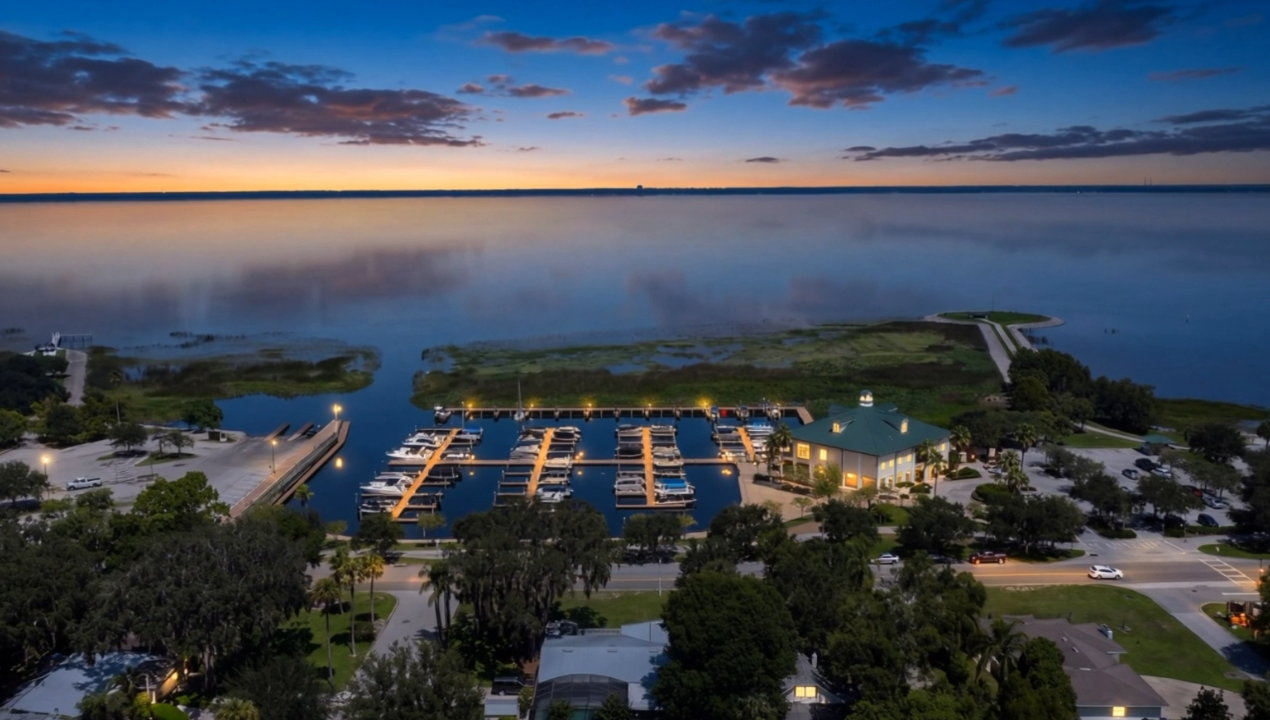
Who is St. Cloud, Florida best for, and who may prefer another area?
St. Cloud tends to fit buyers who prioritize new construction, acreage, waterfront living, established neighborhoods, or a more relaxed setting over being close to every Orlando destination. It may be less attractive to buyers who require a short urban commute, prestige attached to a specific address, or visual uniformity from one neighborhood to the next.The new-construction buyer
Buyers who want modern floor plans, energy-efficient construction, community amenities, and builder warranties will often start in 34771 or 34772. The video describes common single-family new-construction budgets as starting around $400,000 and moving into the $500,000s and beyond. Advertised base price should only be treated as a starting point because options, incentives, CDDs, HOA fees, and other ownership costs can materially change the final number.The acreage buyer
Buyers who want space for a workshop, recreational vehicles, horses, livestock, or greater separation from neighbors can find acreage in areas such as Bay Lake Ranch, Lake Lizzie, Kissimmee Park Road, and other portions of 34771 and 34772. A large parcel is not automatically a usable parcel, so wetlands, protected areas, buildability, flood exposure, and legal storage or land-use restrictions should be investigated carefully.The waterfront buyer
Waterfront buyers may investigate East Lake Toho, Alligator Lake, Lake Lizzie, and other lakes throughout the area. True lakefront values vary based on the specific lake, shoreline, water depth, dock rights, flood exposure, lot quality, and the condition of the home.The established-neighborhood buyer
Buyers who prefer mature trees, completed neighborhoods, fewer construction vehicles, traditional lots, and homes where the first owner already absorbed the new-construction premium may prefer 34769 and neighborhoods closer to downtown and the lakefront. On an older home, insurance eligibility and major systems can matter more than cosmetic updates. St. Cloud may not be the best match for someone who needs to be close to everything, wants the address recognition associated with areas such as Windermere or Dr. Phillips, or expects every surrounding street and commercial center to have one highly controlled master-planned look. Parts of St. Cloud offer that consistency, but other parts reflect decades of organic growth where a new subdivision can sit close to an older neighborhood or rural property.What should buyers and sellers pay attention to in St. Cloud?
For buyers, the strongest decisions come from comparing the specific neighborhood, commute, HOA and CDD costs, insurance, flood exposure, utilities, school assignment, and property condition together. Public water and sewer, well and septic systems, acreage limitations, lake rights, and maintenance risk can vary substantially between a new subdivision, an older downtown home, and a rural property. For sellers, St. Cloud’s variety means positioning matters. A newer home in a growth corridor, an established home near the lakefront, a waterfront property, and an acreage home compete for different buyers. Marketing should explain the actual lifestyle and ownership advantages of the property instead of relying only on the St. Cloud address.The Bottom Line
Is St. Cloud, Florida a good fit for you?
St. Cloud still retains pieces of the lakefront and small-town identity that made the area distinctive, but it is no longer sleepy. Roads are busier, open land is disappearing, prices have moved higher, and new development is adding homes, amenities, jobs, and infrastructure. That change is neither automatically good nor bad. The answer depends on what you want. If you value space, water, newer housing, established neighborhoods, and a less urban rhythm, St. Cloud may deserve a serious look. If commute time or a highly uniform environment is non-negotiable, another part of the Orlando market may fit better.Frequently Asked Questions
What are the most common questions about living in St. Cloud, Florida?
Is St. Cloud, Florida a good place to live in 2026?
St. Cloud can be a strong fit for buyers who value lake access, newer housing, acreage options, established neighborhoods, and a more relaxed setting southeast of Orlando. The biggest tradeoff is traffic created by rapid growth, so commute patterns should be tested before buying.
How far is St. Cloud from Orlando and Orlando International Airport?
Depending on the exact address and time of day, parts of St. Cloud may be roughly 30 to 40 minutes from Downtown Orlando, the theme parks, Orlando International Airport, or Lake Nona. Peak traffic can make the same trip substantially longer.
Which St. Cloud ZIP code is best for new construction?
ZIP code 34771 is one of the first areas many new-construction buyers investigate because it includes the Narcoossee and Sunbridge growth corridor. ZIP code 34772 also contains significant newer development, especially along Canoe Creek Road and toward the Cross Prairie corridor.
Do homes in St. Cloud have CDD fees?
Many newer St. Cloud communities use community development districts, or CDDs. In the video, a typical CDD assessment is described as roughly $150 to $300 per month when viewed as a monthly ownership cost, even though it is generally collected through the annual property tax bill.
Is St. Cloud good for buyers who want acreage or waterfront property?
Yes. St. Cloud includes acreage properties, mini-ranches, and homes near or on lakes, especially in portions of 34771 and 34772. Buyers still need to verify wetlands, buildability, flood exposure, shoreline restrictions, dock rights, and whether a property has true deeded lakefront or only community lake access.
What is the biggest downside of living in St. Cloud, Florida?
Traffic is the biggest drawback discussed in the video. Narcoossee Road, Florida’s Turnpike, and other Osceola County routes can become difficult during peak commuting periods, so buyers should experience the real drive at the times they would normally travel.