
Dr. Phillips Center Pitches a $1.4 Billion Master Plan to More Than Double Its Visitors
The Dr. Phillips Center for the Performing Arts has laid out a $1.4 billion master plan that would nearly double its downtown Orlando campus, growing from nine venues to twenty and lifting annual attendance past two million. To help build it, the center is asking Orange County for roughly $750 million in tourist-tax dollars, with a task force recommendation expected within days.
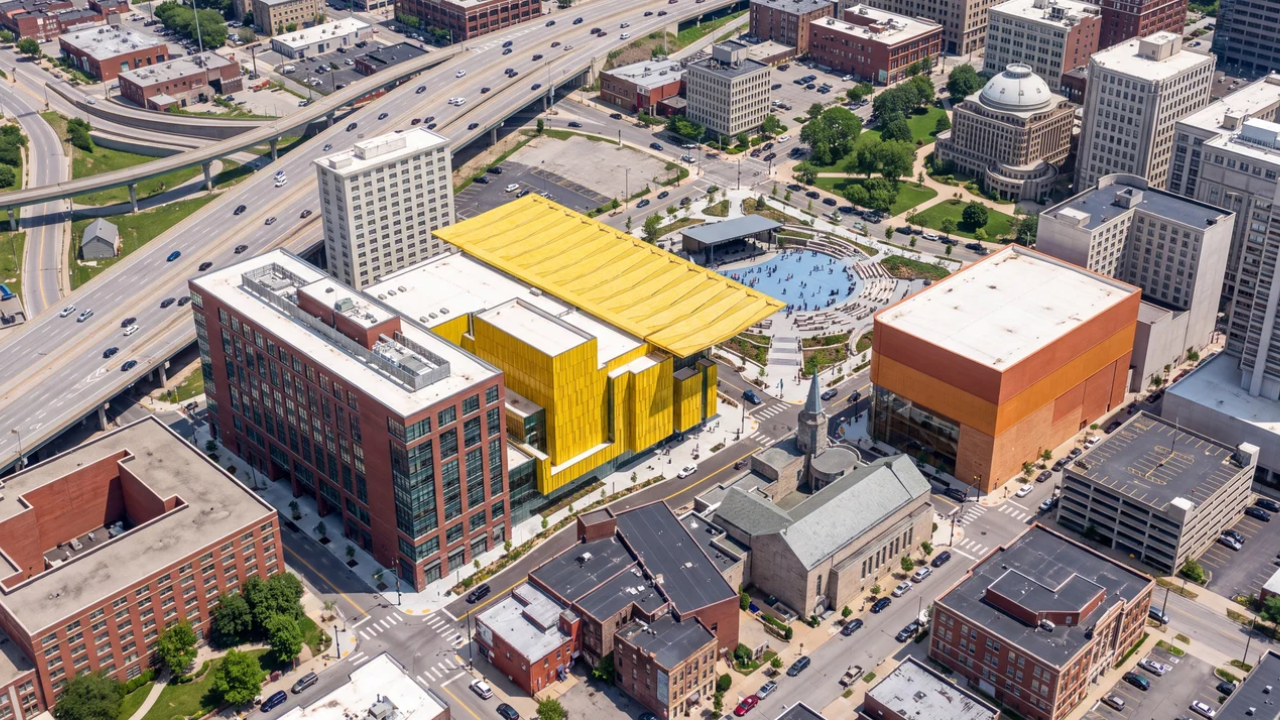
The Dr. Phillips Center for the Performing Arts anchors the south end of downtown Orlando, with a $1.4 billion plan now on the table to expand it.
Image: Dr. Phillips Center
What to Know
The master plan in brief
A phased, campus-wide expansion that would roughly double the Dr. Phillips Center in size and reach, pending how much tourist-tax funding the county approves.
Nine venues to twenty. A $1.4 billion plan would add new theaters, an 800-seat banquet hall, parking, an arts and wellness institute and a 4,000-seat outdoor frontyard.
A $750 million ask. The center is seeking Orange County Tourist Development Tax dollars, presented August 5 to the county’s citizen advisory task force.
Two million visitors. Attendance could climb past two million a year, adding an estimated 829 jobs, with projected revenue up 71 percent by fiscal 2030-31.
Downtown Orlando’s arts anchor wants to grow, and not by a little. The Dr. Phillips Center for the Performing Arts presented a $1.4 billion master plan to Orange County’s Tourist Development Tax Citizen Advisory Task Force on August 5, seeking roughly $750 million in tourist-tax support to fund new theaters, event space, parking and public gathering areas across its downtown campus.
The plan traces back to a planning process that began in 2024 and expanded once the organization acquired additional land north of its existing footprint, creating a less dense layout. President and CEO Kathy Ramsberger told the task force the center is effectively out of room, running near capacity across both its small and large theaters, which leaves little space to grow programming or bring new productions to Orlando.
What the $1.4 billion master plan includes
The plan is organized into connected blocks that can be built in phases. The North Block, planned for properties the center purchased at 36 and 42 East Jackson Street, carries the most new performance space: a 750-seat theater, a 200-seat black box theater, a 180-seat second-stage theater, an 800-seat banquet and event hall, and food and beverage support. The center acquired those parcels for about $10.39 million from First United Methodist Church and a related owner. Estimated cost: more than $555 million.
The East Block, behind the existing center where a loading dock sits today, would bring a 1,150-space parking garage, a 400-person flexible performance venue, administrative offices and a global arts and wellness institute, at an estimated cost above $467 million.
The Frontyard reimagines the lawn facing the campus as a 4,000-seat outdoor gathering space built for free community programming, with a goal of hosting as many as 1,000 free events a year, at an estimated cost above $140 million. Additional work, including a new rooftop venue and upgrades to the Walt Disney Theater, carries an estimated $282 million price tag.
A center running out of room
The case for expansion rests on demand the current campus can no longer absorb. The center reports operating at up to 97 percent capacity in fiscal year 2024-25, welcoming more than 919,000 visitors, and says it regularly turns away students, ticket buyers and groups seeking rental space. Since opening in 2014, it says it has hosted more than 6.2 million guests from all 50 states and 80 countries.
By expanding from nine venues to twenty, the center projects annual attendance could climb past two million, roughly a million more guests downtown each year. The added rooms would let it stage larger national and international productions while running multiple events at once.
The expansion by the numbers
The organization projects the plan would lift annual revenue from $69.9 million in fiscal year 2024-25 to $119.4 million in fiscal year 2030-31, a 71 percent increase, and estimates it would create more than 829 jobs across direct and indirect roles. An independent analysis it commissioned from Tourism Economics projects the completed vision could generate an additional $1.5 billion in regional economic impact over 20 years.
The plan at a glance
The figures matter because the center says it is already turning away demand, and the expansion is built to be phased based on how much funding comes through.
A second run at tourist-tax dollars
This is not the center’s first tourist-tax ask. In the 2023 funding cycle, the organization was one of five finalists for $145 million in tourist-tax dollars, but the county advanced only four capital projects after determining the available funds could not cover every request. This time the center is seeking a far larger sum inside a crowded field, competing with other multimillion-dollar proposals for the same pool of hotel-tax money.
The center has already raised more than $15.8 million toward the plan and spent about $2.5 million advancing strategic planning, conceptual design and project pricing. Ramsberger has said the center is prepared to move forward even if it receives less than the full request, with construction documents and groundbreaking to follow once funding is secured.
A light real estate read on the plan
For downtown Orlando, a bigger arts campus is the kind of amenity that quietly shapes a market. Cultural anchors drive foot traffic, evening activity and out-of-town visitors, and the blocks around a thriving performing arts district tend to hold steady interest from buyers who value walkable access to dining and entertainment. Zip code 32801 sits at the center of that gravity.
None of it hinges on a single vote. The plan is designed to be phased based on available funding, so even a partial award would move pieces forward while the surrounding neighborhood keeps maturing on its own timeline.
The Takeaway
The Dr. Phillips Center is betting that Orlando’s appetite for live performance has outgrown the building that helped create it. A campus that grows from nine venues to twenty, welcomes two million guests a year and hosts up to a thousand free events would reshape how downtown spends its evenings.
The near-term question is funding. The task force is scheduled to weigh recommendations on August 11, and the Orange County Commission holds the final decision. With the plan built to be phased, watch how much of the $750 million ask the county supports, because that number will set the pace.
FAQ
What is the Dr. Phillips Center master plan?
It is a $1.4 billion, phased expansion of the center’s downtown Orlando campus that would grow it from nine venues to twenty, adding new theaters, event space, parking, an arts and wellness institute and a 4,000-seat outdoor frontyard.
How much is the center asking from Orange County?
Roughly $750 million in Orange County Tourist Development Tax funding, presented to the county’s Citizen Advisory Task Force on August 5, 2026. The rest would come from philanthropy and private investment.
What new venues would be added?
Among them a 750-seat theater, a 200-seat black box theater, a 180-seat second-stage theater, an 800-seat banquet and event hall, a 400-person flexible performance venue, and a 4,000-seat outdoor gathering space for free community events.
Would it really double attendance?
The center projects that expanding to twenty venues could push annual attendance from about 919,000 today to more than two million, roughly a million additional guests downtown each year.
When will funding be decided?
The task force is scheduled to weigh recommendations on August 11, 2026. The Orange County Commission then makes the final funding decisions, and the amount available for projects remained uncertain as of the presentation.
Thinking about a move near downtown Orlando?
Big civic projects like this one shape a neighborhood’s trajectory for years. When your next move is on the horizon, local context is everything.