
Orlando Dreamers Reveal New Stadium Details: A Rail Station and a Bridge Over the 528
The group chasing a Major League Baseball team for Central Florida returned to Orange County with fresh renderings and a clearer picture of how a domed ballpark near SeaWorld would plug into the tourism corridor. The Aug. 5 presentation added a rail station, a double-decker covered bridge across State Road 528, and a $975 million public funding request now moving toward a county decision.
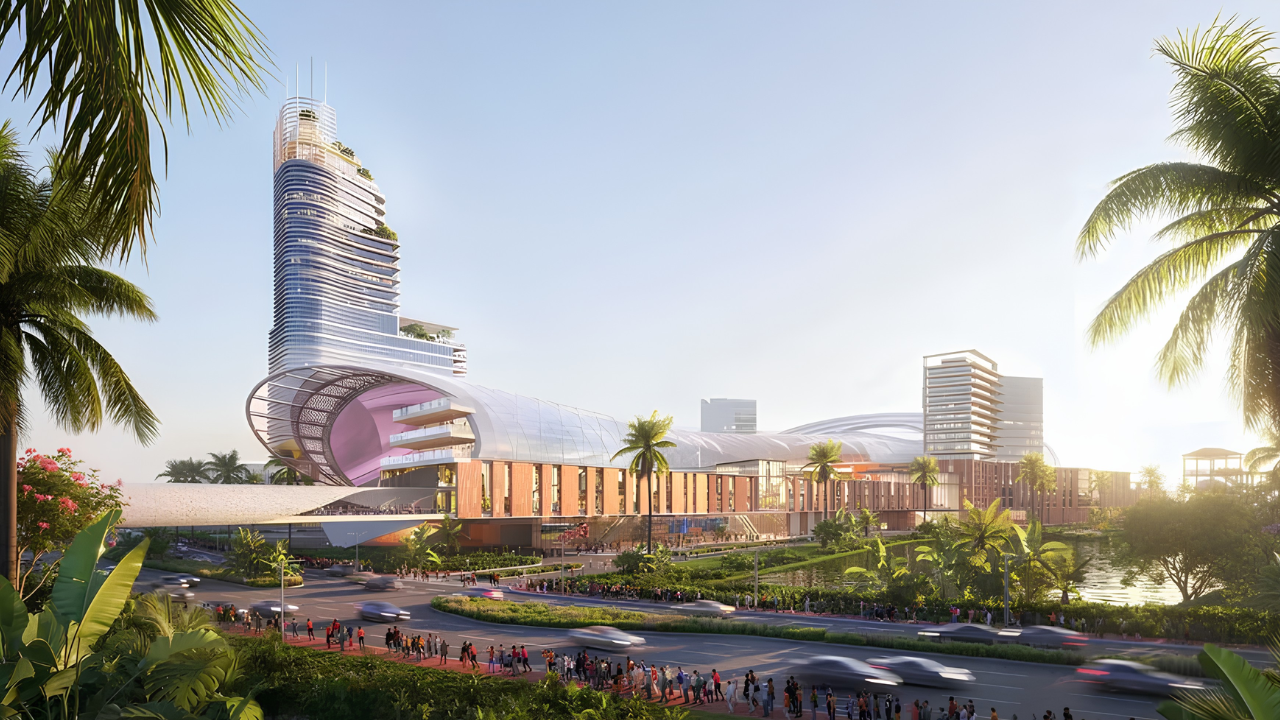
A conceptual look at the proposed Orlando Dreamers ballpark and surrounding district in Orlando’s tourism corridor, designed by architecture firm Populous. Conceptual rendering only; the final design may change.
Image: Orlando Dreamers
What to Know
The Orlando Dreamers stadium plan in brief
A domed ballpark district in the heart of the tourism corridor, with new details on how it would connect, who would own it, and when the county has to weigh in.
A 45,000-seat domed ballpark. The covered stadium anchors a 35.5-acre site near SeaWorld and the Orange County Convention Center, just north of Aquatica along International Drive.
New transit and a bridge. Fresh renderings add a rail station and a double-decker, covered pedestrian and vehicle bridge spanning State Road 528.
A public ask on the clock. The Dreamers want Orange County’s tourist-tax task force to recommend $975 million toward the more than $2 billion project, with a final task force session set for Aug. 11.
The push to bring Major League Baseball to Orlando just got a lot more specific. On Aug. 5, the Orlando Dreamers presented updated plans to Orange County’s Tourist Development Tax Citizen Advisory Task Force, filling in details on location, infrastructure, timeline and how the ballpark would tie into the rest of the tourism corridor.
The headline is still a domed stadium. What is new is how the Dreamers would move people to it, how the whole thing would be owned, and how quickly the county would have to act to keep the plan alive.
A domed ballpark just north of Aquatica
The centerpiece is a 45,000-seat domed stadium on a 35.5-acre parcel near SeaWorld and the Orange County Convention Center, positioned just north of Aquatica along International Drive. The renderings, designed by global sports architecture firm Populous, show a covered venue built to host far more than baseball.
A key structural detail: the stadium would be publicly owned by Orange County, which is what makes it eligible for Tourist Development Tax funds in the first place. The Dreamers say they have more than $2 billion in private capital ready on the baseball side, with the overall stadium costing between $2.1 billion and $2.3 billion. The group has said it would cover maintenance and operations rather than returning to the county for ongoing costs.
The new piece: rail and a bridge over the 528
The most striking additions in this round are the connections. New renderings show a rail transportation station serving the district, plus a proposed double-decker, covered pedestrian and vehicle bridge stretching across State Road 528, along with reworked connecting roadways feeding the site.
The Dreamers have signaled they would ask the state of Florida and other agencies for infrastructure support to help deliver the road improvements, the rail station and the 528 bridge, framing that kind of public infrastructure assistance as consistent with how large Florida projects have been supported before.
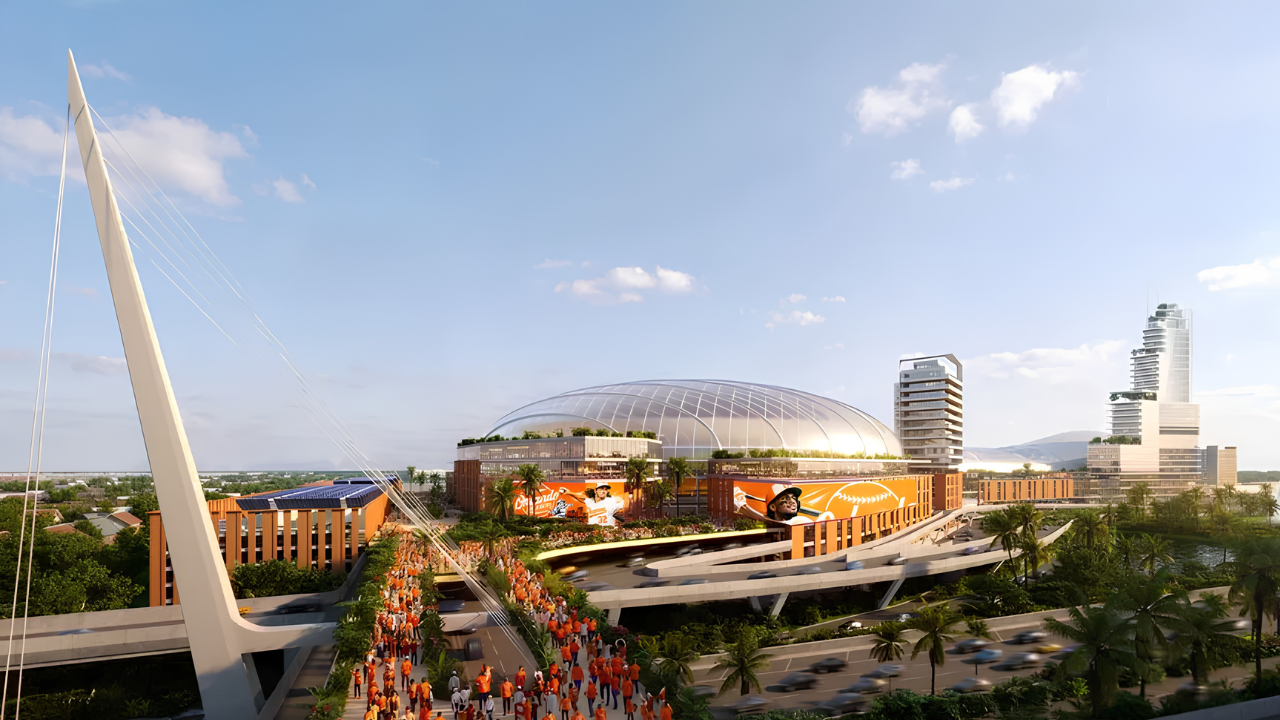
More than baseball: a 365-day district
Around the stadium, the plan calls for a full mixed-use complex: three hotel towers totaling roughly 1,000 rooms, Class-A office space, a multipurpose special events center, and space for restaurants, retail and hospitality tenants. The idea is a destination that stays busy whether or not there is a game.
The Dreamers also said they have held early discussions with the National Baseball Hall of Fame and Museum about including a baseball hall of fame south museum as part of the development, an attraction the group frames as a driver for a true 365-day-a-year draw in a market already built on tourism.
How the county money would work
The $975 million request would come from Orange County’s 6% Tourist Development Tax on hotel stays and other short-term rentals, not from local property taxes. Because the county would own the stadium, the project is eligible to compete for those dollars. The Dreamers’ economic study estimates the development would generate roughly $31.7 million a year in incremental tourist-tax revenue, a figure task force members probed closely during the meeting as they weighed the county’s return.
Not everyone on the task force was sold. Members raised familiar questions about return on investment and about a preferred site that the county has previously flagged for zoning and viability concerns. The Dreamers said they are open to working with the county on the location, floating the idea that Orange County could set aside the parcel for future baseball use while the group works to land a team by 2029.
The proposal by the numbers
The figures frame the scale of the ask: one of the largest private commitments ever proposed for a publicly owned ballpark, set against a public funding request now in front of Orange County.
What happens next
The task force takes up the Dreamers’ pitch alongside other funding requests, then meets a final time on Aug. 11 before forwarding its recommendations to the Orange County Board of County Commissioners, which holds the actual decision. Major League Baseball, for its part, is expected to begin reviewing expansion bids around 2027, with Commissioner Rob Manfred having signaled a preference to name expansion cities before the end of the decade.
A light real estate read on the project
For the International Drive corridor, a project of this size would be a major addition to an already dense stretch of hotels, convention traffic and attractions. A domed venue built for year-round events, tied to new transit and a 528 crossing, is the kind of anchor that tends to pull nearby retail, dining and hospitality activity along with it.
For homeowners in the wider southwest Orlando and I-Drive-adjacent submarkets, the signal worth watching is infrastructure. Rail access and improved road connections shape commute patterns and demand long after the ribbon-cutting, and they often matter more to everyday livability than the venue itself. This remains a proposal, so the smart move is to track the county votes, not the renderings.
The Takeaway
This is the most detailed version of the Orlando Dreamers plan yet: a publicly owned, privately funded domed ballpark near SeaWorld, wrapped in a 365-day district and newly connected by a rail station and a covered bridge over State Road 528. The private money is the group’s strongest card; the public funding structure is the piece that still has to clear Orange County.
Watch Aug. 11. The task force’s recommendation does not settle anything on its own, but it is the next real checkpoint on whether Central Florida’s big-league bid keeps its momentum heading toward the county commission.
FAQ
What are the Orlando Dreamers proposing?
A 45,000-seat domed Major League Baseball stadium anchoring a mixed-use district near SeaWorld and the Orange County Convention Center, along with hotels, office space, a special events center, retail and dining, and newly detailed rail and bridge connections.
Where would the stadium be built?
On a 35.5-acre site in Orlando’s tourism corridor, just north of Aquatica along International Drive, near SeaWorld and the Convention Center. The county has previously raised zoning and viability questions about the preferred site, and the group says it is open to discussing options.
How much public money is being requested?
The Dreamers are asking Orange County’s Tourist Development Tax Citizen Advisory Task Force to recommend $975 million toward a project costing more than $2 billion. Those dollars come from the county’s 6% tax on hotel stays and short-term rentals, not from local property taxes.
What are the new rail and bridge details?
Updated renderings add a rail transportation station serving the district and a proposed double-decker, covered pedestrian and vehicle bridge crossing State Road 528, plus connecting roadways. The group has indicated it would seek state and agency support to help fund that infrastructure.
When could Orlando actually get a team?
The county task force meets a final time on Aug. 11 before sending recommendations to the Orange County Board of County Commissioners. Separately, Major League Baseball is expected to review expansion bids around 2027, and the Dreamers have pointed to landing a team by 2029.
External Links & Related Reading
For readers who want to go straight to the primary sources on this proposal, these are the key references.
Tracking Orlando’s next big move?
Projects like this reshape where demand goes across the tourism corridor and southwest Orlando. When a move is on your radar, local context is everything.