
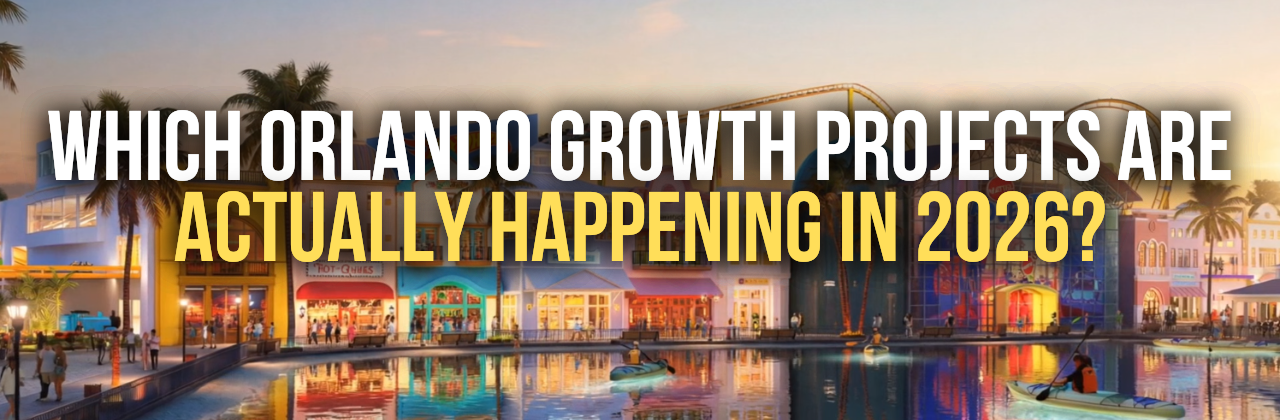
Which Orlando growth projects are actually happening in 2026, and which ones should buyers be careful about?
The Quick Answer
Orlando has real money moving in 2026, but not every headline should influence where you buy. Projects like Disney’s Horizon West housing plan, Pulte’s 288-acre Davenport vacation resort, the InterContinental Orlando on I-Drive, NeoCity’s AdventHealth campus, and Ovation Orlando near I-4 and 192 are backed by land deals, permits, approvals, or active development momentum. But other ideas — like the Ocoee Dynasty Sports Complex, Horizon West Surf Park, and DC Comics rumors at Universal — need more caution. If you are buying in Horizon West, Davenport, Ocoee, or Osceola County, separate confirmed infrastructure from marketing noise before you make a location decision.
After 23 years in Central Florida real estate, nearly 4,000 closed transactions, and more than 200 personal flips, I’ve learned one thing about Orlando growth: the renderings are not the deal. The permit, the land deed, the funding, the roadway plan, and the actual dirt moving matter. In 2026, this is especially important in submarkets like Horizon West, Davenport, I-Drive, Downtown Orlando, and Osceola County, where buyers are being sold the future every single day. Some of that future is real. Some of it is delayed. Some of it is already dead. If you are relocating, investing, or trying to pick the right side of town, this is the part you have to get right before you buy the house.
6 Orlando Growth Project Takeaways for Buyers in 2026
Orlando has major projects moving, but buyers need to separate real development from stalled plans, rumors, and marketing noise.
Permits and land deals matter more than renderings
Buyers should look for land closings, permits, public approvals, funding, road plans, and active construction before relying on any future project.
Horizon West growth is real, but it comes with pressure
Disney’s housing plan and continued development near Horizon West, Hamlin, Avalon Road, and Schofield Road may add demand, but also more traffic and infrastructure strain.
Davenport is still a major vacation-home bet
Pulte’s 288-acre Davenport resort project shows builder confidence in the Disney-side rental corridor, but primary-home buyers should watch tourism activity and short-term rental concentration.
I-Drive and 192 are getting major reinvestment
Projects like the InterContinental Orlando, I-Drive redevelopment, and Ovation Orlando near I-4 and 192 could reset key tourism corridors if they are executed well.
Osceola County growth needs infrastructure follow-through
NeoCity, AdventHealth, Sunbridge, and road expansion plans may strengthen Kissimmee, St. Cloud, and eastern Osceola County, but buyers still need to verify commute and medical access today.
Some projects should not drive your buying decision yet
The Ocoee Dynasty Sports Complex, Horizon West Surf Park, and DC Comics rumors at Universal may sound exciting, but buyers should treat them as uncertain until there is stronger proof.
Which Orlando projects are actually moving in 2026?
The projects buyers should take most seriously are the ones tied to land closings, permits, public approvals, signed agreements, or active redevelopment momentum. In 2026, that puts Universal’s transit discussions, Disney’s Horizon West housing, Pulte’s Davenport resort project, InterContinental Orlando, The Canopy, NeoCity’s AdventHealth campus, and Ovation Orlando in a different category than pure rumor.
The biggest mistake buyers make is treating every headline the same. A press release is not the same thing as a permit. A conceptual rendering is not the same thing as a closed land deal. A “planned” project is not the same thing as a project with funding, zoning, and dirt moving.
That matters because buyers often pay a premium for future convenience. They want to be near the next hospital, next resort corridor, next entertainment district, next road connection, or next job center. That can be smart, but only if the project is real enough to affect lifestyle and resale.
In Horizon West, Disney’s attainable housing project is more than a concept because it has moved through real permitting channels. In Davenport, Pulte’s land purchase is a major signal that the vacation rental corridor still has institutional builder confidence. On International Drive, hotel and entertainment reinvestment is reshaping the corridor in real time.
The Orlando Project Reality Matrix
Before buyers rely on a future project, they need to know whether the project is backed by real movement or just a good-looking headline.
Universal / Boring Company Transit Concept
Area: Universal / Epic Universe corridor
Could improve movement between major Universal destinations.
Disney Attainable Housing
Area: Horizon West
Adds workforce housing near Disney-side employment and could influence rental supply, traffic, and local demand.
Pulte Davenport Resort Project
Area: Davenport
Adds large-scale short-term rental inventory in one of the strongest Disney-side vacation-home corridors.
InterContinental Orlando
Area: I-Drive
Signals luxury reinvestment on the tourism corridor and supports the broader International Drive reset.
The Canopy
Area: Downtown Orlando
Adds public space under I-4 and could improve the pedestrian experience through part of downtown.
NeoCity / AdventHealth
Area: Osceola County
Adds medical access and high-wage job potential to one of the fastest-growing parts of Central Florida.
Ovation Orlando
Area: I-4 / 192 / Celebration area
Repositions a long-underused tourism parcel near one of the most important visitor corridors in Central Florida.
Takeaways for buyers
- Real projects should still be verified at the parcel level.
- A major project nearby can help resale, but it can also add traffic, construction, and density.
- Short-term rental growth in Davenport is not the same as primary-residence growth in Winter Garden.
- Medical, road, and job infrastructure usually matters more than one entertainment headline.
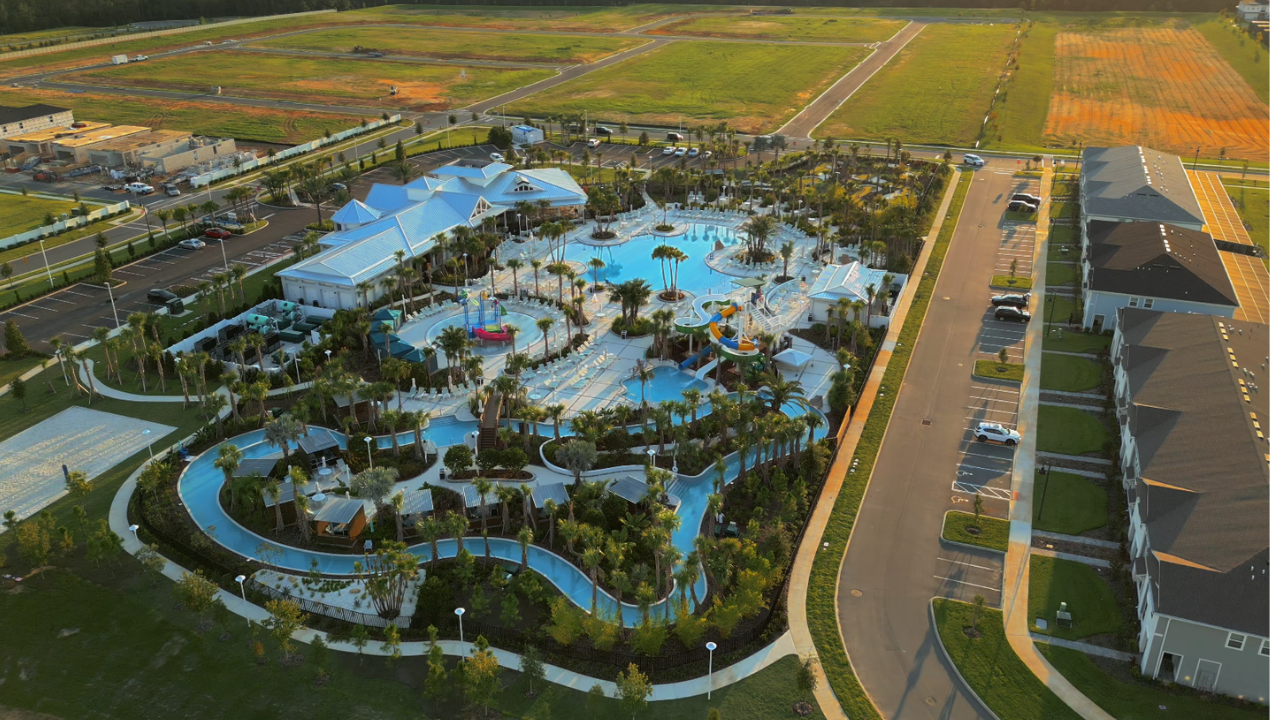
Which Orlando projects are stalled, canceled, or still just rumor?
The risky projects are the ones with no construction, unresolved approvals, lawsuits, withdrawn plans, or no signed deal. Buyers should be careful with the Ocoee Dynasty Sports Complex, the canceled AREA15 Orlando project, the Winter Garden soccer stadium plan, Horizon West Surf Park, and DC Comics rumors tied to Universal.
This does not mean every stalled project is a bad idea. Some concepts are genuinely interesting. A surf park in Horizon West would be unique. A sports complex in Ocoee could drive weekend travel and hospitality demand. A professional soccer stadium near Plant Street could have created jobs and attention.
But from a real estate standpoint, buyers should not pay today’s price for tomorrow’s project unless tomorrow’s project is actually happening. That is where people get hurt. They assume a road, venue, park, or commercial center is coming, and then five years later they are still waiting.
The Winter Garden soccer stadium is a good example of local identity mattering. The community pushed back because the project did not feel like the right fit for that location. Sometimes cancellation is not a failure. Sometimes the market, city, and residents are telling you what belongs there.
Projects to Treat Carefully
Do not overpay for hypeOcoee Dynasty Sports Complex
High WatchBig concept, major promise, sports tourism, hotel demand, and possible weekend visitor traffic for Ocoee.
Buyers should not count on it until there is visible progress, legal clarity, and real construction activity.
AREA15 Orlando
CanceledIt would have brought immersive entertainment to a major tourism corridor between Disney and Universal activity.
The project was canceled, and the land story shifted toward a more practical retail outcome.
Winter Garden Soccer Stadium
WithdrawnThe plan included a professional soccer stadium, mixed-use development, housing, hotel space, and recreation.
The community reaction mattered, and the original stadium-centered vision is no longer something buyers should rely on.
Horizon West Surf Park
PendingThe concept is exciting: inland surfing, a wave pool, recreation, and another major lifestyle draw in Horizon West.
Pending approvals and a long timeline make it too uncertain to price into a home purchase today.
DC Comics at Universal
RumorThe idea of Batman, Superman, Wonder Woman, and a future DC land at Universal would be a major theme park story.
Interesting if it happens, but not something to use in a serious relocation or investment decision yet.
What do these projects mean for buyers choosing where to live?
These projects matter because they change traffic patterns, job centers, rental supply, commute logic, and resale narratives. But they do not affect every buyer the same way. A Disney employee, a short-term rental investor, a Lake Nona medical worker, and a Winter Garden family should read these headlines completely differently.
For a primary-home buyer, the first question is not “what is being built?” The first question is “does this improve my daily life?” If a new entertainment district brings traffic past your subdivision every weekend, that is not automatically a win. If a hospital shortens your drive for specialist care, that may matter more than a theme park announcement.
For an investor, the math changes. Davenport’s Pulte project, the I-4/192 Ovation corridor, and new tourism infrastructure may all affect rental demand, nightly-rate expectations, and competition. More demand is good. More supply can be a problem. You have to underwrite both sides.
For relocating buyers, the biggest trap is choosing based on future hype instead of today’s reality. Buy the house and the location as they exist now. Treat future projects as upside, not the reason the deal works.
Buyer Decision Filter
Before you let a future project influence where you buy, run the location through these five questions.
Verify the Proof
Check whether the project is backed by permits, land records, public approvals, signed agreements, or actual construction.
Measure Daily Life
A project only matters if it improves your commute, healthcare access, schools, daily errands, or lifestyle.
Watch the Side Effects
Growth can bring jobs and amenities, but it can also bring traffic, noise, parking pressure, and rental turnover.
Check the Premium
If buyers are already paying more because of the future project, the upside may already be built into the price.
Remove the Project
The safest test is simple: would the home, neighborhood, and location still make sense if the project never happens?
How should buyers think about budget scenarios around Orlando growth areas?
Buyers should match their budget strategy to the type of growth happening nearby. A primary-home buyer in Horizon West should not analyze a project the same way an investor analyzes Davenport. A downtown buyer should think about lifestyle and safety. An Osceola buyer should focus on infrastructure timing, roads, healthcare, and job growth.
Budget is not just purchase price. In Central Florida, you have to factor in HOA fees, CDD fees, insurance, taxes, commuting costs, rental restrictions, short-term rental competition, and whether the surrounding infrastructure is already built or still catching up.
In growth markets, the cheapest home is not always the best buy. Sometimes it is cheap because roads are behind, retail is weak, schools are stretched, or the area is still too dependent on one future project that has not happened yet.
The strongest buyers are the ones who separate price, payment, and risk. A lower purchase price in a fast-growth corridor can still be expensive if the insurance, taxes, HOA, commute, and resale uncertainty are all working against you.
Budget Scenarios Around Orlando Growth Areas
The right budget strategy depends on how you plan to use the home, what kind of growth is nearby, and whether the area works for your life today.
Primary-Home Buyer Wanting Disney-Side Access
Horizon West, Winter Garden, Windermere, and parts of Clermont.
Traffic, school zoning, CDD fees, HOA costs, and the real daily drive pattern.
Short-Term Rental Investor
Davenport, Kissimmee, and Disney-side resort corridors.
Oversupply, changing STR performance, rental rules, and operating costs.
Healthcare-Focused Buyer
Lake Nona, St. Cloud, Kissimmee, and NeoCity-area Osceola.
Infrastructure timing, commute gaps, specialist access, and road capacity.
Urban Lifestyle Buyer
Downtown Orlando, Ivanhoe, Mills 50, and College Park.
Safety perception, parking, nightlife noise, and block-by-block differences.
Value-Seeking Relocation Buyer
Ocoee, Clermont, Minneola, Apopka, and Mount Dora.
Project hype, commute reality, unfinished commercial depth, and long-term convenience.

Which Central Florida areas deserve extra due diligence before you buy?
Buyers should be extra careful in places where the growth story is bigger than the current infrastructure. That includes parts of Davenport, Ocoee, Horizon West, Osceola County, and certain tourism-corridor locations. These areas can still be good buys, but you need to verify roads, schools, rental rules, taxes, and project status.
Davenport is a great example. It has real growth, strong tourism access, and major builder activity. But it also has pockets where traffic, rental concentration, and commercial gaps can frustrate primary-home buyers who thought they were getting a quiet Orlando suburb.
Horizon West has some of the strongest long-term fundamentals in West Orange County, but it is not one simple market. Hamlin, Village I, Lakeside Village, Waterleigh-area pockets, and Avalon/Schofield corridors all feel different. A buyer needs to understand those differences before paying a premium.
Osceola County has massive upside because of NeoCity, road planning, Lake Nona proximity, and growth toward St. Cloud. But fast growth can stretch infrastructure. That is why buyers need to check commute routes, turnpike access, medical access, and school zoning before assuming the future solves everything.
Due Diligence Checklist
Before buying in a fast-growth corridor, verify the details that affect daily life, monthly cost, and resale safety.
Commute Timing
Check current commute times at the hours you will actually drive, not just the distance on a map.
School Zoning
Confirm school zoning directly instead of relying on listing remarks, builder flyers, or old online data.
HOA + CDD Fees
Review HOA and CDD fees before comparing prices because a cheaper home can carry a higher monthly cost.
Rental Rules
Verify whether the property allows short-term rentals if investment use matters now or in the future.
Nearby Land Use
Look beyond the subdivision entrance and check what is planned or allowed on nearby land.
Day + Night Visits
Drive the area at night, on weekends, and during school pickup windows before deciding it fits your life.
Project Status
Ask whether the future project is permitted, funded, approved, under construction, or still conceptual.

Why Choose Jared Jones?
As a top real estate agent with nearly 4,000 homes sold and over 20 years of experience in the Florida real estate market, I have the expertise needed to help you navigate today’s evolving landscape. Whether you’re looking to buy or sell, my deep understanding of market trends and personalized approach will provide you with the insights and strategies required for success.
Best Realtor in Orlando- Reach Out Today
If you’re ready to make a move in Florida’s real estate market, don’t hesitate to reach out. Contact Jared Jones at 407-706-5000 (call or text) or email info@jaredjones.com for professional guidance and personalized service that will help you achieve your real estate goals.
 Posted on Google
 Steven M
Trustindex verifies that the original source of the review is Google.
⭐⭐⭐⭐⭐ When we found out we were moving across the country to the Orlando area, we started watching Jared Jones’ Orlando housing market videos on YouTube. His videos provided a ton of great information about the different communities, neighborhoods, and the Orlando housing market and really helped us get familiar with the area before making the move. As good as Jared’s videos are, his team is even better in person! We had the pleasure of working with Leonard O’Connor, and he was awesome from the very beginning. Communication was excellent throughout the entire process. Leonard took the time to show us several existing homes and really helped us narrow down exactly what we were looking for. Once we zeroed in on the right property, Leonard was there every step of the way. He helped us through the negotiations and, because we were still living across the country, went above and beyond to help with measurements and other things we needed taken care of before we could arrive in Orlando. Having someone local we could trust made a huge difference and took a lot of stress out of buying a home from thousands of miles away. The entire process went incredibly smoothly, and closing was a breeze. We couldn’t be happier with our experience. If you’re moving to the Orlando area—especially if you’re relocating from out of state—I highly recommend Jared Jones, Leonard O’Connor, and the eXp Realty team. Great communication, great service, and people who genuinely work hard for their clients. Five stars all the way!Posted on Google Peter MJared and his team helped me and my family in purchasing a home in Orlando and I would highly recommend them to anyone. They are extremely knowledgeable about the greater Orlando area which was important to me moving from New Jersey. They kept us informed every step of the way and did a phenomenal job when it came time to present an offer and close the deal. This team is top notch!Posted on Google
 Dyan DLeonard O’Connor, with Jared Jones Realty team, did a fantastic job helping us find our new home in Clermont, Florida. He was very accommodating, often squeezing last minute home viewing into his schedule and doing virtual walkthroughs with us from Michigan. His communication throughout the process was exemplary and his vast experience shown through in his advice and negotiating skills. Leonard and the whole team at Jared Jones Realty worked together seamlessly to assist us every step of the way through the home buying process. We couldn’t be happier!Posted on Google
 Dan HHeidi was incredibly helpful and kind during the entire process. She negotiated effectively for us and was always reachable whenever we had a question and now we live in our dream home!Posted on Google
 Paul HSelling a home from overseas could have been stressful, but Jared and his team made the whole process feel incredibly straightforward. From the very beginning we felt we were in safe hands. Jared was always approachable, responsive and happy to answer any questions we had. His communication was excellent throughout, keeping us updated every step of the way, and his advice was always honest and reassuring. The professional photography and video marketing were first class and really showed our Davenport home at its very best. What impressed us most was how much Jared genuinely cared about achieving the best possible outcome for us. Even when unexpected issues arose during the sale, he remained calm, proactive and worked hard to keep everything moving towards a successful closing. We couldn’t have asked for a better Realtor and would wholeheartedly recommend Jared Jones and his team to anyone buying or selling a home in the Davenport and Central Florida area. Thank you, Jared, for all your hard work, professionalism and support—it has been a pleasure working with you.Posted on Google
 David RMy wife and I purchased a home in Kissimmee, Florida and it was by far the best home buying experience we have ever had. This is our 7th home we have purchased. Stephany Cornelius was our Realtor from Jared Jones Real Estate Team and we couldn't have been more pleased. She made the process so easy, less stressful and guided us through every aspect including a very quick closing. I highly recommend Stephany if you're trying to navigate the home buying experience here in Florida.Posted on Google
 Gianfranco RJared Jones was amazing at helping us pick and getting our dream home. He was very patient and always had an answer to any questions we had. Could not be more thankful for him and his team.Posted on Google
 David WJared and his team were great to work with. Always professional and responsive to every situation that arose. Would love to work with them again on future deals.Posted on Google
 City TJared and Kristen were a pleasure to deal with. Their professionalism and quick responses made the entire closing process smooth and stress-free. I look forward to working with them again on future transactionsPosted on Google
 Veronica RJared was great! We were moving to FL from out of state and he made everything so much easier!Verified by TrustindexTrustindex verified badge is the Universal Symbol of Trust. Only the greatest companies can get the verified badge who has a review score above 4.5, based on customer reviews over the past 12 months. Read more
Search Homes in Orlando, Florida




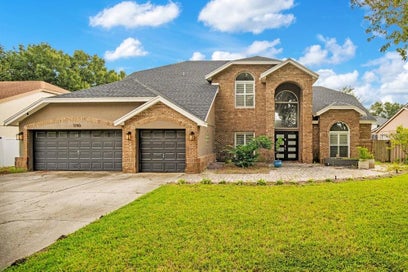


FAQ: Orlando neighborhoods out-of-state buyers should avoid
These are the most common questions out-of-state buyers ask when comparing Orlando neighborhoods, commute routes, school zones, new construction areas, and lifestyle tradeoffs in 2026.
What Orlando neighborhoods should I avoid if I am moving from out of state?
You should avoid any Orlando neighborhood that does not match your daily life, even if the house looks like a great deal. For many out-of-state buyers, that means being careful with remote parts of Davenport, south Kissimmee, outer St. Cloud, and fast-growth corridors where roads and retail are still catching up. These areas can be good fits for the right buyer, but they can be frustrating if you need a reliable commute, strong school zoning, or polished commercial development. Before you rule an area in or out, drive the exact route to work, visit nearby shopping centers, check the school zone, and review CDD and HOA costs.
Is Davenport a bad place to live near Orlando?
Davenport is not a bad place to live, but it is often misunderstood by relocating buyers. It can be one of the best value plays near Orlando if you want more house for the money and like being near Disney, Highway 27, 192, and I-4. The concern is that some parts of Davenport are heavily influenced by tourism and short-term rental activity. That may not bother you, but you need to know it before buying. If you work remotely, love the theme park side of town, and want newer housing at a more approachable price, Davenport may work. If you need a clean daily commute into downtown Orlando, test that drive carefully.
Is Kissimmee a good place to buy a house in 2026?
Kissimmee can be a good place to buy in 2026, but you have to separate the submarkets. North Kissimmee near Hunters Creek, The Loop, and major expressway access is a very different decision than south Kissimmee or areas closer to Poinciana. West Kissimmee near Disney may also have short-term rental influence. Some buyers like Kissimmee because it offers value, shopping, lake access, newer communities, and proximity to the theme parks. Others do not like the traffic, mixed land uses, or inconsistent neighborhood feel. Do not buy in Kissimmee based on the city name. Buy only after understanding the exact pocket.
Should I buy in St. Cloud if I work in Orlando?
You can buy in St. Cloud if you work in Orlando, but your commute route matters more than the listing photos. St. Cloud has a lot going for it: newer homes, a real downtown, Lakeshore Boulevard, Cross Prairie, Narcoossee Road growth, and access to Lake Nona amenities in certain pockets. But St. Cloud can also create traffic friction, especially around Narcoossee and Turnpike-dependent routes. If you work near Lake Nona or the airport, some St. Cloud locations may make sense. If you work downtown, in Winter Park, or on the north side of Orlando, you need to test the drive before committing.
Is Horizon West better than Lake Nona for relocating families?
Horizon West and Lake Nona are both strong relocation markets, but they are not identical. Horizon West is heavily tied to Winter Garden, Hamlin, Disney access, newer schools, parks, trails, and the 429. Lake Nona is stronger for buyers who want southeast Orlando access, Medical City, the airport, and the 417/528 corridor. Horizon West may feel more connected to Disney and Winter Garden lifestyle, while Lake Nona may feel more connected to the airport and medical/employment centers. The better choice depends on where you work, your school priorities, your budget, and whether you prefer west-side or southeast-side Orlando living.
Is Winter Garden worth the premium?
Winter Garden can be worth the premium if you actually use what you are paying for. Historic Winter Garden gives buyers Plant Street, the West Orange Trail, golf cart lifestyle, restaurants, farmers market energy, and a strong sense of place. Horizon West gives buyers newer homes, newer schools, planned parks, and modern retail. Those benefits are exactly why prices are higher. But if you do not care about walkability, trails, or west-side access, you may be able to get more house in Clermont, St. Cloud, Apopka, or Davenport. Winter Garden is not cheap, so the lifestyle needs to matter to you.
Are Dr. Phillips and Windermere overpriced?
Dr. Phillips and Windermere are expensive because they combine access, schools, restaurants, lakes, and prestige. That does not automatically mean they are overpriced. It means buyers are paying for location and land value, not just the structure. In Dr. Phillips, you are near Restaurant Row, Universal, Disney, SeaWorld, and major Orlando corridors. In Windermere, buyers often want privacy, lake access, estate-style neighborhoods, or proximity to strong west-side schools. If your priority is maximum square footage, these areas may feel expensive. If your priority is access and long-term location strength, they deserve a serious look.
Where should I live in Orlando if schools are my top priority?
If schools are your top priority, start with exact school zoning rather than broad city names. Many buyers look at Lake Mary, Heathrow, Oviedo, Winter Springs, Longwood, Winter Garden, and Lake Nona because these areas often come up in school-driven searches. Seminole County is especially popular with families who prioritize schools, which is why Lake Mary, Heathrow, Winter Springs, and Oviedo command a premium. In Orange County, Winter Garden and Lake Nona are common targets. The key is to check the specific elementary, middle, and high school for the exact address, because boundaries can shift and one street can change the assignment.
Should I buy an older home in Winter Park, College Park, or Maitland?
You should consider an older home in Winter Park, College Park, or Maitland if you value location, character, trees, and proximity more than new construction. These areas can be some of the most desirable parts of Orlando, but they require a different budget mindset. Older homes may need roof work, plumbing updates, electrical updates, HVAC replacement, drainage improvements, or insurance review. Winter Park’s 32789 area, College Park near Edgewater Drive, and Maitland near the chain of lakes can be excellent long-term locations. But they are not casual purchases. You need inspections, repair estimates, and a clear maintenance plan.
What is the biggest mistake out-of-state buyers make in Orlando?
The biggest mistake is buying the house instead of buying the lifestyle. A buyer sees a newer home in Davenport, a larger home in Kissimmee, a cheaper home in Apopka, or a charming older home in College Park and assumes the decision is obvious. But Orlando punishes lazy location decisions. Commute routes, school zones, toll roads, CDDs, insurance, tourism exposure, and neighborhood consistency all matter. The right home in the wrong corridor can become frustrating fast. Before you buy, compare at least 3 areas side by side and drive them like you already live there.
Jared Jones Real Estate Team Serving All of Central Florida
- Osceola County
- Orange County
- Lake County
- Polk County
- Seminole County
- Volusia County
- Broward County
- Marion County
- Flagler County
- Brevard County
- Pinellas County
- Hillsborough County
Orlando Market IQ
Want smarter Orlando real estate updates?
Get local market insights, new construction updates, Orlando growth news, and buyer/seller strategy delivered straight to your inbox.
Get the latest from Jared Jones
Sign up below to stay informed on Orlando real estate and Central Florida market shifts.
I agree to be contacted by Jared Jones PA via call, email, and text for real estate services. To opt out, you can reply “STOP” at any time or reply “HELP” for assistance. You can also click the unsubscribe link in the emails. Message and data rates may apply. Message frequency may vary. Please read our privacy policy here: Privacy Policy .