

6 Key Highlights for Florida Home Buyers in 2026
Not every Florida home that looks like a deal is actually a deal. In 2026, buyers need to look beyond the list price and understand the insurance, plumbing, roof, HOA, flood, septic, commute, and location risks that can turn a cheap home into an expensive mistake.
A Low Price Can Be a Warning Sign
If a home is priced $40,000 below similar homes in the neighborhood, that gap may be information. It could point to roof age, insurance issues, plumbing problems, flood risk, location mismatch, or hidden repairs.
Insurance Issues Can Kill the Deal Fast
Older roofs, outdated HVAC systems, aluminum wiring, and panels like Federal Pacific Stab-Lok or Zinsco can create major insurance problems during the four-point inspection process.
Plumbing Can Be One of the Biggest Hidden Costs
Homes built from roughly 1978 to 1995 may have polybutylene piping, while many pre-1975 homes may have cast iron drain lines. Both can create expensive surprises if they are not inspected before closing.
Flood Risk Is Not Just About the FEMA Map
A home may sit in an X flood zone and still deal with drainage issues during heavy storms. Buyers need to check lot elevation, street drainage, nearby water, and neighborhood storm history before making an offer.
HOA, CDD, and Commute Costs Change the Real Payment
In newer communities, CDD fees can run for 20 to 30 years, and toll-road commuters in Central Florida may spend an additional $150 to $300 per month just on tolls.
Location Mistakes Are Hard to Fix Later
Buyers can renovate a house, but they cannot renovate what is across the street. Short-term rental zones near ChampionsGate, Reunion, and Davenport, nearby industrial land, or rezoning risk can all affect daily life and resale.

What Florida Homes Should I Avoid Buying in 2026?
The Quick Answer
The Florida homes buyers should be most careful with in 2026 are the ones that look affordable online but carry hidden costs after closing. That includes homes with older roofs, Federal Pacific or Zinsco electrical panels, polybutylene plumbing, cast iron drain lines, unpermitted additions, weak HOA reserves, septic surprises, or location problems you cannot fix later. In Central Florida, buyers comparing areas like Horizon West, Lake Nona, ChampionsGate, Reunion, and Winter Park need to look beyond list price. A home priced $40,000 below the neighborhood may not be a deal. It may be the market warning you.
A lot of buyers come to Florida with five homes saved from Zillow, a hotel reservation, and the belief that the cheapest house on the list is the smartest move. After 23 years in Central Florida real estate, nearly 4,000 transactions, and more than 200 personal flips, I can tell you that price gaps usually mean something. In 2026, that matters even more because insurance rules, inspections, roof coverage, HOA costs, and infrastructure issues are changing the real cost of ownership. This is especially true in submarkets like Metro Orlando, where a buyer might compare an older resale in Winter Park, a master-planned home in Horizon West, and a short-term rental property near ChampionsGate without realizing each one carries a completely different risk profile.
Which Florida Homes Create the Biggest Insurance Problems in 2026?
A home can look fine in photos and still collapse during insurance review. This is one reason a buyer should not assume a clean listing description means the house is financially safe.
Two electrical panel names matter: Federal Pacific Stab-Lok and Zinsco. If either shows up, many buyers should treat it as a serious warning sign until an electrician and insurance provider confirm the path forward.
Older roofs are another trap. A roof may pass inspection and still receive actual cash value treatment instead of full replacement cost coverage. That means the buyer may be self-insuring a large portion of the roof replacement.
| Issue | Why It Matters | Possible Buyer Impact |
|---|---|---|
| Federal Pacific / Zinsco Panel | Known insurance and safety concern. | Replacement may be needed before closing. |
| HVAC Over 15 Years Old | Often flagged in four-point inspection reports. | Buyer may need immediate replacement planning. |
| Older Roof With ACV Coverage | Insurance may only cover depreciated value. | Buyer could pay most of a future roof bill. |
| Aluminum Wiring | Common in some older Florida homes. | May require evaluation, correction, or insurance review. |

Why Is Polybutylene Plumbing Such a Serious Issue in Florida Homes?
Polybutylene plumbing is a serious issue because it can fail behind the walls before a buyer ever sees a warning sign. In Florida, homes built from the late 1970s through the mid-1990s deserve extra plumbing scrutiny before a buyer removes inspection contingencies or commits to the purchase.
The problem is not just the pipe itself. It is what happens when the pipe fails. A buyer may not discover the issue until there is a leak, water damage, drywall repair, flooring damage, and possible insurance complications.
A standard home inspection should identify polybutylene, but not every inspector catches it. That is why buyers need an agent who knows when to ask more questions and when to bring in a plumber before the deal moves too far forward.
In areas with a lot of older resale housing across Central Florida, this can become one of the biggest hidden costs in the transaction. The key is to identify the risk early, understand the cost, and negotiate before closing instead of discovering the problem after the home is already yours.
Buyer Takeaways
- Risk window: ask whether the home was built between 1978 and 1995
- Inspection question: confirm whether the inspector specifically checked for polybutylene plumbing
- Seller disclosure: ask whether the home has ever been fully or partially repiped
- Negotiation strategy: price the risk before making an offer, not after closing
Should I Get a Sewer Scope on an Older Florida Home?
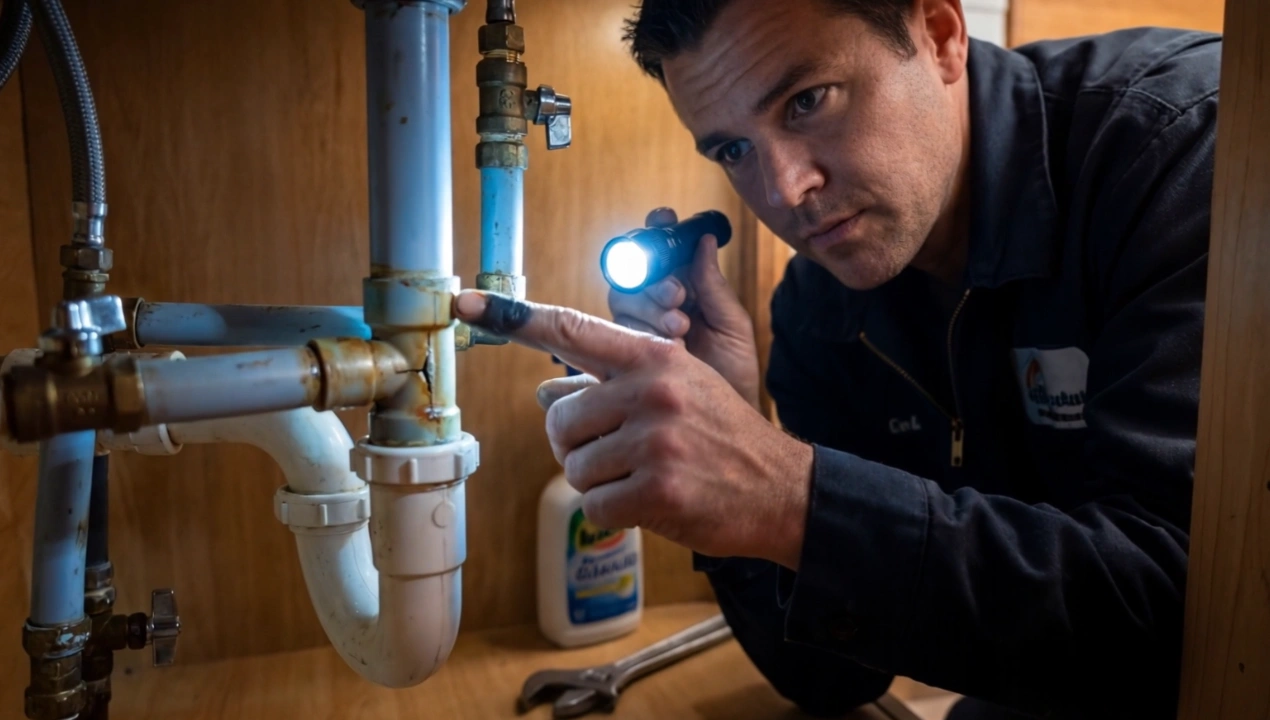
Yes, buyers should strongly consider a sewer scope on older Florida homes, especially pre-1975 properties. Cast iron drain lines can deteriorate under the slab, and a normal inspection may not reveal the problem because the pipes are hidden below the foundation.
This is one of the most expensive surprises in older Florida housing. The home can flush properly, drain normally, and still have deteriorating cast iron below the surface.
The issue is especially important in older Central Florida neighborhoods where mid-century homes are still actively selling. You cannot judge underground pipe condition from listing photos, flooring updates, or a remodeled kitchen.
A sewer scope is relatively inexpensive compared with the potential cost of cutting through a slab and repairing failed drain lines. It is not the most exciting inspection, but it can protect a buyer from a major five-figure mistake before closing.
Data Callout
- Highest-risk homes: older Florida properties, especially pre-1975 homes with cast iron drain lines
- Main issue: the pipes are hidden under the slab and may not show up in a normal home inspection
- Big warning: the home can drain normally and still have deteriorating cast iron below the surface
- Buyer protection: a sewer scope can identify problems before closing instead of after you own the home
Can a Florida Home Flood Even If It Is Not in a High-Risk Flood Zone?
Yes, a Florida home can sit outside a high-risk FEMA flood zone and still experience drainage issues, standing water, or street flooding during major storms. Flood maps matter, but they do not tell the full story of lot elevation, street drainage, and neighborhood stormwater performance.
Many buyers hear “X zone” and assume they are completely safe. That is not always true. Florida is flat, and older subdivisions may not have modern drainage standards designed for the type of heavy rain events buyers worry about today.
The opposite can also happen. A property may appear in a mapped flood area, but the home itself may have been built up with an elevation certificate that changes the insurance conversation.
The safest approach is to check the map, study the lot, look at nearby streets, and ask local questions before making an offer. In Florida, flood risk is not just about the zone. It is also about the land, the roads, the drainage, and the history of that specific neighborhood.
What to Check Before Making an Offer
- FEMA flood zone: confirm the current flood zone status before writing the offer
- Lot elevation: compare the home’s elevation to the street and surrounding lots
- Drainage patterns: look for signs of standing water or poor drainage after heavy rain
- Nearby water: check for ponds, lakes, canals, wetlands, or retention areas near the property
- Storm history: review neighborhood flooding history from local sources, neighbors, and past storm reports

Are Flipped Homes in Florida Riskier in 2026?
Flipped homes are not automatically bad, but they require extra inspection discipline in 2026. The risk is cosmetic renovation hiding mechanical problems, roof age, plumbing issues, HVAC age, unpermitted work, or post-storm moisture problems.
When investor margins are tight, some renovators spend money where buyers can see it and avoid spending where buyers cannot. That means flooring, paint, lighting, countertops, and staging may look new while the expensive systems remain old.
This is especially important if the property was affected by storm activity and later received new drywall or cosmetic updates. Buyers should ask what was remediated, what was permitted, and what was only covered up.
In Metro Orlando, many flipped homes can still be good purchases. The difference is whether the buyer verifies the work before closing. A clean-looking kitchen or fresh flooring should never distract from the condition of the roof, HVAC, plumbing, electrical, and permits.
Flip Review Checklist
- Renovation timeline: compare the renovation date to the roof, HVAC, plumbing, and water heater age
- Permit history: pull permits through the county or municipality before moving forward
- Storm history: ask for mold remediation documentation when the home may have had water intrusion
- Older homes: get a sewer scope on flipped homes with possible cast iron drain lines
- Buyer warning: do not let new flooring, paint, countertops, or staging distract you from old systems
Why Are Unpermitted Additions a Problem When Buying a Florida Home?
Unpermitted additions are a problem because they can affect insurance, financing, appraisal value, resale, and buyer confidence. A converted garage, enclosed lanai, added bathroom, or bonus room may look useful, but it can create a major issue if the work was never properly permitted.
The first concern is safety. If electrical, plumbing, or structural changes were done without oversight, the buyer may inherit problems that are difficult to insure, finance, repair, or explain later.
The second concern is value. If the advertised square footage includes space the county does not recognize as permitted living area, the appraisal may not support the contract price.
The third concern is resale. When you eventually sell the home, the next buyer, inspector, lender, or insurance company may raise the same issue and use it against you in negotiations.
Quick Comparison
| Feature | Permitted Addition | Unpermitted Addition |
|---|---|---|
| Appraisal Support | More likely to count. | May be excluded or questioned. |
| Insurance Comfort | Cleaner underwriting. | Possible carrier concern. |
| Resale Confidence | Easier to explain. | Can become a negotiation problem. |
| Buyer Risk | Lower if documented. | Higher without records. |
What Should Buyers Know About Sinkholes and Older Florida Condos?
Buyers should know that sinkholes and older Florida condos are very different risks, but both require documentation before closing. Sinkhole concerns are tied to geology, insurance coverage, and visible warning signs. Older condo concerns are tied to structural inspections, reserves, special assessments, and association financial health.
In Florida, catastrophic ground cover collapse may be treated differently than broader sinkhole activity. Buyers need to understand what their insurance does and does not cover before assuming they are protected.
For condos, the bigger issue in 2026 is often documentation. Older buildings may have milestone inspection reports, reserve studies, repair needs, or special assessments that materially change the true cost of ownership.
This matters in Central Florida too. It is not only a coastal tower issue. Buyers looking at older condo communities in Orlando, Winter Park, Maitland, Altamonte Springs, or other established areas need to review the association documents before getting emotionally attached to the price.
Documents to Request for Older Condos
- Milestone inspection report: confirm whether the building has been reviewed for structural concerns
- Reserve study: check whether the association is properly planning for future repairs
- Current budget: review whether the monthly dues match the real cost of maintaining the property
- Special assessment history: ask about recent or pending assessments before closing
- Board meeting minutes: look for discussions about repairs, lawsuits, insurance, or deferred maintenance
- Insurance information: confirm what the association policy covers and what the owner must insure separately
Should I Be Concerned If a Florida Home Has Septic Instead of Sewer?
A septic system is not automatically a problem, but buyers need to understand the maintenance, inspection, and future connection costs. Many rural, semi-rural, and older suburban Florida homes use septic instead of municipal sewer.
For buyers relocating from major metro areas, septic can feel unfamiliar. The tank may need pumping every 3 to 5 years, and the drain field has a lifespan that should be evaluated before closing.
The drain field is the big-ticket concern. If it fails, the repair can become expensive, disruptive, and difficult to ignore. That is why septic should be inspected as part of the buyer’s due diligence, not treated as a minor detail.
There is also a long-term planning issue. If sewer lines eventually reach the area, homeowners may be required to connect, and that connection can create another significant cost. This is especially important in growing edges of Central Florida where rural land is slowly being absorbed by new development.
Before Closing, Confirm
- Sewer or septic: verify whether the home is connected to city sewer or operating on a private septic system
- Pumping history: ask when the septic tank was last pumped and whether the seller has records
- Drain field condition: confirm whether the drain field has been inspected and whether there are signs of failure
- Future sewer plans: check whether sewer expansion is planned for the area
- Connection cost: ask who would pay if a future sewer connection becomes required
How Do HOA and CDD Fees Change the Real Cost of a Florida Home?
HOA and CDD fees can make the real monthly payment much higher than the list price suggests. In newer Florida master-planned communities, buyers need to understand HOA dues, CDD bond payments, property taxes, insurance, and whether the association is properly funded.
A CDD, or Community Development District, is commonly used to help fund infrastructure such as roads, utilities, amenity centers, landscaping, and community improvements. The cost is typically passed to homeowners and may last 20 to 30 years.
The HOA is separate. A low HOA is not always good if the association is underfunded and deferring maintenance. Buyers need to know whether the community has enough money to maintain what they see, because those costs eventually come back to the homeowners.
In areas like Horizon West, Lake Nona, Clermont, Minneola, and other fast-growth corridors, the payment structure matters as much as the price. A home may look affordable on the MLS, but the real cost is the mortgage, taxes, insurance, HOA, CDD, and ongoing ownership expenses combined.
Monthly Cost Stack
- Principal and interest: the base mortgage payment before other ownership costs
- Property taxes: often higher in newer or fast-growing communities
- Homeowners insurance: a major part of the Florida affordability equation
- HOA dues: community fees for amenities, maintenance, rules, and shared services
- CDD assessment: infrastructure-related costs that may remain for 20 to 30 years
- Flood insurance: required or strongly considered depending on the property and risk profile
- Maintenance reserves: money set aside for repairs, replacements, and future ownership costs
- Toll and commute costs: especially important in Central Florida growth corridors
How Can Commute Costs Turn a Cheaper Florida Home Into a Bad Deal?
A cheaper home farther from work can become more expensive when tolls, gas, time, car maintenance, and stress are added. In Central Florida, commute routes like 429, 417, and Osceola Parkway can materially change the real cost of living.
Buyers often stretch farther out to get a newer home, a larger floor plan, a bigger yard, or a lower monthly mortgage payment. That can work, but only if the commute math still makes sense after the real daily cost is included.
A buyer who saves money on the purchase price but spends heavily on tolls, fuel, maintenance, and extra drive time may not actually come out ahead. The home may be cheaper, but the lifestyle can become more expensive and more stressful.
This is why buyers should test the commute before making an offer, not after moving in. In Central Florida, the difference between a Saturday afternoon drive and a weekday morning commute can completely change how livable a location feels.
Commute Test
- Test the real drive: run Google Maps at 7:45 AM on a Tuesday, not Saturday at noon
- Check multiple weekdays: test the route several days in a row before deciding
- Add tolls to the budget: include 429, 417, Osceola Parkway, or other toll-road costs in the monthly payment
- Account for vehicle costs: factor in gas, maintenance, insurance, tires, and possible second-car needs
- Compare savings to lost time: make sure the lower home price is worth the hours spent commuting

Why Does Location Mismatch Matter More Than the House Itself?
Location mismatch matters because you can renovate the house, but you cannot renovate what sits across the street or around the corner. Some Florida homes look perfect online but sit next to land uses, future zoning changes, or surrounding properties that limit resale appeal.
This is common in growth corridors where new construction pushes against older rural land, industrial parcels, commercial uses, or inconsistent property conditions. The house may be updated, but the surrounding environment can still hurt the long-term ownership experience.
It can happen at affordable price points and luxury price points. A beautiful home can still be hurt by the drive in, the drive out, or the future land use nearby.
Buyers should review zoning maps, county planning documents, and surrounding parcels before committing. In Florida, the home itself is only one part of the decision. The land around it, the roads near it, and the future plans for that area matter just as much.
Location Due Diligence Checklist
- Drive multiple routes: enter and leave the property from several directions before making a decision
- Check nearby zoning: look for commercial, industrial, warehouse, or mixed-use zoning near the home
- Review future land use: check county and city planning maps for what may be coming nearby
- Watch for road changes: look for planned road expansions, new connectors, or traffic-producing projects
- Ask about vacant land: find out whether nearby open parcels are likely to stay quiet or change over time
How Should Buyers Budget for Florida Home Risk Before Making an Offer?
Buyers should budget beyond the mortgage payment by estimating immediate repairs, insurance conditions, HOA/CDD costs, inspections, commute costs, and future replacement items. The right question is not, “Can I buy this house?” It is, “Can I safely own this house after closing?”
A buyer looking at an older Winter Park home may need a different reserve plan than a buyer looking at a newer Horizon West home with a CDD. The risks are different, so the budget should be different too.
A buyer considering a ChampionsGate-area short-term rental-style community as a primary residence has another set of lifestyle, HOA, rental-density, and resale questions.
The goal is not fear. The goal is to avoid surprises. When buyers understand the real cost before they make an offer, they can negotiate better, protect their cash, and avoid owning a problem they did not see coming.
Budget Scenarios Buyers Should Run
- Older resale scenario: roof age, HVAC age, electrical panel, plumbing type, sewer scope, and insurance terms
- Newer master-planned scenario: HOA, CDD, taxes, insurance, commute, and future bond payoff timeline
- Vacation-area scenario: rental activity, HOA rules, full-time residency rules, neighbor turnover, and resale pool
- Rural or semi-rural scenario: septic, well, road access, future sewer connection, and zoning changes
FAQ: Florida Homes to Avoid in 2026
Buying a home in Florida in 2026 requires more than comparing list prices. These are the common questions buyers should ask before moving forward on older homes, flipped homes, short-term rental communities, CDD neighborhoods, and properties with insurance or inspection concerns.
What types of Florida homes should I avoid buying in 2026?
You should be cautious with Florida homes that have aging roofs, old electrical panels, polybutylene plumbing, cast iron drain lines, unpermitted additions, weak HOA reserves, septic uncertainty, or obvious location mismatch. That does not mean every home with one of these issues is automatically a bad purchase. It means the issue must be priced, inspected, insured, and negotiated correctly. In Central Florida, this matters whether you are buying an older home in Winter Park, a master-planned home in Horizon West, or a vacation-style property near ChampionsGate.
Are older homes in Orlando bad investments?
Older homes in Orlando are not automatically bad investments. In fact, many of the most desirable neighborhoods in Central Florida have older housing stock, including areas near Winter Park, College Park, Conway, and downtown Orlando. The issue is not age by itself. The issue is what has or has not been updated. A well-maintained older home with updated electrical, plumbing, roof, HVAC, drainage, and permits can be a strong buy. An older home with hidden cast iron, insurance issues, or unpermitted work can become expensive quickly.
Is a cheap Florida home usually a red flag?
A cheap Florida home is not always a red flag, but a major price gap deserves investigation. If a house is priced well below similar homes in the same neighborhood, the market may be telling you something. It could be roof age, insurance problems, bad plumbing, flood history, location mismatch, HOA issues, or needed repairs. In areas like Lake Nona, Horizon West, Winter Garden, or Davenport, buyers should compare not only the list price but also the full monthly and long-term ownership cost.
Should I buy a home with an older roof in Florida?
You can buy a Florida home with an older roof, but you need to know how insurance will treat it. The key question is whether the policy offers replacement cost coverage or only actual cash value coverage. With actual cash value, the insurer may depreciate the roof, leaving the homeowner responsible for a large share of replacement costs. In Central Florida, roof age can influence insurance, financing comfort, negotiations, and future resale. Before closing, get the four-point inspection and insurance quote reviewed carefully.
Is polybutylene plumbing common in Central Florida?
Polybutylene plumbing can be found in Florida homes built from the late 1970s through the mid-1990s. Some Central Florida resale homes still fall into that age range, especially in established Orlando-area neighborhoods. The risk is that the piping can deteriorate and fail behind walls or in areas that are not obvious during a walkthrough. A qualified home inspector should know how to identify it, but buyers should ask directly. If polybutylene is present, the buyer needs to understand repipe cost, insurance impact, and negotiation strategy.
Do I need a sewer scope when buying in Orlando?
A sewer scope is strongly worth considering on older Orlando-area homes, especially homes built before the mid-1970s. Cast iron drain lines can deteriorate under the slab, and a basic home inspection may not show the condition of those pipes. This matters in older Central Florida neighborhoods where homes may have been cosmetically updated while underground systems remain original. A sewer scope can reveal cracks, corrosion, blockages, or failure risk before closing. Compared with a major drain line repair, it is a small upfront cost.
Are short-term rental neighborhoods bad for full-time living?
Short-term rental neighborhoods are not bad, but they are not right for every full-time buyer. In areas near ChampionsGate, Reunion, and Davenport, some communities were designed around vacation guests and theme park visitors. The homes may be large, updated, and full of amenities, but the neighborhood rhythm can feel very different from a traditional residential community. For retirees or buyers who enjoy resort-style living, that may work. For families wanting long-term neighbors and kids nearby, it can become frustrating after move-in.
What is a CDD fee in Florida real estate?
A CDD fee is a Community Development District assessment often used in newer Florida communities to fund infrastructure like roads, utilities, and amenities. Buyers commonly see CDDs in fast-growing areas such as Horizon West, Lake Nona, Clermont, Minneola, and other master-planned corridors. The fee is separate from the HOA and may appear on the property tax bill. It can last for decades depending on the bond structure. Buyers need to know the annual amount, what portion may eventually be paid off, and what ongoing operations costs remain.

Why Choose Jared Jones?
As a top real estate agent with nearly 4,000 homes sold and over 20 years of experience in the Florida real estate market, I have the expertise needed to help you navigate today’s evolving landscape. Whether you’re looking to buy or sell, my deep understanding of market trends and personalized approach will provide you with the insights and strategies required for success.
Best Realtor in Orlando - Reach Out Today
If you’re ready to make a move in Florida’s real estate market, don’t hesitate to reach out. Contact Jared Jones at 407-706-5000 (call or text) or email info@jaredjones.com for professional guidance and personalized service that will help you achieve your real estate goals.
 Posted on Google
 Stephanie S
Trustindex verifies that the original source of the review is Google.
The team possesses extensive knowledge of the Orlando real estate market, which proved invaluable in helping us select the ideal home. I highly recommend their services to anyone seeking professional assistance.Posted on Google Gurj DWe had such a great experience working with Connor and would absolutely recommend him. As we were buying a house in Florida while still living in Utah, we relied on Connor for so much throughout the process. He was always incredibly responsive and went out of his way to make things easier for us. When we couldn’t view houses ourselves, he would visit them and send us detailed video walkthroughs, which was a huge help when trying to make decisions from another state. He handled communication with the agents, put together our offers, arranged the inspection and, once we had the inspection results, gave us great advice on how to negotiate so we could get the best possible deal. What really stood out was how willing he was to help with things that went beyond simply buying the house. Because we were in Utah, Connor offered to go back to the property whenever something needed checking, helped arrange appointments such as getting an electrician out, and even offered to continue checking on the house and things like the lawn for us after closing until we’re able to be there. Throughout the whole process Connor was friendly, attentive, patient and extremely easy to work with. Buying a house from across the country could have been incredibly stressful, but having someone local who was so responsive and willing to help made the whole experience much easier. Thank you for everything, Connor! We couldn’t be happier with our new home and really appreciate everything you did for us.Posted on Google
 Jonathan TJared Jones went above and beyond in every aspect of our home-buying experience. From the very beginning to closing, Jared was there for us every step of the way. Buying a new home can be overwhelming, with countless details, questions, decisions, and unexpected bumps along the road, but Jared made the entire process feel manageable because we always knew he had our back. What really stood out to us was how involved and proactive he was. He didn't just show up for the big moments — he was there throughout the entire process, staying on top of details, answering our questions, advocating for us, and making sure we understood what was happening. Whenever something came up, Jared was quick to jump in and help find a solution. We genuinely felt like he was looking out for our best interests from start to finish. He was incredibly responsive, knowledgeable, patient, and professional, but what we appreciated most was that he truly cared. We never felt like we were just another transaction or another set of clients. Jared treated the purchase of our home as if it were his own, and that made a huge difference. We honestly cannot say enough good things about Jared. He exceeded our expectations in every way and made what could have been a stressful experience so much easier. If you're looking for a realtor who will truly go to bat for you, be there when you need him, and genuinely care about getting you into the right home, we couldn't recommend Jared more highly. Five stars doesn't really feel like enough. Thank you, Jared, for everything you did for us!Posted on Google
 Geoffrey ZJared Jones is an absolute main stay in the Orlando Real Estate world. I've now had the pleasure of working with him in Orlando as well as Las Vegas years ago, and while he shifted coasts, his skills, care, and diligence in this business have remained sharp and calculated. Jared knows his stuff. I would question whether anyone knew Orland Real Estate better than Jared and his team. Whether I'm working with him directly, or one of his hand picked, expertly trained team members, I know I'm getting the same level of sill and dedication to meet our very demanding needs. Thank you Jared, and your team, for being our absolute Go-To in Orlando Real Estate!Posted on Google
 Steven M⭐⭐⭐⭐⭐ When we found out we were moving across the country to the Orlando area, we started watching Jared Jones’ Orlando housing market videos on YouTube. His videos provided a ton of great information about the different communities, neighborhoods, and the Orlando housing market and really helped us get familiar with the area before making the move. As good as Jared’s videos are, his team is even better in person! We had the pleasure of working with Leonard O’Connor, and he was awesome from the very beginning. Communication was excellent throughout the entire process. Leonard took the time to show us several existing homes and really helped us narrow down exactly what we were looking for. Once we zeroed in on the right property, Leonard was there every step of the way. He helped us through the negotiations and, because we were still living across the country, went above and beyond to help with measurements and other things we needed taken care of before we could arrive in Orlando. Having someone local we could trust made a huge difference and took a lot of stress out of buying a home from thousands of miles away. The entire process went incredibly smoothly, and closing was a breeze. We couldn’t be happier with our experience. If you’re moving to the Orlando area—especially if you’re relocating from out of state—I highly recommend Jared Jones, Leonard O’Connor, and the eXp Realty team. Great communication, great service, and people who genuinely work hard for their clients. Five stars all the way!Posted on Google
 Peter MJared and his team helped me and my family in purchasing a home in Orlando and I would highly recommend them to anyone. They are extremely knowledgeable about the greater Orlando area which was important to me moving from New Jersey. They kept us informed every step of the way and did a phenomenal job when it came time to present an offer and close the deal. This team is top notch!Posted on Google
 Dyan DLeonard O’Connor, with Jared Jones Realty team, did a fantastic job helping us find our new home in Clermont, Florida. He was very accommodating, often squeezing last minute home viewing into his schedule and doing virtual walkthroughs with us from Michigan. His communication throughout the process was exemplary and his vast experience shown through in his advice and negotiating skills. Leonard and the whole team at Jared Jones Realty worked together seamlessly to assist us every step of the way through the home buying process. We couldn’t be happier!Posted on Google
 Dan HHeidi was incredibly helpful and kind during the entire process. She negotiated effectively for us and was always reachable whenever we had a question and now we live in our dream home!Posted on Google
 Paul HSelling a home from overseas could have been stressful, but Jared and his team made the whole process feel incredibly straightforward. From the very beginning we felt we were in safe hands. Jared was always approachable, responsive and happy to answer any questions we had. His communication was excellent throughout, keeping us updated every step of the way, and his advice was always honest and reassuring. The professional photography and video marketing were first class and really showed our Davenport home at its very best. What impressed us most was how much Jared genuinely cared about achieving the best possible outcome for us. Even when unexpected issues arose during the sale, he remained calm, proactive and worked hard to keep everything moving towards a successful closing. We couldn’t have asked for a better Realtor and would wholeheartedly recommend Jared Jones and his team to anyone buying or selling a home in the Davenport and Central Florida area. Thank you, Jared, for all your hard work, professionalism and support—it has been a pleasure working with you.Posted on Google
 David RMy wife and I purchased a home in Kissimmee, Florida and it was by far the best home buying experience we have ever had. This is our 7th home we have purchased. Stephany Cornelius was our Realtor from Jared Jones Real Estate Team and we couldn't have been more pleased. She made the process so easy, less stressful and guided us through every aspect including a very quick closing. I highly recommend Stephany if you're trying to navigate the home buying experience here in Florida.Verified by TrustindexTrustindex verified badge is the Universal Symbol of Trust. Only the greatest companies can get the verified badge who has a review score above 4.5, based on customer reviews over the past 12 months. Read more
Search Homes in Orlando, Florida




Jared Jones Real Estate Team Serving All of Central Florida
- Osceola County
- Orange County
- Lake County
- Polk County
- Seminole County
- Volusia County
- Broward County
- Marion County
- Flagler County
- Brevard County
- Pinellas County
- Hillsborough County