
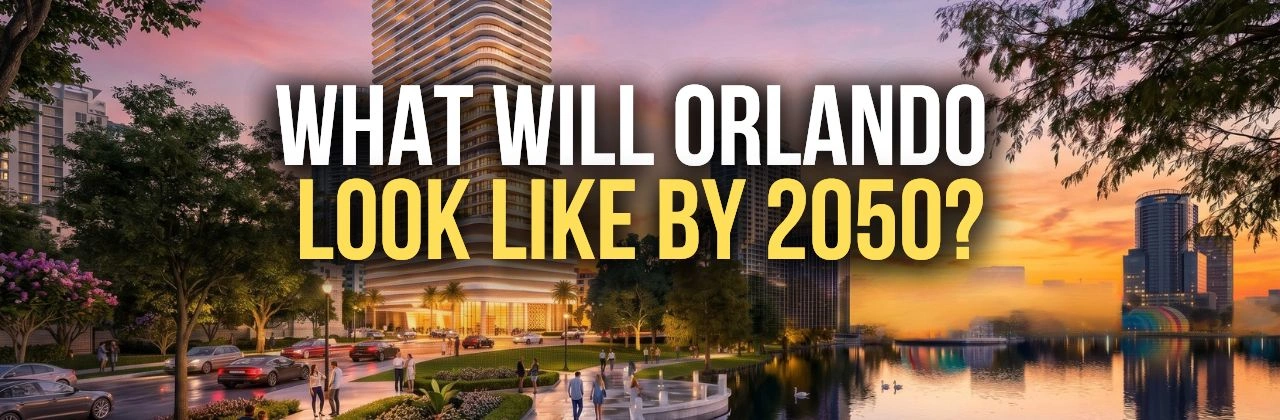
6 Key Highlights for Orlando’s Future Growth
Orlando is not just growing because of tourism. Jobs, population growth, theme park expansion, downtown redevelopment, transportation changes, and land-use shifts are all reshaping how buyers should think about Central Florida.
Orlando’s Growth Story Is Bigger Than Theme Parks
Orlando is gaining national attention for job growth, population growth, and economic expansion, which means the housing story is much bigger than Disney and Universal alone.
The Jaguars Are Coming to Orlando in 2027
The Jacksonville Jaguars are expected to play home games at Camping World Stadium in 2027, giving Downtown Orlando a major national sports spotlight.
Downtown Orlando Is Entering a New Redevelopment Cycle
Westcourt, Lake Eola improvements, the former Orlando Sentinel site, and new high-rise proposals point to a downtown core that could look very different over the next decade.
Universal Is Already Planning Beyond Epic Universe
Universal has filed additional construction plans tied to the Epic Universe area, showing that the I-Drive and Universal corridor may continue evolving long after opening year.
Disney Is Responding With Major Park Investment
Disney permit activity points to major work across Animal Kingdom, Magic Kingdom, and Hollywood Studios, including Tropical Americas, Villains Land, and Monstropolis.
Transportation and Land Use Could Reshape the Map
New road projects, vertiport planning, preservation land, and agricultural enclave laws could change how buyers think about Lake Nona, Downtown Orlando, Horizon West, Lake County, and West Orange.

What Will Orlando Look Like by 2050?
Orlando Is Not Slowing Down in 2026 — It Is Changing Shape
Orlando is not slowing down in 2026 — it is changing shape. The bigger story is not just more houses; it is the combination of jobs, population growth, theme park expansion, downtown redevelopment, new transportation laws, and land-use changes all hitting at the same time. Orlando ranked No. 1 among the 30 largest U.S. metros for job growth, population growth, and nominal GDP growth, while major projects are moving in Downtown Orlando, Horizon West, Lake Nona, Sunbridge, and the Disney/Universal corridors. For buyers, the opportunity is real — but so is the risk of buying the wrong location too late in the growth cycle.
After 23 years in Central Florida real estate, nearly 4,000 transactions, and more than 200 personal flips, I’ve learned this: the headline is rarely the whole story. In 2026, Orlando’s growth is showing up in places most buyers never check — permit filings, land purchases, road alignments, state laws, and quiet redevelopment moves. That matters if you are looking at Horizon West, Downtown Orlando, Lake Nona, Sunbridge, Clermont, Minneola, Kissimmee, Davenport, or anywhere around the western growth corridor. The question is not simply, “Is Orlando growing?” The real question is, “Where is the growth already priced in, where is it still early, and where could buyers overpay because they bought the story instead of the fundamentals?”
Is Orlando Actually Slowing Down or Still Growing?
Orlando is still growing, but the growth is not evenly distributed. The region’s population, employment, tourism, and GDP numbers are strong, but buyers need to understand that “Orlando growth” does not automatically make every subdivision, condo, or outer-corridor purchase a good move.
The Orlando Economic Partnership reported that Orlando led the 30 largest U.S. metros in job growth, population growth, and nominal GDP growth. That is a big deal because it means the growth is not coming from just one source. It is not only tourism, and it is not only retirees.
The region reportedly added about 37,500 jobs and 76,000 residents. Those numbers create housing demand, but they also create stress on roads, schools, medical access, insurance, HOA budgets, and construction timelines.
That is why I do not want buyers just chasing a YouTube headline. The right move is to separate the areas with durable long-term fundamentals from the areas where the marketing story may be ahead of the actual lifestyle.
Why Does the Jaguars 2027 Move Matter for Orlando Real Estate?
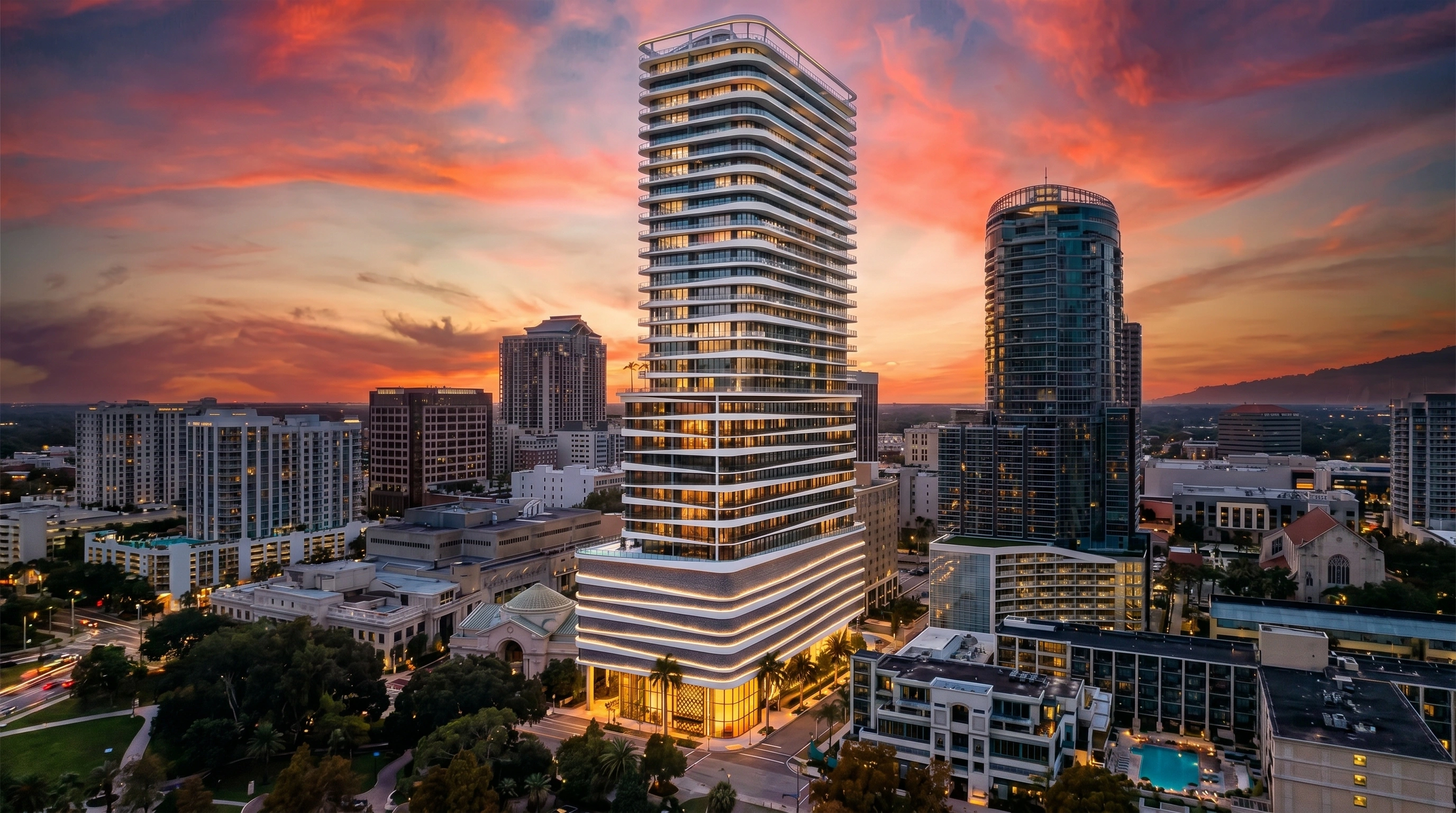
The Jaguars’ temporary 2027 move to Camping World Stadium matters because national attention can change how people view Downtown Orlando. It does not mean every downtown condo is suddenly a great buy, but it does make the stadium district, Church Street, Creative Village, and nearby redevelopment more visible.
NFL owners approved Camping World Stadium as the Jacksonville Jaguars’ temporary home for 2027 while EverBank Stadium is being renovated. That is not a permanent relocation, but it is still meaningful because Orlando gets a full NFL spotlight for a season.
Camping World Stadium is also tied to a major renovation story. That matters because cities do not usually receive large-scale sports attention without infrastructure already being positioned for it.
For real estate, the biggest impact is perception. Buyers and investors who previously only thought of Orlando as theme parks may start looking harder at downtown, sports, entertainment, and mixed-use growth.
Buyer Takeaways
- Do not buy downtown only because the NFL is coming for one season.
- Watch the Church Street, Creative Village, Parramore, and Kia Center/Camping World corridors.
- Separate long-term redevelopment from short-term event hype.
- Check condo financials, HOA reserves, parking, walkability, and rental restrictions before getting excited.

Source: Orlando City
What Does Downtown Orlando’s Redevelopment Mean for Buyers?
Downtown Orlando is entering one of its most important redevelopment windows in years. Westcourt, the former Orlando Sentinel site, Lake Eola improvements, and proposed high-rise development all point to a more serious urban core but buyers still need to evaluate safety, parking, HOA strength, and daily convenience.
Westcourt is planned as a major mixed-use district near the Kia Center, with a Kimpton-branded hotel, residential units, office space, retail and dining, parking, and a live entertainment venue. Turner Construction has been selected for the project, and public reporting places the broader project around $500 million.
The former Orlando Sentinel site is another major piece. Public reporting describes a roughly $2 billion redevelopment vision led by Midtown Development and Heatherwick Studio, which could dramatically reshape how people view the northern edge of Downtown Orlando.
Lake Eola also matters because it is the emotional center of Downtown Orlando. When the city invests in public spaces, walkability, drainage, and park improvements, it can support livability — but buyers still need to look at the block-by-block reality.
Downtown Orlando Redevelopment: What Buyers Should Watch
| Downtown Project | What It Could Improve | Buyer Risk to Watch |
|---|---|---|
| Westcourt near Kia Center | Entertainment, hotel, office, dining, and event traffic | Timeline delays, parking, and construction disruption |
| Former Orlando Sentinel Site | Large-scale urban redevelopment | Final design, delivery timing, and surrounding block conditions |
| Lake Eola Improvements | Public space, drainage, and park experience | Condo pricing may already reflect optimism |
| Proposed High-Rise Projects | More residential density downtown | HOA strength, rental rules, and resale competition |
Is Universal Already Expanding Epic Universe?
Yes, public reporting shows Universal has filed plans tied to additional Epic Universe construction, including a project reported at just under 40,000 square feet near the entrance and Super Nintendo World. The bigger point is that Universal tends to build in phases, and buyers should expect the I-Drive and Universal corridor to keep evolving.
Epic Universe opened in 2025, and the surrounding development story is still unfolding. A new theme park does not reach its full real estate impact on opening day. The real impact shows up over years as hotel, road, retail, workforce, and visitor patterns settle.
The caution is simple: not every property “near Universal” benefits the same way. Some areas may see stronger rental demand, while others may get more traffic without the same appreciation upside.
If you are buying around Universal, International Drive, Dr. Phillips, Tangelo Park, Millenia, or South Orlando, you need to understand the difference between a short-term tourism play and a livable long-term residential purchase.
How Should Buyers Read Disney, Universal, and Sunbridge Growth Differently?
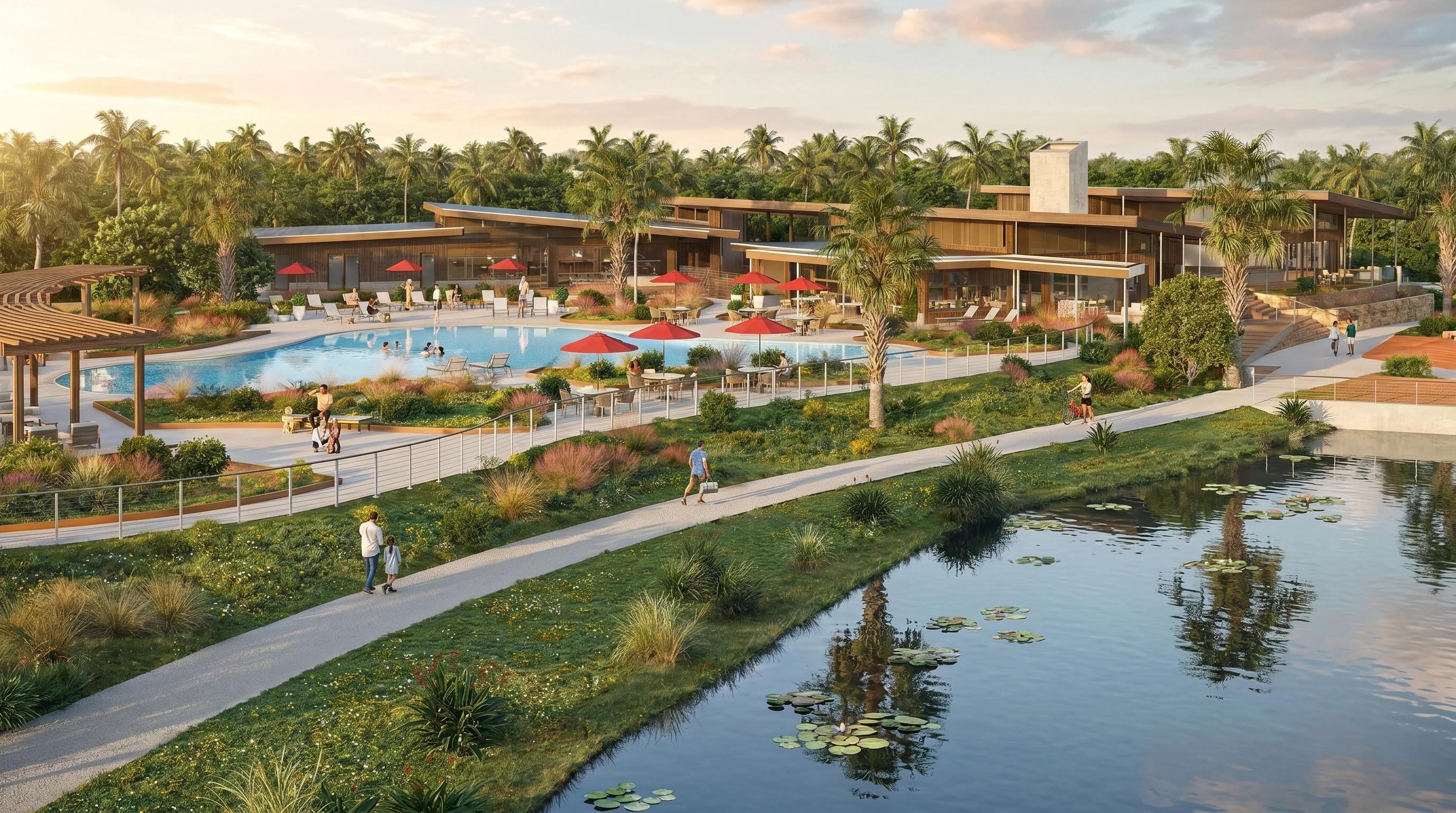
Disney, Universal, and Sunbridge are three different growth stories. Disney is an established demand engine, Universal is expanding a major tourism corridor, and Sunbridge is still proving whether it becomes a true destination or primarily a residential master-planned community east of Lake Nona.
Disney’s Tropical Americas work at Animal Kingdom is moving through active construction and permit activity, with Encanto and Indiana Jones concepts tied to a 2027 opening window.
Universal’s growth is more directly tied to the Epic Universe corridor, hotels, employment, visitor patterns, and South Orlando infrastructure. That can create opportunity, but it can also create overconfidence from buyers who assume proximity alone equals a good investment.
Sunbridge is different. The long-term land story is real, but the pivot from the earlier Marina Village concept to a smaller amenity and lifestyle center needs to be watched carefully. For buyers, that means you should not price Sunbridge like Lake Nona until the commercial gravity, schools, roads, and lifestyle infrastructure prove themselves.
How I’d Read Each Growth Story
- Disney corridor: Strong long-term demand, but often already priced into nearby areas.
- Universal/I-Drive corridor: High visibility, but traffic and use-case matter.
- Sunbridge: Long runway, but buyers need patience and realistic expectations.
- Lake Nona: More mature than Sunbridge, but price and commute tradeoffs matter.
- Horizon West: Strong location west of Disney, but infrastructure strain is real.

Could New Transportation Change How People Live in Orlando?
Yes, but buyers should not assume every transportation idea will make their commute easier next year. Florida’s vertiport law, Brightline-adjacent planning, SR 516, and western road expansion could change Orlando over time, but the practical impact will happen corridor by corridor, not everywhere at once.
Florida’s HB 1093 authorizes FDOT to fund vertiport facilities and related charging infrastructure, including up to 100% of project costs for public vertiports when federal funds are unavailable.
That sounds futuristic, but in plain English, it means Florida is creating a legal and funding framework for electric air taxi infrastructure. Whether that becomes useful for everyday residents is still an open question.
The more immediate transportation story for many buyers is still roads. SR 516, the Lake/Orange Expressway, and the western Orange/Lake County growth corridor could reshape how people think about Clermont, Minneola, Horizon West, Wellness Way, and areas west of Disney.

What Does Florida’s Agricultural Enclave Law Mean for Orlando’s Future Growth?
Florida’s agricultural enclave law could accelerate development pressure on farmland surrounded by approved development. That matters for outer Orlando corridors because land-use rules can change where builders go next, especially in Lake County, Osceola County, Polk County, and West Orange.
The bill language says that if a local government does not approve or deny certification of a parcel as an agricultural enclave within 90 days, the parcel must be certified. Public reporting says the law takes effect July 1, 2026, with changes scheduled to sunset in January 2028 unless extended.
For property owners, this may unlock value. For buyers, it may mean more future inventory in areas that previously felt rural, quiet, or protected.
My concern is not growth by itself. My concern is when state-level policy reduces local control in rural settlement areas, and buyers do not realize the quiet land next to them may not stay quiet.
Buyer Takeaways
- Ask what land around the neighborhood is zoned for today.
- Ask what land around the neighborhood is entitled for tomorrow.
- Do not assume farmland, groves, or open fields are permanent.
- Check future land-use maps before buying in outer corridors.
- Watch Lake County, Osceola County, Polk County, West Orange, and areas near major road expansions.

What Budget Scenarios Should Orlando Buyers Plan for in 2026?
Orlando buyers should plan around payment, insurance, taxes, HOA/CDD fees, and location tradeoffs — not just purchase price. A $650,000 house in one area can behave very differently from a $650,000 house in another if taxes, insurance, commute, CDD fees, and resale demand are different.
This is where a lot of buyers get hurt. They compare homes on Zillow as if the only difference is square footage and price. That is not how Orlando works.
A home in Horizon West may have a different tax/HOA/CDD structure than a resale in Winter Garden. A home near Lake Nona may solve airport access but cost more per square foot. A home in Clermont or Minneola may offer more house, but the commute and future road timing matter.
Before you shop, build scenarios around the full monthly cost and the exit strategy.
| Buyer Scenario | Likely Tradeoff |
|---|---|
| $450k–$600k Buyer | More options in outer corridors, fewer premium locations |
| $600k–$850k Buyer | Better shot at newer homes, pools, or stronger schools |
| $850k–$1.2M Buyer | Can target stronger lifestyle areas but must watch overpricing |
| Investor/STR Buyer | Tourism access may help, but rules can kill the plan |
| Relocation Buyer | Needs neighborhood fit before house fit |

Where Should Buyers Be Careful Before Betting on Orlando’s 2050 Growth?
Buyers should be careful anywhere the story sounds better than the current lifestyle. If the roads, schools, retail, medical access, insurance profile, HOA budget, or resale demand do not support the price today, do not assume future growth will automatically bail you out.
Some areas will benefit from Orlando’s next chapter. Others will simply get more traffic, more construction, and more competition. That is the part buyers miss when they fall in love with a master plan.
The safest approach is to ask three questions before buying: What is already here? What is funded and under construction? What is only a promise, rendering, or marketing concept?
That is how you avoid paying 2035 prices for a 2026 lifestyle.
Jared’s Reality Check
- Do not buy a rendering.
- Do not assume every road project fixes traffic.
- Do not assume every theme park expansion helps your exact neighborhood.
- Do not ignore CDD, HOA, insurance, and tax resets.
- Do not buy in an outer corridor without checking surrounding land use.
- Do not treat new construction incentives as free money.
- Do not skip resale analysis before you buy.

Frequently Asked Questions About Orlando’s Future Growth
Orlando is changing fast, but not every growth story affects every neighborhood the same way. These are the key questions buyers should ask before choosing areas like Winter Garden, Horizon West, Lake Nona, Clermont, Minneola, Downtown Orlando, Kissimmee, Davenport, or the Disney and Universal corridors.
Is Orlando still a good place to buy a home in 2026?
Yes, Orlando can still be a good place to buy in 2026, but only if the location and numbers make sense. The market is not one thing. Winter Garden, Lake Nona, Clermont, Minneola, Downtown Orlando, and Kissimmee/Davenport all behave differently. Some areas have stronger long-term demand because of jobs, schools, medical access, airport proximity, or lifestyle. Other areas rely more heavily on future promises. Before buying, you need current MLS data, payment estimates, insurance quotes, tax projections, and a realistic resale strategy.
What Orlando neighborhoods could benefit most from long-term growth?
The areas most likely to benefit are the ones tied to jobs, transportation, lifestyle, and constrained land. Horizon West, Winter Garden, Lake Nona, Downtown Orlando, Clermont/Minneola, and parts of the Disney/Universal corridors all have different growth drivers. Horizon West benefits from proximity to Disney and western road expansion. Lake Nona benefits from medical, airport, and planned-community infrastructure. Downtown benefits if redevelopment actually delivers. But buyers should not treat every neighborhood inside these areas the same. Street, school zone, HOA, builder quality, lot position, and future surrounding land use still matter.
Will Downtown Orlando become more valuable because of Westcourt and the Jaguars?
Downtown Orlando could benefit from Westcourt, Lake Eola improvements, the former Orlando Sentinel redevelopment, and the Jaguars’ 2027 temporary season at Camping World Stadium. But “could benefit” does not mean every downtown purchase is automatically smart. Condo buildings can have very different reserve positions, HOA fees, insurance issues, parking access, and rental rules. I would pay close attention to Lake Eola, Creative Village, Church Street, Parramore, and the Kia Center/Camping World Stadium corridor, but I would still underwrite each building and block carefully before buying.
Is Horizon West still a smart place to buy?
Horizon West can still be a smart place to buy because it sits in one of Central Florida’s most important growth corridors near Disney, Hamlin, Flamingo Crossings, Avalon Road, and the western expressway network. The caution is that Horizon West has grown fast, and buyers need to be realistic about traffic, school crowding, HOA/CDD costs, and price competition from newer construction. I like the long-term location, but I would not blindly overpay just because a home is in Horizon West. Lot, school zone, builder, floor plan, and surrounding development matter.
Is Lake Nona still better than Sunbridge?
Lake Nona is more mature than Sunbridge today. It already has stronger commercial infrastructure, Medical City, proximity to Orlando International Airport, established amenities, and a more proven identity. Sunbridge may have a strong long-term future, but it is still earlier in the development cycle and needs time to prove its commercial gravity, schools, roads, and daily convenience. For some buyers, Sunbridge may offer a better long-term entry point. For others, Lake Nona may justify the premium because more of the lifestyle is already in place. The right answer depends on timeline, budget, commute, and risk tolerance.
Should I buy near Epic Universe or Universal Orlando?
Buying near Epic Universe or Universal can make sense, but only for the right reason. If you are buying for short-term rental income, you must confirm zoning, HOA rules, licensing, fees, and realistic occupancy. If you are buying to live there, you need to evaluate traffic, noise, daily convenience, schools, and resale demand. Areas near Universal, International Drive, Dr. Phillips, Millenia, and South Orlando can all perform differently. Theme park proximity creates demand, but it can also create congestion. You need the numbers and the lifestyle to work.
Will Florida’s vertiport law really change Orlando commutes?
It may change Orlando over time, but buyers should not make a 2026 home purchase assuming air taxis will solve their commute next year. HB 1093 creates a funding and legal pathway for vertiports and advanced air mobility infrastructure, which could eventually matter around Orlando International Airport, Lake Nona, Downtown Orlando, and the tourism corridor. But practical adoption, pricing, routes, noise concerns, safety rules, and public usage are still major unknowns. For now, roads, toll access, airport drive time, and job centers should carry more weight in your home search.
What does the agricultural enclave law mean for buyers?
The agricultural enclave law could make it easier for some farmland surrounded by development to move toward commercial, industrial, or residential use. For buyers in outer corridors like Lake County, Osceola County, Polk County, and West Orange, that means you cannot assume nearby rural land will stay rural. Before buying, you should check zoning, future land-use maps, pending applications, road plans, and neighboring parcel ownership. This is especially important if your reason for buying is privacy, open space, low density, or a rural feel close to Orlando.
Is Orlando growth good or bad for homeowners?
Orlando growth can be good for homeowners if it supports jobs, wages, amenities, infrastructure, and long-term demand. It can be bad if it creates traffic, school pressure, higher taxes, insurance stress, overbuilding, or loss of open space. In places like Winter Garden, Horizon West, Lake Nona, and Clermont, growth has created real value for many homeowners, but it has also changed the lifestyle. The key is knowing whether the growth around your home is improving daily life or simply adding density without enough infrastructure.
What should relocation buyers do before choosing an Orlando neighborhood?
Relocation buyers should start with lifestyle and logistics before houses. I would look at commute to work, airport access, school priorities, medical needs, grocery and restaurant patterns, church/community fit, recreation, and tolerance for traffic. Then compare neighborhoods like Winter Garden, Windermere, Lake Nona, Clermont, Minneola, Dr. Phillips, Oviedo, and Downtown Orlando against those priorities. The biggest mistake is flying in, touring random homes, and trying to understand Orlando through individual listings. You need a neighborhood strategy first, then a house strategy.

Why Choose Jared Jones?
As a top real estate agent with nearly 4,000 homes sold and over 20 years of experience in the Florida real estate market, I have the expertise needed to help you navigate today’s evolving landscape. Whether you’re looking to buy or sell, my deep understanding of market trends and personalized approach will provide you with the insights and strategies required for success.
Best Realtor in Celebration - Reach Out Today
If you’re ready to make a move in Florida’s real estate market, don’t hesitate to reach out. Contact Jared Jones at 407-706-5000 (call or text) or email info@jaredjones.com for professional guidance and personalized service that will help you achieve your real estate goals.
 Posted on Google
 Steven M
Trustindex verifies that the original source of the review is Google.
⭐⭐⭐⭐⭐ When we found out we were moving across the country to the Orlando area, we started watching Jared Jones’ Orlando housing market videos on YouTube. His videos provided a ton of great information about the different communities, neighborhoods, and the Orlando housing market and really helped us get familiar with the area before making the move. As good as Jared’s videos are, his team is even better in person! We had the pleasure of working with Leonard O’Connor, and he was awesome from the very beginning. Communication was excellent throughout the entire process. Leonard took the time to show us several existing homes and really helped us narrow down exactly what we were looking for. Once we zeroed in on the right property, Leonard was there every step of the way. He helped us through the negotiations and, because we were still living across the country, went above and beyond to help with measurements and other things we needed taken care of before we could arrive in Orlando. Having someone local we could trust made a huge difference and took a lot of stress out of buying a home from thousands of miles away. The entire process went incredibly smoothly, and closing was a breeze. We couldn’t be happier with our experience. If you’re moving to the Orlando area—especially if you’re relocating from out of state—I highly recommend Jared Jones, Leonard O’Connor, and the eXp Realty team. Great communication, great service, and people who genuinely work hard for their clients. Five stars all the way!Posted on Google Peter MJared and his team helped me and my family in purchasing a home in Orlando and I would highly recommend them to anyone. They are extremely knowledgeable about the greater Orlando area which was important to me moving from New Jersey. They kept us informed every step of the way and did a phenomenal job when it came time to present an offer and close the deal. This team is top notch!Posted on Google
 Dyan DLeonard O’Connor, with Jared Jones Realty team, did a fantastic job helping us find our new home in Clermont, Florida. He was very accommodating, often squeezing last minute home viewing into his schedule and doing virtual walkthroughs with us from Michigan. His communication throughout the process was exemplary and his vast experience shown through in his advice and negotiating skills. Leonard and the whole team at Jared Jones Realty worked together seamlessly to assist us every step of the way through the home buying process. We couldn’t be happier!Posted on Google
 Dan HHeidi was incredibly helpful and kind during the entire process. She negotiated effectively for us and was always reachable whenever we had a question and now we live in our dream home!Posted on Google
 Paul HSelling a home from overseas could have been stressful, but Jared and his team made the whole process feel incredibly straightforward. From the very beginning we felt we were in safe hands. Jared was always approachable, responsive and happy to answer any questions we had. His communication was excellent throughout, keeping us updated every step of the way, and his advice was always honest and reassuring. The professional photography and video marketing were first class and really showed our Davenport home at its very best. What impressed us most was how much Jared genuinely cared about achieving the best possible outcome for us. Even when unexpected issues arose during the sale, he remained calm, proactive and worked hard to keep everything moving towards a successful closing. We couldn’t have asked for a better Realtor and would wholeheartedly recommend Jared Jones and his team to anyone buying or selling a home in the Davenport and Central Florida area. Thank you, Jared, for all your hard work, professionalism and support—it has been a pleasure working with you.Posted on Google
 David RMy wife and I purchased a home in Kissimmee, Florida and it was by far the best home buying experience we have ever had. This is our 7th home we have purchased. Stephany Cornelius was our Realtor from Jared Jones Real Estate Team and we couldn't have been more pleased. She made the process so easy, less stressful and guided us through every aspect including a very quick closing. I highly recommend Stephany if you're trying to navigate the home buying experience here in Florida.Posted on Google
 Gianfranco RJared Jones was amazing at helping us pick and getting our dream home. He was very patient and always had an answer to any questions we had. Could not be more thankful for him and his team.Posted on Google
 David WJared and his team were great to work with. Always professional and responsive to every situation that arose. Would love to work with them again on future deals.Posted on Google
 City TJared and Kristen were a pleasure to deal with. Their professionalism and quick responses made the entire closing process smooth and stress-free. I look forward to working with them again on future transactionsPosted on Google
 Veronica RJared was great! We were moving to FL from out of state and he made everything so much easier!Verified by TrustindexTrustindex verified badge is the Universal Symbol of Trust. Only the greatest companies can get the verified badge who has a review score above 4.5, based on customer reviews over the past 12 months. Read more
Search Homes in Orlando, Florida




Jared Jones Real Estate Team Serving All of Central Florida
- Osceola County
- Orange County
- Lake County
- Polk County
- Seminole County
- Volusia County
- Broward County
- Marion County
- Flagler County
- Brevard County
- Pinellas County
- Hillsborough County